
2026 Immigration Trends Spain – What Expats Need to Know

Moving to Spain in 2026 brings excitement but also new challenges, as recent reforms make residency and visa applications more complex for Latin American students and expatriates. Spain is rolling out fully digital systems, stricter financial requirements, and updated residency categories that require organized, tech-savvy applicants who can provide proof of income and integration. This guide explains how regularizing undocumented migrants and using Spain’s modern digital portals can make your transition smoother and help you avoid common pitfalls.
Table of Contents
- Defining Spain’s 2026 Immigration Landscape
- Key Residency Categories and Changes
- Regularization Policy for Undocumented Migrants
- Digitalization and New Application Systems
- Financial Requirements and Common Pitfalls
Key Takeaways
| Point | Details |
|---|---|
| Digital Transformation | Spain’s immigration system will fully transition to digital platforms, making online applications mandatory for efficiency and accuracy. |
| Residency Categories | Key changes include a focus on retaining skilled workers through revised categories, emphasizing financial sustainability and community integration. |
| Regularization of Undocumented Migrants | New policies will allow undocumented migrants to regularize their status by demonstrating community ties and employment history, rather than solely financial assets. |
| Financial Documentation | Accurate and consistent financial documentation is crucial for all residency applications to avoid delays or rejections due to discrepancies. |
Defining Spain’s 2026 Immigration Landscape
Spain’s immigration framework is undergoing significant transformation in 2026, shaped by domestic priorities and European Union directives. The changes reflect Spain’s commitment to modernizing how it handles residency permits, visa applications, and housing integration for newcomers. Understanding these shifts is critical if you’re planning a move in the coming year.
Living legally in Spain shouldn't be difficult.
View services and pricesNot sure which procedure you need? Find out in 2 min
Questions? Message us on WhatsApp
The overarching theme centers on regularizing undocumented migrants while simultaneously reforming residency categories to better serve skilled workers, students, and family reunification cases. Spain recognizes that its housing market pressures and labor shortages demand a more strategic immigration approach. Major changes to Spain’s immigration framework include new visa rules, digital application reforms, and administrative modernization across all residency procedures.
Key areas being restructured include:
- Digital application systems: Moving away from paper-based submissions to fully online platforms for faster processing and fewer errors.
- Residency permit categories: Expanding options for remote workers, entrepreneurs, and those seeking long-term stability.
- Housing requirements: New standards ensuring expats understand rental agreements and tenant protections before arrival.
- Family reunification pathways: Streamlined processes for bringing spouses and dependent children to Spain.
Latin American expats will notice specific implications. Spain’s government has prioritized bilateral relationships with Latin American countries, meaning visa accessibility, work permits for skilled professionals, and student residence options may expand. However, processing times and documentation requirements will likely become stricter as part of the modernization effort.
The administrative reform deserves special attention. Spain is investing heavily in digital infrastructure, which means appointment scheduling, document uploads, and case tracking will happen entirely online. This change favors tech-savvy applicants who can navigate platforms efficiently and submit complete applications on the first attempt.
Spain’s 2026 immigration changes prioritize digital efficiency and strategic residency categories, directly benefiting organized applicants with complete documentation.
These updates also align with broader European Union migration management directives. Spain must balance accepting skilled workers and students while managing irregular migration. The 2026 framework reflects this balance through tiered visa categories—some routes face stricter scrutiny, while others (like EU family reunification) see faster approval paths.
Pro tip: Begin gathering required documents now—even if you’re applying in 2026. The new digital systems will prioritize complete applications, so having certified copies of your passport, financial records, and educational credentials ready gives you a significant advantage when applications officially open.
Key Residency Categories and Changes
Spain’s residency categories are shifting significantly in 2026, with stricter financial requirements and renewed focus on retention over acquisition. Each category now emphasizes your ability to sustain yourself financially and integrate into Spanish society. Understanding which category fits your situation determines your approval timeline and required documentation.

The Digital Nomad Visa has become the most popular entry point for remote workers from Latin America. The income threshold for solo applicants is €2,849 monthly gross, adjusted upward to align with Spain’s evolving minimum wage standards. This requirement ensures financial self-sufficiency and protects Spain’s labor market from underemployment concerns.
Other key residency categories include:
- Work Permits: Now requiring proof of employer sponsorship and salary comparability to Spanish market rates. Skilled professionals in tech, healthcare, and engineering face fewer barriers.
- Student Visas: Expanded but with stricter income verification for family sponsors and proof of enrollment in accredited institutions.
- Family Reunification: Faster approval paths but requiring documented proof of housing, income, and social security registration.
- Golden Visa: Subject to enhanced scrutiny with higher investment thresholds and mandatory integration requirements.
Spain’s stricter renewal criteria deserve your attention. Previously, renewals were mostly routine. Now, Spain’s residency system updates emphasize proof of income, local integration, and social security registration at every renewal stage. You cannot simply exist in Spain—you must demonstrate active participation in the economy or community.
Here is a comparison of the main residency options for newcomers to Spain in 2026:
| Residency Category | Key Eligibility Requirement | Approval Speed | Renewal Complexity |
|---|---|---|---|
| Digital Nomad Visa | €2,849 monthly gross income | Moderate | High |
| Work Permit | Employer sponsorship, market salary | Fast for skilled jobs | High |
| Student Visa | Accredited enrollment, income proof | Moderate | Moderate |
| Family Reunification | Documented family ties, housing proof | Fast for EU families | Moderate |
| Golden Visa | High investment, integration tasks | Slow | Very High |
This table highlights financial and procedural differences across Spain’s new residency categories.
The shift toward retention means Spain values expats who stay long-term and contribute, not those seeking temporary residency advantages.
For Latin American applicants, this creates both opportunity and responsibility. Spain recognizes bilateral ties and skilled migration from your region, making work visa pathways more accessible. However, you’ll face documentation requirements similar to other nationalities. Your advantage lies in demonstrating cultural affinity and commitment to genuine integration.
The renewal process now demands updated social security contributions, proof of continuous housing, and sometimes attendance at Spanish language programs. These aren’t obstacles—they’re evidence of your genuine stake in Spanish life.
Pro tip: Start your social security registration process immediately upon arrival, even if not required for your visa category. Consistent contributions strengthen your renewal applications and demonstrate financial stability to Spanish authorities.
Regularization Policy for Undocumented Migrants
Spain’s 2026 regularization policy represents a significant shift in how the country addresses undocumented migration. Rather than enforcement-focused approaches, Spain is creating pathways for migrants already embedded in Spanish society to legalize their status. This policy signals opportunity for those who have been working and living in Spain without formal authorization.
The extraordinary regularization program offers a window for undocumented migrants to obtain legal residency. This isn’t a blanket amnesty—it requires demonstrating continuous presence in Spain, employment history, and ties to the community. Extraordinary regularization in 2026 provides structured pathways for migrants meeting specific residency and employment criteria.
Who qualifies for regularization includes:
- Migrants with employment contracts or documented work history spanning at least six months.
- Individuals with family ties to Spanish citizens or legal residents.
- Those demonstrating continuous residence through utility bills, rental agreements, or community registration.
- Workers contributing to the informal economy seeking to formalize their status.
The regularization process differs from standard residency applications. It emphasizes prior presence and contribution rather than financial assets or specialized skills. Spain recognizes that many undocumented migrants perform essential work—agriculture, hospitality, domestic care—that sustains the economy.
Regularization succeeds when applicants document their actual life in Spain, not fabricate credentials or connections they lack.
For Latin American migrants currently undocumented in Spain, this policy opens doors previously closed. Your primary advantage is demonstrating genuine roots: employment relationships, community connections, family bonds. The bureaucracy values authenticity over perfection.
The timeline matters significantly. Applications submitted early in 2026 face faster processing than those submitted near the deadline. Spain’s digital infrastructure will handle volumes, but early submission reduces the risk of administrative delays.
Renewal pathways after initial regularization remain strict. You won’t simply maintain status by doing nothing—ongoing employment, social security contributions, or family support documentation must be current. Regularization is your entry point, not your destination.
Pro tip: Gather employment documentation, housing proof, and community connection evidence now. Collect payslips, employment contracts, utility bills, and letters from employers or community organizations before the 2026 regularization window opens; complete documentation dramatically increases approval odds.
Digitalization and New Application Systems
Spain’s immigration bureaucracy is undergoing a complete digital transformation in 2026. Gone are the days of printing forms, collecting physical documents, and waiting in government offices. Everything now moves through online portals, electronic signatures, and digital identification systems.
This shift benefits applicants with reliable internet access and comfort navigating technology. Spain’s residency system reforms emphasize digital application portals for visa issuance and renewals, replacing traditional paper submissions. The new systems aim to streamline approvals by reducing human error and accelerating document verification.
Key features of the new digital infrastructure include:
- Electronic identification (eID): Required for all online submissions and legally binding signatures.
- Digital document uploads: Submit certified copies, employment contracts, and financial statements directly through secure portals.
- Appointment scheduling: Book consulate or immigration office visits entirely online with automatic confirmation.
- Case tracking dashboard: Monitor your application status in real time without contacting authorities.
- Automated notifications: Receive updates at each processing stage via email or SMS.
Latin American applicants should expect a learning curve. Spanish government portals use specific formatting requirements, and rejected submissions often result from minor technical errors rather than substantive issues. Your first interaction matters significantly.
Digital systems demand precision—a misaligned PDF or incorrect file format can delay your application by weeks.
The requirement for digital signatures and electronic identification creates a barrier for some applicants. If you lack a Spanish electronic ID initially, you’ll need to obtain one before submitting applications. This process itself takes time, so plan accordingly.
Reliable internet matters. Upload failures or timeout errors during document submission can corrupt files or lose your place in the queue. Use stable broadband, not mobile hotspots, when submitting critical applications.
Proof of compliance now flows automatically. Social security contributions, tax payments, and employment records integrate directly into government databases. You cannot hide inconsistencies—the system reveals them instantly.
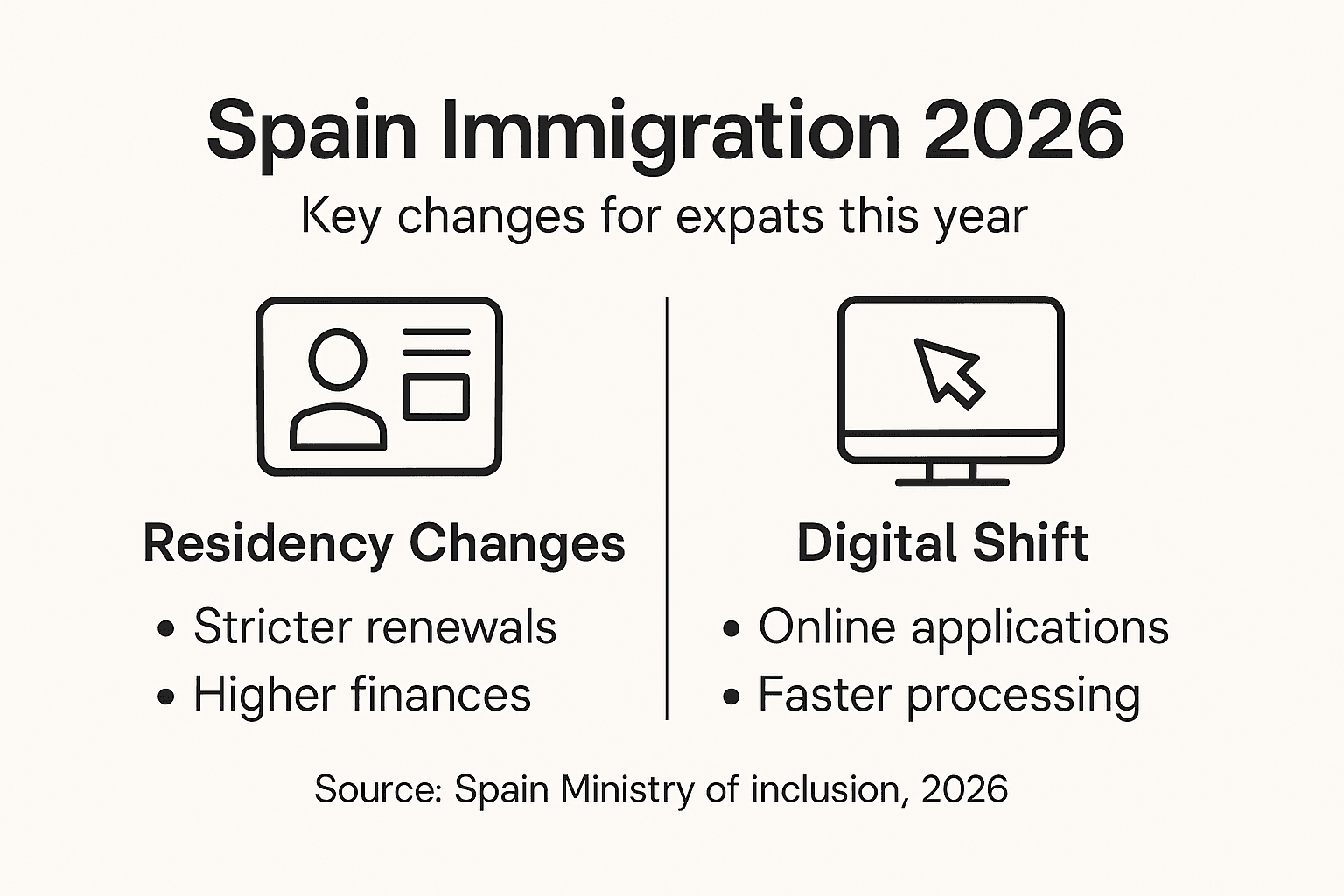
For applicants using Spain’s new digital immigration system, here is a summary of critical success factors:
| Digital System Feature | Benefit for Applicants | Common Mistake |
|---|---|---|
| Electronic Identification | Quick access to application portal | Delayed eID setup |
| Digital Document Uploads | Faster processing and fewer errors | Wrong file format |
| Real-Time Case Tracking | Transparency for application status | Ignoring notifications |
| Automated Notifications | Immediate updates for each stage | Missed email alerts |
Review these factors to avoid delays in Spain’s digitalized immigration process.
Pro tip: Test all your documents on the portal’s file converter before submitting your final application. Upload a single test document, verify it displays correctly, and download it to confirm quality; this prevents rejection surprises after you’ve submitted everything.
Financial Requirements and Common Pitfalls
Money matters in Spanish immigration. Your financial standing determines eligibility for most residency categories and heavily influences renewal decisions. Understanding the specific thresholds and documentation requirements separates approved applicants from rejected ones.
The Digital Nomad Visa sets the baseline for financial expectations. The income threshold for solo applicants is €2,849 monthly gross, adjusted annually to match Spain’s evolving minimum wage standards. This isn’t net income—it’s your gross earnings before taxes. The requirement ensures you can sustain yourself without draining Spanish social services.
Common financial pitfalls destroy otherwise strong applications:
- Inconsistent income documentation: Bank statements showing irregular deposits or gaps raise red flags about stability.
- Mixing business and personal finances: Freelancers and entrepreneurs must demonstrate clear accounting separating professional income from personal spending.
- Undisclosed tax obligations: Failing to declare Spanish taxes or multiple income sources creates legal exposure and application rejection.
- Inadequate proof of funds: One month of income isn’t proof—provide 3-6 months of consistent deposits demonstrating regular cash flow.
- Ignored social security registration: Even high earners who skip social security contributions face application delays or denials.
Spain’s authorities cross-reference your bank records with tax filings and social security contributions. Misalignment triggers investigations that derail your timeline. If your bank shows €4,000 monthly deposits but your tax return claims €1,500 income, officials will question the discrepancy.
Robust financial documentation is your insurance policy—it proves your legitimacy and protects against administrative disputes.
For Latin American remote workers, this creates specific challenges. Receiving USD payments into a Spanish account can complicate currency calculations and create confusion about net versus gross amounts. Document your exchange rates carefully and maintain clear records of conversions.
Family reunification and work visa categories add complexity. Sponsors must prove they can support dependents, which means higher overall income requirements. A single remote worker earning €2,900 qualifies. That same person supporting a spouse requires approximately €4,500 monthly.
Pro tip: Create a dedicated document tracking your monthly income for the past six months, including bank statements, tax records, and social security contributions; organize this chronologically with clear annotations explaining any irregular months, and submit it proactively rather than waiting for authorities to request clarification.
Simplify Your 2026 Immigration Process in Spain with Expert Legal Support
Navigating Spain’s evolving 2026 immigration framework can feel overwhelming. From meeting stringent financial thresholds to mastering digital application systems and preparing for the new regularization policies, every step demands accuracy and timely action. If you want to avoid common pitfalls like documentation errors or financial inconsistencies, professional guidance is essential. Spain’s focus on digital efficiency and strict residency requirements means there’s little room for delay or mistake.
Take control of your immigration journey today with Vive Legal. Our platform specializes in streamlining Spain’s complex residency procedures including visas, renewals, and regularization applications by combining smart automation with expert oversight. We help you prepare complete, precise applications and manage your case entirely online so you can meet the 2026 digital demands confidently. Don’t wait until deadlines tighten or digital systems slow processing. Visit Vive Legal now to gain peace of mind and improve your approval chances in this new immigration landscape.
Frequently Asked Questions
What are the major immigration changes in Spain for 2026?
Spain’s immigration framework is shifting to focus on regularizing undocumented migrants and restructuring residency categories. Key changes include the introduction of digital application systems, expanded residency options for remote workers, and streamlined family reunification processes.
How does the Digital Nomad Visa work in Spain for 2026?
The Digital Nomad Visa allows remote workers to live in Spain, requiring a gross monthly income of €2,849. Applicants must provide proof of employment and demonstrate financial self-sufficiency to qualify for this residency category.
What are the benefits of Spain’s new digital immigration system?
The digital immigration system streamlines application processes by allowing online submissions, electronic document uploads, and real-time case tracking. This modernization aims to reduce errors, speed up processing times, and improve the overall applicant experience.
What are the financial requirements for residency in Spain in 2026?
Financial requirements vary by residency category. For the Digital Nomad Visa, applicants must show a gross income of €2,849 monthly. Additionally, consistent income documentation and proof of social security registration are crucial for successful applications and renewals.
Recommended
Living legally in Spain shouldn't be difficult.
View services and pricesNot sure which procedure you need? Find out in 2 min
Questions? Message us on WhatsApp