
2026 Spanish Immigration Terms: 500K Benefit from NIE & TIE
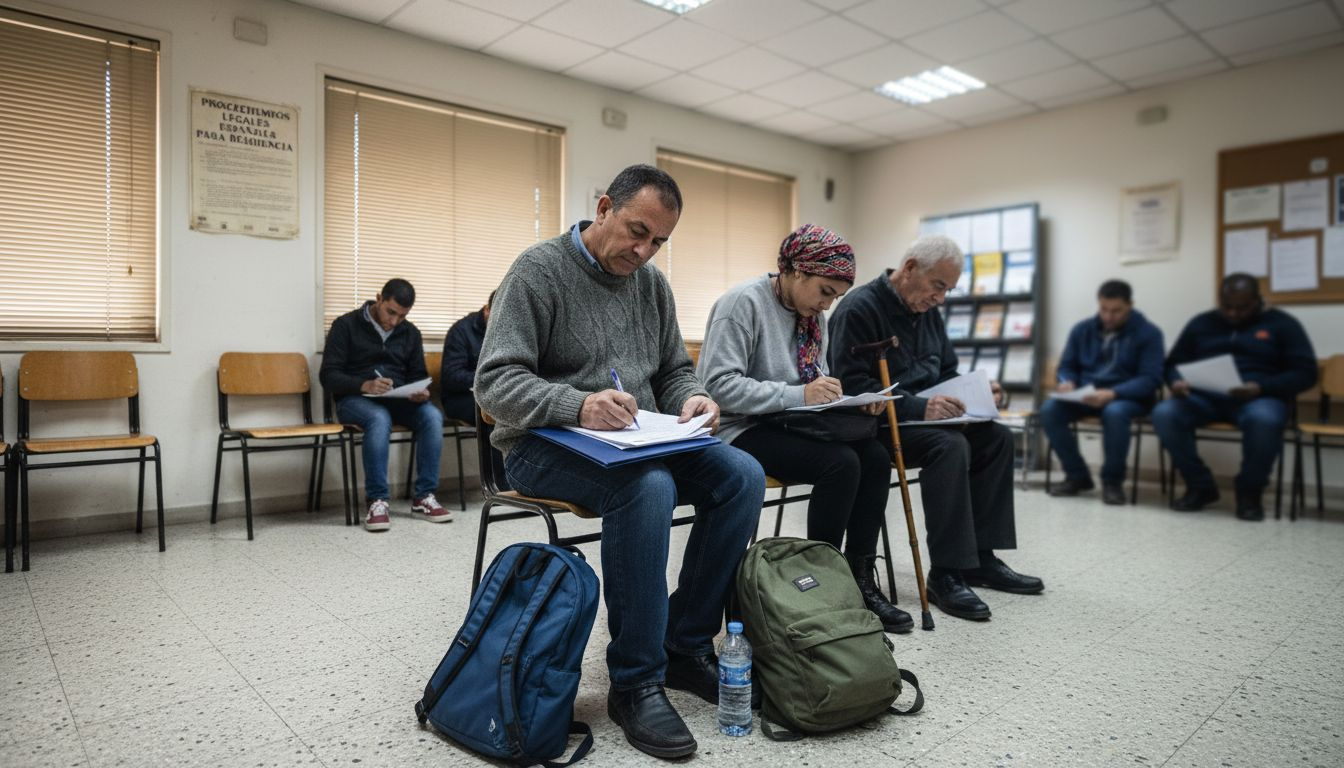
Many believe Spain’s 2026 extraordinary regularization is an automatic amnesty. It’s not. You must actively apply with proper documentation proving continuous residence. Understanding key immigration terms like NIE and TIE is essential for success. This guide clarifies these terms, explains the regularization process, and provides actionable steps to navigate Spain’s residency system confidently.
Table of Contents
- Introduction To Key Spanish Immigration Terms
- Understanding The 2026 Extraordinary Immigration Regularization
- Proof And Documentation Requirements For Regularizing Residency
- Common Misconceptions And Procedural Pitfalls In Spanish Immigration Terms
- Comparison Of Spanish Residency Permits And Their Application Processes
- Utilizing Digital Legal Platforms Like Vive Legal For Immigration Support
- Practical Steps To Prepare And Apply For Residency Regularization In Spain
- Get Expert Help With Your 2026 Residency Applications
- Frequently Asked Questions About Spanish Immigration Terms
Key Takeaways
| Point | Details |
|---|---|
| NIE vs TIE | NIE is your tax identification number; TIE is your physical residence card for stays over 6 months. |
| 2026 Regularization | Requires 5 months continuous residence before December 31, 2025, and application between April and June 2026. |
| Documentation | Proof of residence (padrón, utility bills), clean criminal record, and consistent official documents are mandatory. |
| Common Mistakes | Confusing NIE with TIE, assuming automatic approval, and missing application deadlines lead to rejection. |
| Digital Support | AI-powered platforms reduce application errors by 30-50% through expert review and automated checks. |
Introduction to Key Spanish Immigration Terms
Navigating Spanish immigration starts with understanding two fundamental documents: NIE and TIE. These terms often confuse newcomers, yet they’re essential for legal residence and daily life in Spain.
Living legally in Spain shouldn't be difficult.
View services and pricesNot sure which procedure you need? Find out in 2 min
Questions? Message us on WhatsApp
The NIE (Número de Identificación de Extranjero) is your tax identification number. You need it immediately upon arrival for opening bank accounts, signing rental contracts, or working legally. According to Vive Legal, NIE is essential for tax and legal identification upon arrival. Think of it as your Spanish social security number.
The TIE (Tarjeta de Identidad de Extranjero) is your physical residence card. You only need TIE if staying longer than six months. It proves legal residence and serves as your primary ID within Spain. TIE shows immigration authorities you have permission to live here long term.
Here’s the key distinction: NIE is just a number for transactions and taxes. TIE is proof you can legally reside. Everyone needs NIE, but only long-term residents need TIE.
Pro Tip: Apply for your NIE within your first week in Spain. Banks and landlords require it, and processing takes 2-4 weeks. Getting it early prevents delays in settling.
These documents form the foundation of your residency lifecycle. First comes NIE, then TIE if you’re staying permanently. Later, you’ll renew TIE or transition to permanent residence. Understanding this sequence helps you plan ahead and avoid legal complications.
The 2026 regularization process requires both documents. Without NIE, you can’t prove residence. Without understanding TIE requirements, you may miss renewal deadlines. Master these terms now to navigate immigration confidently.
Understanding the 2026 Extraordinary Immigration Regularization
Spain’s 2026 extraordinary regularization offers undocumented migrants a path to legal status. This isn’t amnesty. You must actively apply with strict proof requirements.
Eligibility centers on one requirement: continuous residence for five months before December 31, 2025. You must prove you lived in Spain without interruption during this period. Short trips abroad may disqualify you if they break continuity.
The application window runs from April through June 2026. Missing this three-month deadline means waiting years for another opportunity. According to official government sources, the 2026 regularization allows undocumented migrants with 5 months continuous residence to gain legal residency and work permits initially valid for one year.
Key requirements include:
- Proof of five months continuous residence before December 31, 2025
- Clean criminal record in Spain and home country
- Valid passport or national ID
- Registration on municipal padrón
- Proof of economic means or job offer
Approximately 500,000 undocumented migrants qualify for this extraordinary regularization opportunity. The temporary permit lasts one year initially. After that year, you can renew if you’ve maintained legal employment and residence requirements.
This regularization differs from ordinary permits in timing and requirements. Normal arraigo permits need two to three years of residence. The 2026 process requires only five months but has stricter documentation standards and tight application windows.
Don’t assume approval is automatic. Immigration authorities verify every document carefully. Inconsistencies or missing paperwork lead to rejection. Start gathering proof documents now, even if the deadline seems distant.
The benefit is substantial: legal work authorization, access to public healthcare, and a pathway to permanent residence. For half a million people, this represents life-changing opportunity to step out of legal limbo.
Proof and Documentation Requirements for Regularizing Residency
Documentation determines success or failure in Spain’s immigration process. Authorities require concrete, verifiable proof of continuous residence and legal compliance.

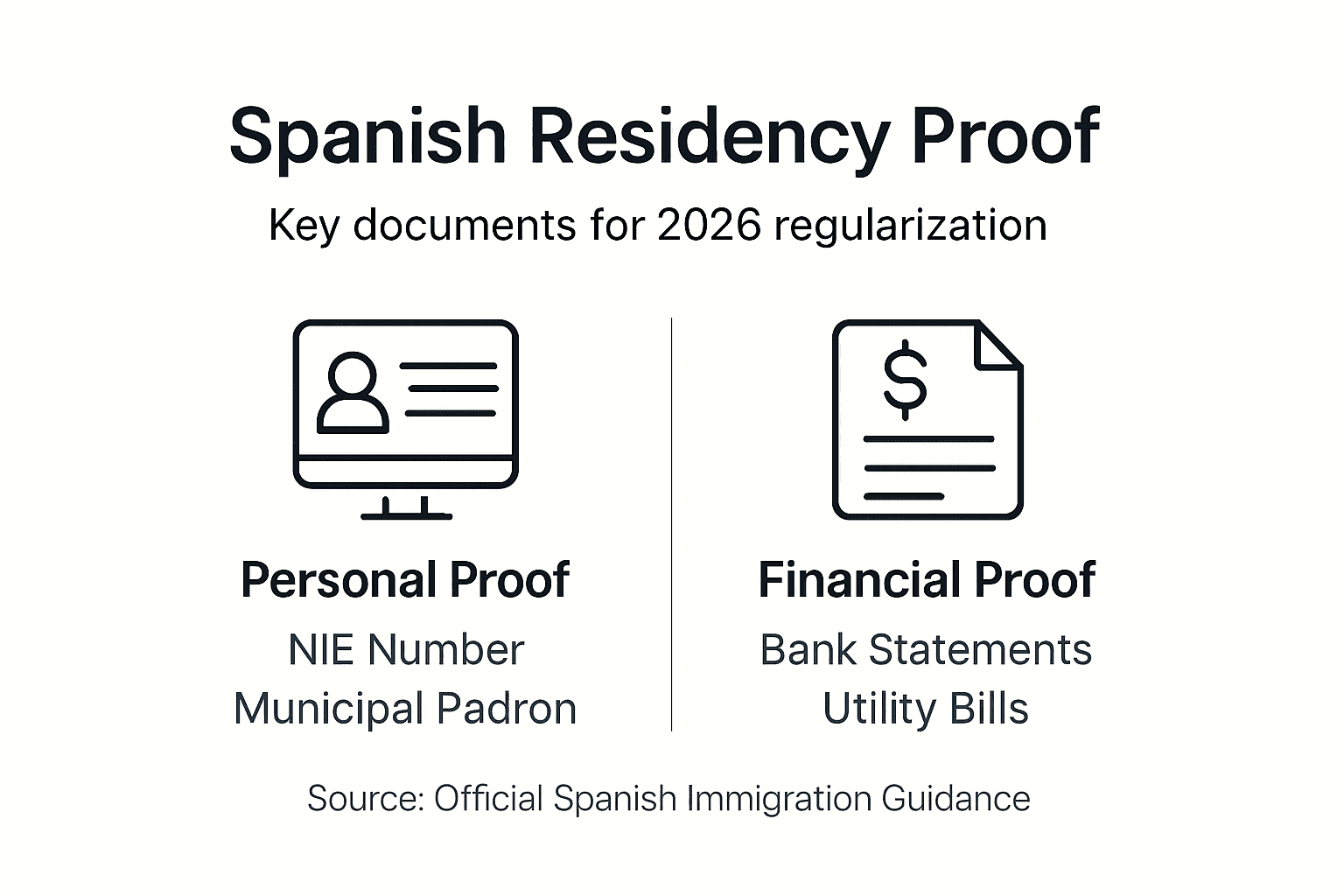
The padrón certificate (municipal registration) is your primary residence proof. It shows where you’ve lived and for how long. Update it immediately when moving to maintain continuous records. Many applications fail because applicants neglect padrón registration.
Acceptable proof documents include:
- Padrón certificates covering the full required period
- Utility bills (electricity, water, gas) in your name
- Rental contracts with landlord details
- Medical records from Spanish healthcare facilities
- Bank statements showing regular transactions
- Employment contracts or payslips if working
Proof of no criminal record is mandatory. You need certificates from Spain and every country where you’ve lived since age 18. These documents expire quickly, so time their acquisition carefully. Most are valid only three to six months.
Consistency matters enormously. If your padrón shows one address but utility bills show another, authorities question your credibility. All documents must tell the same residence story without contradictions.
Common mistakes include submitting expired documents, providing uncertified translations, or leaving gaps in residence proof. One missing month can invalidate your entire application. Review documentation requirements carefully before submitting.
For arraigo social applications specifically, you need additional proof of social integration. This includes reference letters from community members, enrollment in Spanish courses, or evidence of family ties. Check proof requirements for arraigo social for detailed lists.
Organize documents chronologically in a single folder. Create digital copies of everything. Label files clearly with dates and document types. This organization saves hours during application preparation and helps catch missing pieces early.
Start collecting documents immediately, not when deadlines approach. Some certificates take weeks to obtain. Building your documentation portfolio gradually reduces stress and improves accuracy.
Common Misconceptions and Procedural Pitfalls in Spanish Immigration Terms
Misunderstandings about Spanish immigration terms cause unnecessary application failures. Let’s clear up the most damaging misconceptions.
The biggest myth: regularization happens automatically. It doesn’t. You must submit a complete application during the specified window with all required documents. Authorities won’t chase you or remind you. Miss the deadline, and you wait years for another chance.
Frequent misunderstandings include:
- Believing NIE and TIE are interchangeable (they’re completely different documents)
- Thinking any five months of residence counts (only continuous residence qualifies)
- Assuming verbal promises from landlords or employers substitute for written proof
- Believing tourist visa time counts toward residence requirements (it usually doesn’t)
- Thinking family members automatically get included (each person needs separate applications)
NIE confusion is especially common. Having NIE doesn’t mean you have legal residence. You can obtain NIE as a tourist for property purchases or business dealings. NIE alone grants no residence rights. Only TIE proves legal residence status.
Another pitfall: underestimating documentation requirements. One utility bill isn’t enough. You need multiple documents from different sources covering every month of required residence. Gaps or inconsistencies trigger automatic rejection.
Deadlines are absolute. Immigration offices don’t accept late applications, even by a day. They don’t care about excuses. If documents aren’t ready, your application is incomplete. Incomplete applications get rejected without review.
Pro Tip: Create a checklist from official requirements and mark items as complete only after verifying document validity dates. Many applicants gather documents months early, then miss that certificates expired before submission.
Residence continuity means physical presence in Spain. Extended trips abroad break continuity. Even legitimate travel for work or family emergencies can disqualify you if poorly documented. Keep boarding passes, hotel receipts, or proof that trips were brief and necessary.
Don’t rely on informal advice from friends who “went through the process.” Immigration rules change frequently. What worked two years ago may not apply now. Always verify information against current official sources or consult qualified legal professionals.
The cost of mistakes is high. Rejection means restarting the entire process, often waiting additional years to meet eligibility requirements again. Prevention through careful attention to terms and requirements is infinitely easier than correction after rejection.
Comparison of Spanish Residency Permits and Their Application Processes
Spain offers multiple residency pathways, each with distinct requirements. Understanding differences helps you choose the right option for your situation.
The 2026 extraordinary regularization stands apart with its short five-month residency requirement. Traditional pathways demand much longer presence in Spain before you can apply.
| Permit Type | Residency Required | Work Authorization | Family Inclusion | Initial Duration | Key Requirement |
|---|---|---|---|---|---|
| 2026 Regularization | 5 months continuous | Immediate | Separate applications | 1 year | Proof of residence before Dec 31, 2025 |
| Arraigo Social | 3 years continuous | After approval | Possible | 1 year, renewable | Employment contract or economic means |
| Arraigo Laboral | 2 years continuous | Immediate (for specific employer) | Possible | 1 year, renewable | Proven work relationship |
| Arraigo Familiar | Varies | Depends on family tie | Automatic for dependents | 5 years | Spanish family member |
According to immigration experts, arraigo social, laboral, and familiar permits require 2-3 years residency and proofs of social or economic ties; extraordinary regularization requires 5 months continuous residence.
Key distinctions affecting your choice:
- Residency length: Extraordinary regularization’s five months beats all alternatives
- Application timing: Only regularization has a strict three-month window in 2026
- Work rights: Arraigo laboral and 2026 regularization grant immediate work authorization
- Renewal pathways: All permits can eventually lead to permanent residence after five years
- Social integration proof: Arraigo social needs community letters and Spanish course completion
Arraigo social fits people who’ve lived in Spain three years but worked informally. You need an employment contract or proof you can support yourself financially. Community integration evidence strengthens applications. Review arraigo social permit details for complete requirements.
Arraigo laboral targets workers who can prove employment relationships despite lacking formal contracts. This permit is harder to obtain because you must demonstrate an employer illegally hired you, then convince that same employer to formalize the relationship.
Arraigo familiar applies if you have Spanish family members (spouse, children, parents). Requirements vary based on relationship type. Spouses of Spanish citizens have the easiest path, often qualifying for permanent residence immediately.
After initial permit approval, all pathways follow similar renewal cycles. You must maintain legal residence, avoid criminal activity, and prove continued ties to Spain. After five years of legal residence under any permit, you can apply for permanent residence status.
The 2026 regularization’s shortened requirements make it attractive, but don’t ignore alternatives. If you’ve lived in Spain three years already, arraigo social might offer more stability with its five-year initial duration option for some circumstances. Compare all available permits against your specific situation.
Choosing wrong costs time and money. Each application requires fees, document translation, and legal review. Assess your eligibility carefully before committing to one pathway.
Utilizing Digital Legal Platforms like Vive Legal for Immigration Support
Modern technology transforms immigration applications from confusing paperwork into manageable digital processes. Platforms combining artificial intelligence with legal expertise dramatically improve success rates.
Digital platforms like Vive Legal automate document verification, catching errors before submission. AI scans applications for common mistakes: missing signatures, expired certificates, inconsistent dates, or incorrect form fields. According to legal technology research, digital platforms reduce typical errors by 30-50% through AI and legal expert collaboration.
Key advantages of digital immigration support:
- Automated deadline tracking prevents missed application windows
- AI document verification catches errors humans overlook
- Expert legal review ensures compliance with current regulations
- Digital case management provides real-time status updates
- Secure portals protect sensitive personal information
Human expertise remains essential. AI identifies potential issues, but immigration lawyers interpret complex situations and recommend solutions. This combination catches both technical errors and strategic problems that could derail applications.
Convenience matters when juggling work, family, and immigration processes. Digital platforms let you upload documents from anywhere, check progress on your phone, and receive notifications at each stage. No need for multiple office visits or phone tag with legal staff.
Error reduction directly impacts approval rates. Immigration authorities reject applications for minor mistakes like incorrect box checks or missing secondary documents. Automated verification prevents these preventable failures, increasing your chances of first-time approval.
The 2026 regularization’s tight three-month window makes timing critical. Digital platforms track your specific deadline, send reminders as it approaches, and flag if any documents will expire before submission. This proactive management prevents last-minute scrambling.
Cost efficiency is another benefit. Traditional legal services charge hourly rates that add up quickly. Digital platforms offer transparent flat fees covering complete application preparation. You know total costs upfront without surprise bills.
For complex cases involving multiple family members or unusual circumstances, digital platforms connect you quickly with specialized immigration lawyers. The immigration guidance resources provide immediate answers to common questions, saving consultation time for truly complex issues.
Data security is paramount when sharing passport copies, financial records, and personal history. Reputable platforms use bank-level encryption and comply with European privacy regulations. Your sensitive information remains protected throughout the process.
Thousands of successful applications demonstrate these platforms work. They’re particularly valuable for English-speaking expatriates navigating Spanish legal systems. Translation features and multilingual support remove language barriers that traditionally complicated immigration processes.
Practical Steps to Prepare and Apply for Residency Regularization in Spain
Success in Spain’s immigration system requires methodical preparation. Follow these steps to maximize approval chances for the 2026 extraordinary regularization.
Step 1: Obtain your NIE immediately Apply for NIE within your first week in Spain. This number is required for every subsequent step. Processing takes two to four weeks, so early application prevents delays. Visit your local police station’s immigration office or use digital services to expedite the process.
Step 2: Register on the municipal padrón Go to your local town hall (ayuntamiento) with your rental contract and passport. Padrón registration creates the official record of your residence. Update it every time you move. This document becomes your primary proof of continuous residence.
Step 3: Gather continuous residence proof covering five months Collect utility bills, bank statements, medical records, and rental receipts from your arrival date. Ensure documents cover every month without gaps. Organize chronologically and create digital backups. Missing even one month can invalidate your application.
Step 4: Obtain criminal record certificates Request certificates from Spain and every country where you’ve lived since age 18. Start this process early as international requests take weeks. Certificates typically expire in three to six months, so time acquisition to remain valid through application submission.
Step 5: Secure employment proof or economic means documentation Obtain a job offer letter, employment contract, or proof of sufficient savings to support yourself. Immigration authorities need assurance you won’t become a public burden. Bank statements showing consistent deposits strengthen your case.
Step 6: Complete application forms accurately Download official forms from immigration websites. Fill every field completely. Double-check passport numbers, dates, and addresses. One incorrect digit can trigger rejection. Use digital tools that auto-verify form accuracy.
Step 7: Submit during the April-June 2026 window Mark your calendar for the April 1 opening date. Don’t wait until June. Early submission allows time for corrections if authorities request additional documentation. Late submissions risk missing the deadline if unexpected issues arise.
Step 8: Track application status actively Use digital platforms or check immigration office systems regularly. Respond immediately to any requests for additional information. Delays in responding can result in automatic rejection.
Pro Tip: Photograph every document before submitting. Immigration offices occasionally lose paperwork. Having photo evidence lets you quickly provide copies if requested, preventing delays.
Common pitfalls to avoid include submitting photocopies when originals are required, forgetting to translate non-Spanish documents, and assuming email confirmations prove application completion. Always obtain official receipt confirmation showing your application was accepted.
For complex situations involving criminal history, prior visa violations, or unusual residence patterns, consult qualified immigration lawyers. These cases need professional evaluation to identify potential problems and develop mitigation strategies.
Preparation takes time. Starting six months before the application window gives you adequate cushion for unexpected delays in obtaining documents. Rushing leads to mistakes that cost years in waiting for another opportunity.
Get Expert Help with Your 2026 Residency Applications
Navigating Spain’s immigration system doesn’t have to be overwhelming. Professional legal support simplifies every step, from initial NIE applications to complex regularization cases.
Vive Legal specializes in Spanish immigration procedures, offering complete digital services for expatriates and foreign workers. Our platform combines AI-powered document verification with expert legal review to maximize your approval chances. We handle everything: form preparation, document gathering, appointment scheduling, and application submission.
The 2026 extraordinary regularization requires precise documentation and perfect timing. Our team tracks deadlines, verifies residence proof, and ensures every requirement is met before submission. Thousands of successful cases demonstrate our effectiveness in securing approvals.
Whether you need TIE application assistance, arraigo permit support, or guidance through the regularization process, professional help increases your success rate while reducing stress. Our secure portal lets you track progress in real-time, and our transparent pricing means no surprise fees.
Don’t risk rejection due to preventable errors. Expert support costs less than reapplying after failure and saves months of uncertainty. Start your application with confidence today.
Frequently Asked Questions About Spanish Immigration Terms
What is the difference between NIE and TIE?
NIE is your tax identification number required for all legal and financial transactions in Spain. TIE is your physical residence card proving you have legal permission to live in Spain long-term. Everyone needs NIE, but only residents staying over six months need TIE.
Who qualifies for the 2026 extraordinary regularization?
You qualify if you lived continuously in Spain for five months before December 31, 2025, have a clean criminal record, and can prove residence with official documents like padrón certificates and utility bills. The process requires active application between April and June 2026, not automatic approval.
What documents prove continuous residence in Spain?
Acceptable proof includes municipal padrón registration, utility bills in your name, rental contracts, bank statements, medical records from Spanish facilities, and employment documents. You need multiple documents from different sources covering every month without gaps to demonstrate uninterrupted presence.
Can I apply after June 2026 for the regularization?
No. The application window closes at the end of June 2026, and late applications will not be accepted. Missing this three-month deadline means waiting potentially years for another extraordinary regularization opportunity. Start preparing documents now to avoid missing this limited window.
How does digital legal support improve application success?
Digital platforms use AI to verify documents automatically, catching common errors like expired certificates or incorrect form fields before submission. Combined with expert legal review, this reduces typical application errors by 30-50%, significantly increasing approval chances while providing convenient online case management.
Do tourist visa periods count toward the five-month residency requirement?
Generally no. Tourist visa time typically doesn’t count toward residence requirements for regularization. The five months must represent continuous physical presence with intention to reside permanently, evidenced by padrón registration, utility contracts, and other proof of establishing life in Spain rather than temporary tourism.
Recommended
Living legally in Spain shouldn't be difficult.
View services and pricesNot sure which procedure you need? Find out in 2 min
Questions? Message us on WhatsApp