
Complete guide to renewing your TIE card in Spain 2026

Your TIE card expiration date is approaching, and you’re unsure where to start with the renewal process. Missing this deadline could jeopardize your legal residency status in Spain, triggering penalties or complications. This comprehensive guide walks you through every step of renewing your TIE card in 2026, from gathering essential documents to attending your biometric appointment. Whether you’re an expatriate, international student, or long-term resident, you’ll discover practical strategies to navigate the renewal process smoothly and maintain your legal status without stress.
Table of Contents
- Understanding The TIE Card And Renewal Requirements
- How To Prepare For Your TIE Card Renewal Appointment
- Step-By-Step Guide: Renewing Your TIE Card In Spain
- Common Issues And How To Avoid Delays In Your TIE Renewal
- How Vive Legal Can Simplify Your TIE Card Renewal
- FAQ
Key takeaways
| Point | Details |
|---|---|
| Renew before expiry | Starting renewal 60 days before expiration prevents legal complications and maintains continuous residency status. |
| Document preparation | Valid passport, NIE certificate, proof of residence, completed EX-17 form, and payment receipt are mandatory for all applicants. |
| Biometric appointment | In-person visit to authorized police station or immigration office is required for fingerprints and photograph submission. |
| Processing timelines | Typical renewal takes 1 to 3 months depending on region and residency type, with tracking available online. |
| Professional assistance | Legal experts reduce errors and rejection rates by ensuring complete, accurate documentation and proper submission procedures. |
Understanding the TIE card and renewal requirements
The TIE is the mandatory identity card for non-EU residents legally living in Spain, serving as proof of your authorized stay beyond 90 days. This physical card contains your biometric data, photograph, and residency permit details. Renewing your TIE before it expires is not optional but a legal obligation that protects your right to live, work, or study in Spain.
Living legally in Spain shouldn't be difficult.
View services and pricesNot sure which procedure you need? Find out in 2 min
Questions? Message us on WhatsApp
Failure to renew on time creates serious consequences. You risk losing your legal residency status, facing administrative fines, or encountering difficulties when traveling, opening bank accounts, or accessing healthcare services. Spanish immigration authorities require continuous valid documentation, and gaps in your legal status can complicate future applications or renewals.
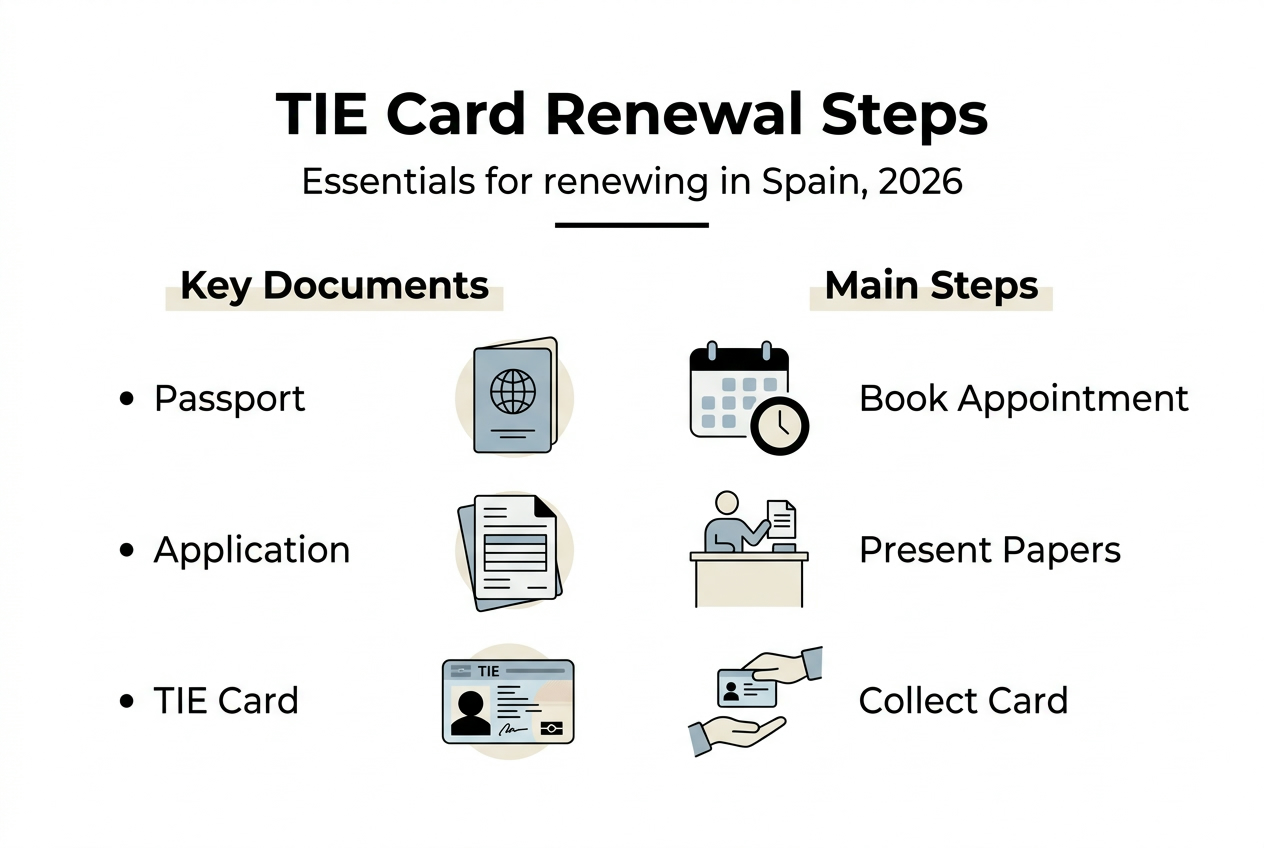
Documentation requirements for 2026 renewals include several essential items. You must present a valid passport with at least six months remaining before expiration. Your current NIE certificate proves your foreigner identification number. Recent passport-sized photographs meeting official specifications are mandatory. You’ll need proof of residence in Spain, such as a rental contract or utility bill in your name. The completed EX-17 application form specifically designed for TIE renewals must be filled accurately.
Renewal requirements vary slightly based on your residency category. Student visa holders need enrollment certificates from recognized educational institutions. Work permit holders must provide employment contracts or proof of self-employment registration. Long-term residents may need additional documentation proving continuous legal residence for the required period. Pro Tip: Always verify the most current 2026 fee schedule and form versions on official government websites, as requirements update periodically throughout the year.
For comprehensive support with TIE card details and renewal requirements, understanding these fundamentals positions you for successful renewal. Each document serves a specific verification purpose, and missing even one item can delay your application by weeks or months.
How to prepare for your TIE card renewal appointment
Proper preparation of documents reduces chances of rejection and delays, making systematic organization your best strategy. Follow this structured approach to ensure nothing gets overlooked before your appointment date arrives.
-
Verify your current TIE card expiration date and note any special conditions listed on the card. Check whether your residency type requires additional documentation beyond standard requirements. Review your card carefully for accuracy in personal details that will transfer to your renewed card.
-
Download the current 2026 version of the EX-17 application form from official Spanish immigration resources. Complete every field legibly using black ink if submitting paper forms, or type information if digital submission is accepted in your region. Double-check spelling of names, dates, and identification numbers against your passport and NIE certificate.
-
Collect all necessary supporting documents in both original and photocopy formats. Gather your valid passport and make clear copies of the photo page and any Spanish visa stamps. Obtain recent proof of address dated within the last three months. Prepare passport photographs that meet biometric standards with white background and neutral expression.
-
Pay the applicable renewal fee using Modelo 790, code 012, at authorized banks or online payment platforms. The 2026 fee varies by residency type but typically ranges from €15 to €20 for standard renewals. Keep your payment receipt as proof, since appointments cannot proceed without this documentation.
-
Book your biometric appointment through the official online system or by visiting your local immigration office in person. Appointment availability varies significantly by region, with major cities like Madrid and Barcelona often requiring several weeks’ advance booking. Select a date that allows comfortable time before your current TIE expires.
Pro Tip: Create a dedicated folder with labeled dividers for each document category, including backup copies stored digitally. This organization prevents last-minute scrambling and demonstrates professionalism during your appointment. For additional guidance on related processes, explore the NIE renewal process in Spain 2026 and check detailed immigration tips and updates regularly.
Preparation separates smooth renewals from stressful experiences. Investing time upfront to organize documentation perfectly pays dividends when you arrive at your appointment confident and ready.
Step-by-step guide: renewing your TIE card in Spain
Appointments are mandatory and biometric data collection is part of the renewal process, requiring your physical presence at designated government offices. Here’s exactly what happens during your renewal appointment and the weeks following submission.
-
Arrive at your assigned police station or immigration office at least 15 minutes before your scheduled time. Bring all original documents plus photocopies in your organized folder. Security screening at entrances may require a few minutes, so early arrival prevents rushing.
-
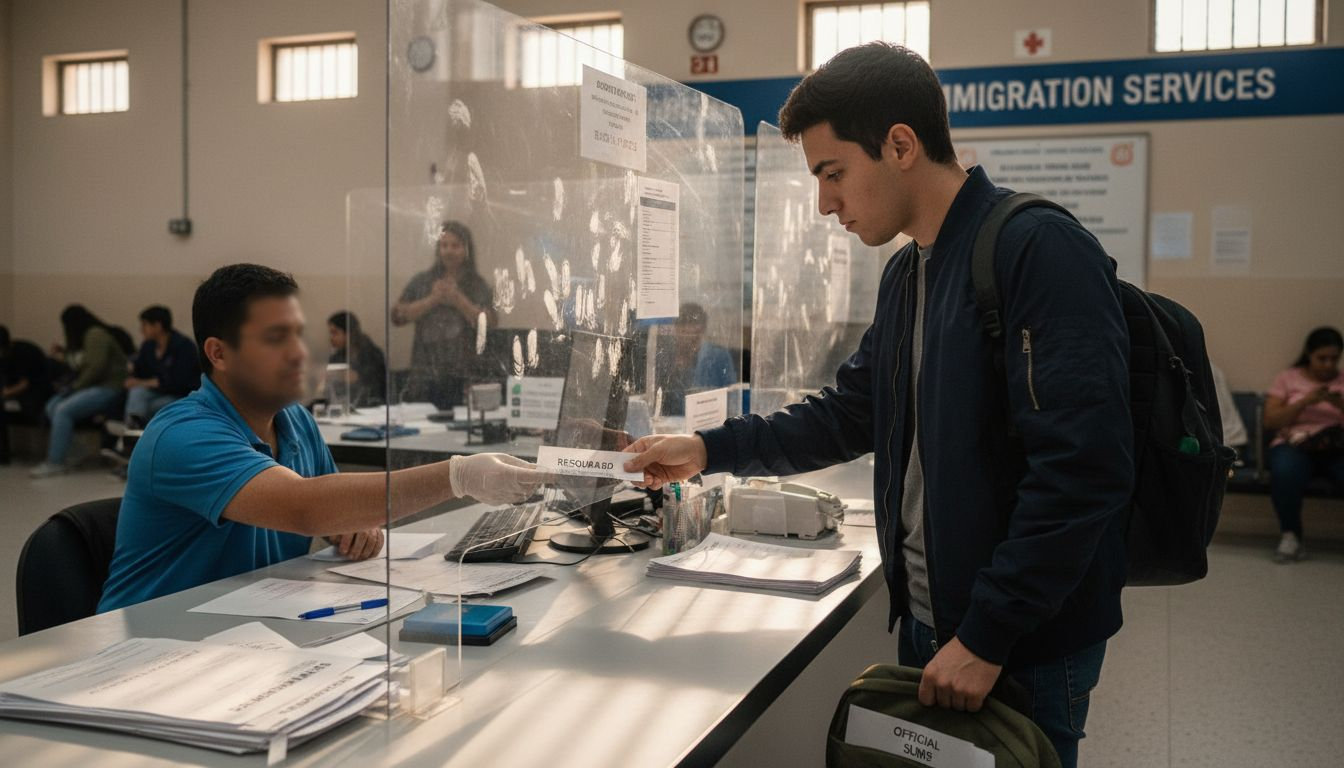
Present your appointment confirmation, collected documents, and payment receipt to the receiving officer. Staff will verify each item against their checklist, examining passport validity, photograph compliance, and form completion. Answer any questions about your residency status or documentation clearly and honestly.
-
Submit biometric data through digital fingerprint scanning of all ten fingers and a new photograph taken at the office. This updated biometric information enhances security and replaces data from your original TIE application. The process takes approximately 5 to 10 minutes and requires no special preparation.
-
Receive an official receipt called a resguardo that certifies your renewal application submission. This temporary document serves as proof of legal status while your new TIE card is being processed. Keep this receipt with you always, as it functions similarly to your expired TIE during the waiting period.
-
Track your application status through online portals if available in your region, or contact the immigration office directly for updates. Processing times vary, but you can expect to receive notification when your new card is ready for collection.
| Residency Type | Average Processing Time | Regional Variation | | — | — | | | Student Visa | 4 to 8 weeks | Madrid and Barcelona may extend to 10 weeks during peak enrollment periods | | Work Permit | 6 to 10 weeks | Smaller cities often process faster, within 4 to 6 weeks | | Long-Term Residence | 8 to 12 weeks | Complex cases requiring additional verification may take up to 16 weeks |
Pro Tip: Photograph every document you submit and save digital copies to cloud storage immediately after your appointment. If any questions arise during processing, you’ll have instant access to exactly what you provided. Understanding the broader context of residency procedures, including the EU residence registration process, helps you navigate Spain’s immigration system more effectively.
Once you receive collection notification, return to the same office with your resguardo and identification to pick up your renewed TIE card. Verify all printed information for accuracy before leaving the office, as corrections after collection require additional procedures.
Common issues and how to avoid delays in your TIE renewal
Incomplete documentation and missed deadlines cause most renewal rejections and delays, but awareness of frequent mistakes helps you sidestep these problems entirely. Understanding what goes wrong in typical applications empowers you to get it right the first time.
Common issues that derail renewals include expired passports discovered only at appointment time. Your passport must remain valid for at least six months beyond your TIE expiration date. Incorrect form versions create automatic rejections, since outdated EX-17 forms from previous years lack required fields for 2026 processing. Missing payment receipts prevent application acceptance regardless of how perfect your other documentation appears. Late appointment booking in high-demand areas means your current TIE expires before you can even submit renewal paperwork.
COVID-19 procedural changes and ongoing system updates continue affecting processing times in 2026. Some regions implemented extended timelines for background checks or increased scrutiny of certain residency categories. Staff shortages at immigration offices in tourist-heavy areas can slow processing during summer months when seasonal population increases strain resources.
Rescheduling appointments requires immediate action through the same booking system you used originally. Most offices allow one free reschedule, but repeated changes may push your new appointment weeks or months later. If emergency circumstances prevent attendance, contact the office directly by phone to explain your situation and request accommodation.
Legal consequences of failing to renew on time extend beyond simple inconvenience. You may face fines ranging from €500 to €10,000 depending on how long you remain in Spain with expired documentation. Serious cases can result in deportation orders or bans on future residency applications. Employment becomes illegal without valid residency status, putting your job and your employer at risk.
Timely submission and meticulous document accuracy are non-negotiable elements of successful TIE renewal. Every day of delay increases risk, and every missing document guarantees rejection. Treat your renewal with the seriousness it deserves, starting preparation at least 90 days before expiration.
Practical tips to bulletproof your application include creating a final checklist the night before your appointment. Verify passport expiration dates, confirm you have original documents plus copies, and ensure photographs meet current biometric standards. Review your completed EX-17 form one last time for any blank fields or errors. Place your payment receipt in an easily accessible pocket rather than buried in your folder.
For specialized guidance on complex situations, explore long-term residence renewal tips that address unique challenges faced by permanent residency applicants. Prevention beats correction every time, making thorough preparation your most valuable investment.
How Vive Legal can simplify your TIE card renewal
Navigating Spain’s immigration bureaucracy alone feels overwhelming when your legal status hangs in the balance. Vive Legal transforms this stressful process into a managed, predictable experience through expert support at every stage.
Our platform provides end-to-end assistance for TIE card renewals, handling everything from initial document review to final card collection. Immigration specialists verify your paperwork meets current 2026 requirements before submission, eliminating the guesswork that leads to rejections. We manage appointment scheduling in your preferred location, securing dates that align with your timeline and availability. Real-time tracking through our secure client portal keeps you informed as your application progresses through each processing stage.
Specialized support for students, expatriates, and complex cases addresses unique challenges different residency categories face. Student visa renewals require coordination with educational institutions for enrollment verification. Work permit renewals involve employer documentation and contract reviews. Our team handles these nuances professionally, reducing errors that cause delays.
Explore our professional TIE card renewal services for detailed information about how we streamline your renewal. If you’re considering broader immigration options, our extraordinary regularization services 2026 help qualify individuals for legal status pathways. Educational institutions can discover our immigration management for study centers designed to support international student populations efficiently.
FAQ
What happens if I miss my TIE card renewal deadline?
Missing your renewal deadline jeopardizes your legal residency status and can trigger administrative fines between €500 and €10,000. You lose authorization to work, study, or access certain public services until you regularize your situation. Contact immigration authorities or legal professionals immediately to explore options for restoring your legal status, which may include penalty payments or starting new residency applications from scratch.
Can I renew my TIE card online or do I must visit in person?
Biometric data collection requires an in-person visit to authorized police stations or immigration offices without exception. You must physically attend your scheduled appointment for fingerprint scanning and photograph submission. Some preliminary steps like form downloads or payment processing can occur online, but the core renewal procedure mandates your physical presence for identity verification and data capture.
For current procedures, review TIE card renewal procedures that outline both online and in-person requirements.
What documents are essential for renewing my TIE card in 2026?
A valid passport with six months remaining validity, your current TIE card, completed EX-17 application form, proof of payment via Modelo 790 code 012, and recent proof of residence are universally required. Additional documents vary by residency category, with students needing enrollment certificates and workers requiring employment contracts or self-employment registration. Always verify your specific category requirements against official 2026 guidelines to ensure complete documentation.
Access our TIE renewal documentation checklist for category-specific requirements.
How long does the TIE renewal process usually take?
Typical processing ranges from four weeks to three months depending on your location and residency type. Student visas in smaller cities may process within four to six weeks, while long-term residence renewals in Madrid or Barcelona can extend to 12 weeks or more. Complex cases requiring additional verification occasionally take up to 16 weeks. Track your application status through online portals or contact your local immigration office directly for updates specific to your submission.
Monitor timelines and updates at TIE renewal processing times for region-specific information.
Recommended
Living legally in Spain shouldn't be difficult.
View services and pricesNot sure which procedure you need? Find out in 2 min
Questions? Message us on WhatsApp