
Data security in immigration: Protect your residency info

If you’re navigating immigration processes in Spain, you’ve likely wondered how safely your personal information is handled. Many assume that government systems and legal services automatically protect data, but this misconception leaves individuals vulnerable to identity theft, phishing scams, and data breaches. Understanding how your immigration data is secured, recognizing common risks, and taking proactive steps can make the difference between a smooth residency process and a compromised one. This article explains the legal protections in place, identifies vulnerabilities you should watch for, and provides practical strategies to safeguard your personal information throughout your immigration journey in Spain.
Table of Contents
- Key takeaways
- Understanding data security in Spanish immigration processes
- Common data security risks in immigration cases and how to avoid them
- Best practices for securing your immigration data in Spain
- How immigration legal services in Spain protect your data and what to look for
- Protect your immigration journey with Vive Legal
- Frequently asked questions
Key Takeaways
| Point | Details |
|---|---|
| GDPR protections | Spain’s immigration data is protected under GDPR and national laws that govern how authorities and legal services handle your information. |
| Data controllers and processors | Data controllers decide why and how your data is processed, while processors handle data on their behalf under GDPR. |
| Mandatory security measures | Organizations must implement encryption, regular security audits, strict access controls, and breach notification to safeguard your immigration data. |
| Your data rights | You have the right to access, correct, and in some cases delete your immigration data, and you should know who processes it. |
Understanding data security in Spanish immigration processes
Spain’s immigration system operates under strict data protection regulations designed to safeguard your personal information at every stage. The General Data Protection Regulation (GDPR) is the primary legal framework governing how immigration authorities, legal advisors, and third-party processors handle your data. This regulation applies across the European Union and sets rigorous standards for data collection, storage, access, and deletion.
Living legally in Spain shouldn't be difficult.
View services and pricesNot sure which procedure you need? Find out in 2 min
Questions? Message us on WhatsApp
Immigration authorities in Spain must comply with both GDPR and national data protection laws, which means they are legally required to implement technical and organizational measures to prevent unauthorized access, data breaches, and misuse. Your personal data in this context includes everything from passport copies and visa applications to biometric scans, employment contracts, and proof of address. Each piece of information is classified as sensitive and subject to specific handling protocols.
Data controllers, typically immigration offices or legal service providers, are responsible for determining how and why your data is processed. Data processors, such as IT service providers or document management platforms, handle the data on behalf of controllers. Both parties must adhere to GDPR principles, including transparency, data minimization, and purpose limitation. This means your information should only be collected for legitimate immigration purposes and retained only as long as necessary.
You have legal rights regarding your immigration data. These include the right to access your information, request corrections if inaccuracies exist, and in certain cases, request deletion once your residency process is complete. You also have the right to know who is processing your data and for what purpose. Immigration authorities and legal services are required to provide clear privacy policy overviews that explain these practices in plain language.
Key protections under GDPR for immigration data include:
- Mandatory encryption for data storage and transmission
- Regular security audits and vulnerability assessments
- Strict access controls limiting who can view your information
- Breach notification requirements within 72 hours if data is compromised
- Accountability measures ensuring organizations can demonstrate compliance
Understanding this regulatory framework helps you recognize when a legal service or immigration process is following proper protocols. If a provider cannot clearly explain how they protect your data or lacks a transparent privacy policy, consider it a red flag.
Common data security risks in immigration cases and how to avoid them
Despite strong legal protections, real-world vulnerabilities exist that can compromise your immigration data. Many data breaches in immigration come from improper handling of paper documents or insecure digital storage by applicants themselves. Recognizing these risks allows you to take preventive action and avoid costly mistakes that could delay your residency process or lead to identity theft.
Phishing scams targeting immigration applicants have become increasingly sophisticated. Fraudsters often pose as immigration officials or legal advisors, sending emails or text messages requesting sensitive documents or payment information. These messages may appear legitimate, using official logos and language, but they direct you to fake websites designed to steal your data. Always verify the sender’s identity through official channels before responding to any request for personal information.
Unsecured document submission methods present another significant vulnerability. Sending passport scans, bank statements, or employment contracts through standard email or messaging apps exposes your data to interception. These platforms typically lack end-to-end encryption, meaning your information travels across servers where it could be accessed by unauthorized parties. Public Wi-Fi networks compound this risk, as hackers can easily intercept data transmitted over unsecured connections.

Physical document security is often overlooked but equally important. Lost or stolen passports, residence permits, or application forms can be used for identity fraud. Carrying unnecessary immigration documents in your wallet or leaving copies in shared spaces increases the likelihood of theft. Similarly, disposing of documents without proper shredding can give criminals access to your personal details.
Not verifying the legitimacy of legal services poses a serious risk. Some unscrupulous operators collect client data without proper security measures, sell information to third parties, or fail to comply with GDPR requirements. Before engaging any immigration advisor, confirm their credentials, read reviews, and ensure they provide a clear privacy policy outlining how your data will be protected.
Technical errors at data handling centers, though less common, can still occur. System glitches, inadequate staff training, or outdated software may result in accidental data exposure. While you cannot control these institutional failures, choosing comprehensive immigration management services with proven security track records minimizes this risk.
Common vulnerabilities to watch for:
- Email requests for sensitive documents from unverified sources
- Websites lacking HTTPS encryption (look for the padlock icon in your browser)
- Legal services without clear data protection certifications or policies
- Requests to submit documents through unsecured file-sharing platforms
- Pressure tactics urging immediate action without proper verification
Pro Tip: Before submitting any immigration document online, verify the website’s security certificate by clicking the padlock icon in your browser’s address bar. Legitimate government and legal service sites will display valid SSL certificates and clear organization information.
Best practices for securing your immigration data in Spain
Taking proactive steps to protect your immigration data significantly reduces your risk of breaches and identity theft. These practical measures put you in control of your information security throughout the residency application process.
Always use official or verified digital submission portals for your documents. Government immigration offices and reputable legal services provide secure client portals with encryption and access controls. Using verified digital platforms and encrypted document transfers significantly improves data security in immigration procedures. These portals typically require multi-factor authentication and maintain audit trails of who accessed your information and when.
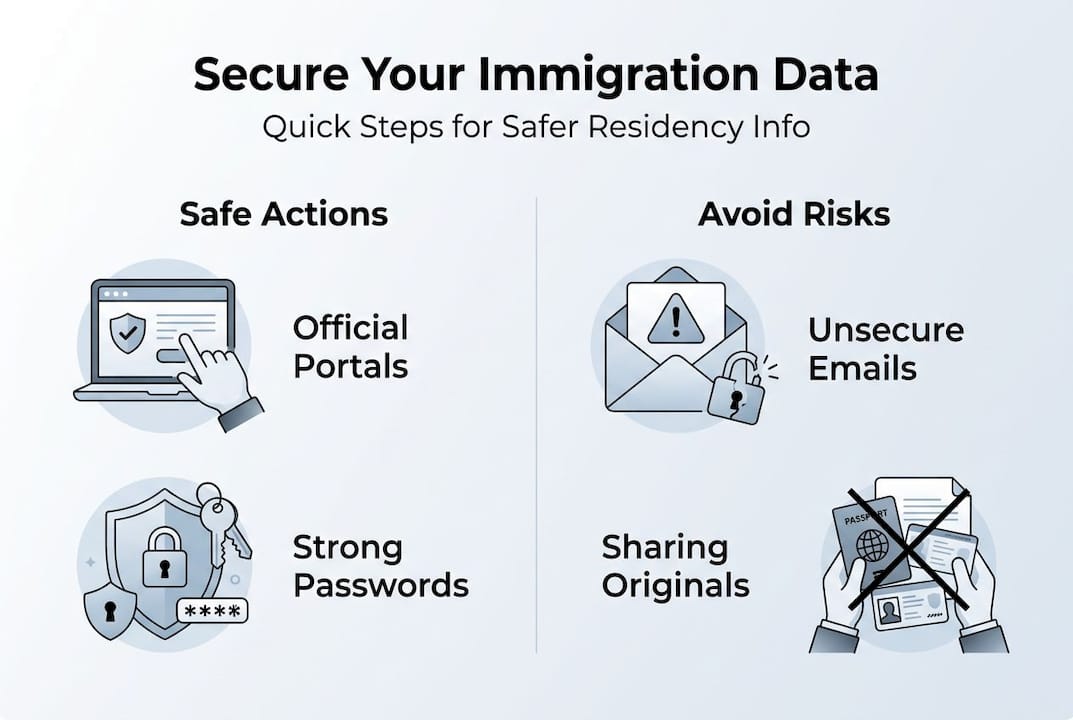
Avoid sharing sensitive immigration documents through unsecured channels. Standard email, WhatsApp, or text messages should never be used to transmit passport scans, bank statements, or other personal data. If you must send documents electronically, use password-protected encrypted files and share the password through a separate secure channel. Better yet, upload documents directly to a secure portal provided by your legal advisor or immigration office.
Secure your physical immigration documents with the same care you would cash or jewelry. Store originals in a locked safe or secure location at home. When you need to carry documents for appointments, take only what is necessary and keep them in a secure bag or inside pocket. Create digital backups of all important documents and store them in encrypted cloud storage with strong password protection. This ensures you can recover your information if originals are lost or stolen.
Regularly update passwords for immigration-related accounts and enable two-factor authentication wherever possible. Use unique, complex passwords for each platform, combining letters, numbers, and symbols. Password managers can help you maintain strong credentials without memorizing dozens of combinations. Two-factor authentication adds an extra security layer, requiring a code from your phone or email in addition to your password.
Verify the credentials of legal advisors before sharing your data. Check for professional accreditations, read client reviews, and confirm they have a physical office address in Spain. Request to see their privacy policy and ask specific questions about how they store and protect client information. Legitimate providers will be transparent about their security measures and happy to address your concerns.
Follow these security steps for maximum protection:
- Use only official government portals or verified legal service platforms for document submission
- Enable two-factor authentication on all immigration-related accounts
- Create encrypted digital backups of all important documents
- Store physical documents in a secure, locked location
- Verify the identity of anyone requesting your personal information
- Monitor your email and accounts for suspicious activity
- Shred physical copies of documents before disposal
- Avoid accessing immigration portals over public Wi-Fi networks
Pro Tip: Set calendar reminders to change your passwords every 90 days for immigration-related accounts. This simple habit dramatically reduces the risk of unauthorized access, especially if a data breach occurs at a third-party service you’ve used.
When attending in-person appointments at immigration offices, be mindful of shoulder surfing, where others may try to view your documents or screen. Position yourself so that sensitive information is not visible to people nearby, and immediately put documents away after officials have reviewed them.
How immigration legal services in Spain protect your data and what to look for
Professional immigration legal services play a critical role in securing your data throughout the residency process. Reputable immigration firms implement secure document management systems and comply with GDPR to protect client data. Understanding what security features to expect helps you distinguish trustworthy providers from those with inadequate protections.
Trusted legal services use encrypted storage systems for all client documents. This means your files are converted into unreadable code that can only be decrypted with specific keys held by authorized personnel. When you upload documents to a secure client portal, they should be transmitted using SSL/TLS encryption, the same technology banks use for online transactions. Look for the HTTPS prefix and padlock icon in your browser when accessing these portals.
Compliance with GDPR and regular security audits are standard practices for reputable firms. These organizations conduct periodic assessments of their data protection measures, identifying and addressing vulnerabilities before they can be exploited. They maintain detailed records of data processing activities, train staff on security protocols, and have incident response plans in case of breaches. Ask potential legal advisors about their audit schedule and whether they work with independent security consultants.
Transparency about data handling practices is a hallmark of trustworthy providers. Before engaging any service, review their privacy policy carefully. It should clearly explain what data they collect, how it’s stored, who has access, how long it’s retained, and under what circumstances it might be shared with third parties. Vague or absent privacy policies indicate poor data governance and should raise concerns.
Beware of firms that cannot provide clear answers about their security measures. If a legal service offers unclear communication about data protection, lacks documented policies, or seems dismissive of your security questions, look elsewhere. Similarly, services that request unnecessary personal information beyond what’s required for your immigration case may not be following data minimization principles.
| Feature | Secure Immigration Services | Non-Secure Practices |
|---|---|---|
| Document storage | Encrypted cloud storage with access controls | Unencrypted email attachments or shared drives |
| Client portals | HTTPS-secured with two-factor authentication | No dedicated portal or unsecured file sharing |
| Privacy policy | Detailed, GDPR-compliant, publicly available | Vague, absent, or difficult to find |
| Staff training | Regular security and data protection training | No documented training programs |
| Breach response | Clear incident response plan and notification procedures | No established protocols |
| Data retention | Clear policies with automatic deletion after case completion | Indefinite storage without client consent |
| Third-party sharing | Limited to necessary partners with data processing agreements | Unclear or unrestricted sharing practices |
When evaluating immigration management for study centers or individual legal services, ask specific questions about their security infrastructure. How are documents stored? Who has access to client files? What happens to your data after your case is resolved? How quickly will you be notified if a breach occurs? Providers with robust security measures will answer these questions confidently and provide documentation to support their claims.
Look for legal services that offer secure communication channels beyond email. Encrypted messaging platforms or secure client portals for questions and updates demonstrate a commitment to protecting your privacy at every interaction point. Some providers also offer document destruction services, ensuring physical copies are properly shredded after digitization.
Protect your immigration journey with Vive Legal
Navigating Spain’s immigration system requires trust in the professionals handling your sensitive information. Vive Legal offers comprehensive immigration management with GDPR-compliant data protection at every stage of your residency process. Our secure client portal uses bank-level encryption to safeguard your documents, while our transparent privacy practices ensure you always know how your information is being used and protected.
Whether you’re applying for a TIE, seeking Extraordinary Regularization 2026 assistance, or managing your TIE residence application process, our platform combines advanced security technology with expert legal guidance. You’ll receive real-time updates through secure channels, track your case progress without compromising data integrity, and benefit from our commitment to protecting your privacy while simplifying your immigration experience in Spain.
Frequently asked questions
How is my personal data protected during the Spanish immigration process?
Spanish immigration processes must comply with GDPR and Spanish data protection laws, which require strict security measures for all personal information. Immigration authorities and legal services use encrypted storage, access controls, and regular security audits to prevent unauthorized access. You have legal rights to access your data, request corrections, and know who is processing your information and why. These protections apply whether you’re working directly with government offices or through legal service providers.
What steps can I take to ensure my immigration data remains secure?
Use official online portals for all document submissions and avoid sharing sensitive information through unsecured channels like standard email or messaging apps. Create strong, unique passwords for immigration-related accounts and enable two-factor authentication wherever possible. Store physical documents in a secure location and only carry what’s necessary for appointments. Verify the identity of anyone requesting your personal information before responding, and regularly monitor your accounts for suspicious activity.
How do legal immigration service providers safeguard my data?
Trusted providers comply with GDPR requirements and use encryption for document storage and transmission. They maintain transparent privacy policies, conduct regular security audits, and train staff on data protection protocols. Reputable immigration management services offer secure client portals with access controls, clear data retention policies, and incident response plans. They limit data sharing to necessary partners and obtain your consent before processing your information for any purpose beyond your immigration case.
What should I do if I suspect my immigration data has been compromised?
Immediately contact your legal service provider and the relevant immigration authorities to report the suspected breach. Change passwords for all related accounts and enable additional security measures like two-factor authentication. Monitor your financial accounts and credit reports for signs of identity theft. If documents were stolen, report the theft to local police and request replacement documents through official channels. Document everything related to the incident, as this information may be necessary for legal remedies or breach notifications required under GDPR.
Are digital immigration processes more secure than paper-based ones?
Digital processes using encrypted platforms and secure portals generally offer better security than paper-based submissions. Physical documents can be lost, stolen, or viewed by unauthorized individuals during transit or storage. However, digital security depends entirely on the platform’s quality and your personal security practices. Using official government portals or verified legal service platforms with proper encryption provides superior protection compared to mailing documents or submitting them in person without secure handling protocols.
Recommended
Living legally in Spain shouldn't be difficult.
View services and pricesNot sure which procedure you need? Find out in 2 min
Questions? Message us on WhatsApp