
Essential checklist for expat workers moving to Spain

TL;DR:
- Spain’s immigration process varies regionally and requires detailed, timely preparation of documents.
- Expat workers must choose between employed sponsorship or self-employment, each with different requirements.
- Prompt registration and legal compliance after arrival are essential for long-term residency and stability.
Relocating to Spain as an expat worker is exciting until you realize that a single missing document can freeze your entire process. Spanish immigration law is detailed, deadline-driven, and surprisingly regional in how it gets applied. Whether you’re coming on an employer-sponsored contract or setting up as self-employed, the difference between a smooth start and a months-long delay often comes down to preparation. This checklist breaks down every critical legal step, from the moment you decide to move to the day you renew your permit, so you can focus on building your new life instead of untangling paperwork.
Living legally in Spain shouldn't be difficult.
View services and pricesNot sure which procedure you need? Find out in 2 min
Questions? Message us on WhatsApp
Table of Contents
- Understand your work authorization pathway
- Check your pre-arrival document requirements
- Complete post-arrival legal steps in Spain
- Renewals, long-term residency, and staying compliant
- A realistic take: What the checklist never tells you
- How Vive Legal makes your move easier
- Frequently asked questions
Key Takeaways
| Point | Details |
|---|---|
| Choose the right permit | Your first step is identifying whether you need a sponsored work visa or can apply as self-employed. |
| Prepare documents early | Apostille and Spanish translation requirements mean you should start gathering paperwork well in advance. |
| First 30 days are critical | Arriving in Spain triggers tight deadlines for TIE and Social Security—act quickly to avoid penalties. |
| Stay vigilant about renewals | Monitoring permit timelines and staying compliant is key for long-term residence in Spain. |
Understand your work authorization pathway
Before anything else, you need to know which legal route applies to you. This is not a detail to figure out later. Choosing the wrong pathway wastes time, money, and goodwill with your employer or clients.
For most non-EU expat workers, there are two main routes. The first is the employed route, where a Spanish employer sponsors your visa. The employer must first get work authorization from Spanish immigration, proving no suitable EU candidate is available through a labor market test, unless your role falls on the Shortage Occupations List. This test is the biggest hurdle and the most common source of delays. If your occupation is on the shortage list, or if your employer can demonstrate specific qualifications that EU candidates lack, the process moves significantly faster.
The second route is the self-employed (autónomo) route, for those who want to operate their own business in Spain. You must submit a business plan, proof of qualifications, and evidence of financial means. The key difference is that self-employed workers apply without employer sponsorship, which offers more independence but requires stronger financial documentation upfront. You can learn more about the self-employed residence permit process if this route applies to you.
| Feature | Employed route | Self-employed route |
|---|---|---|
| Sponsor needed | Yes (employer) | No |
| Labor market test | Usually required | Not required |
| Key documents | Employment contract, employer authorization | Business plan, financial proof |
| Processing time | 3+ months | Varies by consulate |
| Flexibility | Tied to employer | Full business control |
Here’s what each route generally requires:
- Employed: Valid job offer, employer initiates authorization, labor market test clearance or shortage occupation status, signed contract
- Self-employed: Detailed business plan, proof of professional qualifications, health insurance, proof of funds, tax registration plan
You also have a general legal obligations overview available to help clarify your EU or non-EU status and what that means for registration.
Pro Tip: If you’re searching for roles in Spain, target sectors on the official shortage list, such as IT, healthcare, and engineering. Employers in these fields face fewer bureaucratic hurdles when sponsoring you, and your application is far more likely to succeed quickly.
Check your pre-arrival document requirements
Once you’ve identified your path to Spain, it’s time to prepare the paperwork that can make or break your application. The document list sounds straightforward until you discover that some certificates take weeks to obtain and must be apostilled, translated, and certified before your consulate appointment.
The core pre-arrival documents required include:
- Valid passport (with at least one year of validity remaining)
- Completed application forms, including form EX-01
- Private health insurance covering the full duration of your stay
- Criminal record certificate covering the last 5 years (from every country you’ve lived in)
- Medical certificate confirming you have no contagious diseases
- Proof of financial means to support yourself
- Signed employment contract or employer letter
The tricky part is not the list itself but the preparation each document requires. A criminal background check from your home country often takes 2 to 4 weeks. Once you have it, it needs an apostille stamp (an international certification recognized under the Hague Convention) and then a certified Spanish translation by a sworn translator. The same applies to academic certificates if your role requires proof of qualifications.
“All documents must be apostilled or legalized and translated into Spanish. Requirements can vary slightly between consulates, so always confirm with the specific consulate handling your application before your appointment.”
Different consulates do apply the rules slightly differently. The Los Angeles consulate may request additional supporting materials that London does not, or vice versa. Always call or check the official website of your specific consulate. Review the must-have forms compiled for Spain immigration to make sure nothing slips through the cracks.
Pro Tip: Start collecting your documents at least 8 weeks before your target visa appointment. Criminal record processing, apostilles, and sworn translations are the three most common causes of last-minute delays.
Complete post-arrival legal steps in Spain
With your visa granted and plane ticket booked, the process continues upon landing in Spain. Timeliness is essential. You have 30 days from arrival to complete several critical legal steps, and missing these deadlines can create complications for your entire residency.
Here is the order of operations:
- Register your address (empadronamiento): Visit your local city hall (Ayuntamiento) and register your address. You need your passport, lease agreement or proof of residence, and a completed form. This certificate is required for almost every other legal step.
- Apply for your TIE: Your Foreigner Identity Card (TIE) is your official ID as a foreign resident. You apply at the local National Police station using form EX-17, your passport, visa, empadronamiento certificate, and fee form 790-012. Processing typically takes 4 to 6 weeks.
- Social Security registration: Your employer is responsible for registering you with the Social Security system, but you should confirm this happens promptly. If you’re self-employed, you register yourself as an autónomo.
| Step | Form needed | Office | Deadline |
|---|---|---|---|
| Empadronamiento | Local form | City hall | First week |
| TIE application | EX-17, 790-012 | National Police | Within 30 days |
| Social Security | TA-1 or employer-filed | TGSS office | First working day |
| NIE confirmation | EX-15 | Police or consulate | As needed |
You can also check out the immigration guides to find step-by-step walkthroughs for each appointment. If you still need to formalize your NIE application (the national identification number for foreigners), that should be done in parallel.
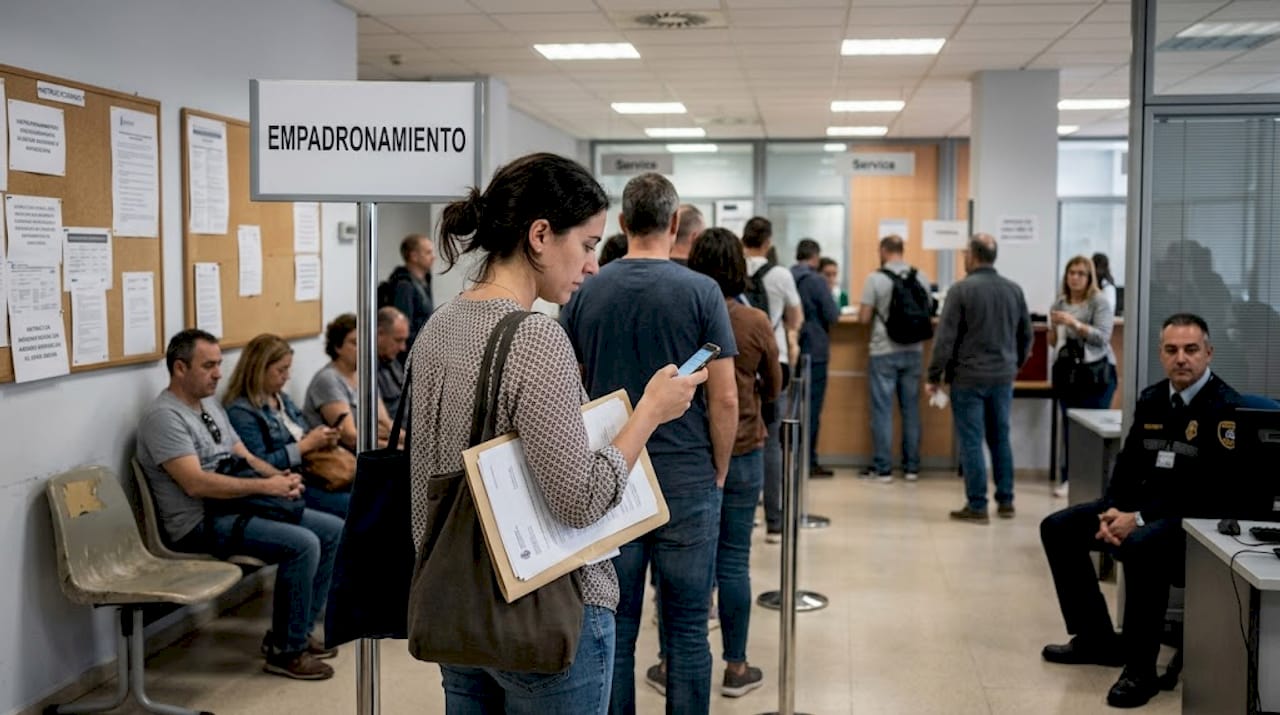
Pro Tip: Book your TIE appointment as early as possible, ideally the day you land. In Madrid and Barcelona, appointments fill up weeks in advance. Use the official Sede Electronica portal to book and set calendar reminders.
Renewals, long-term residency, and staying compliant
Having ticked off the initial boxes, expat life in Spain demands foresight. Your first permit is just the beginning of an ongoing legal relationship with Spanish immigration.
Your initial permit lasts one year and is renewable. You should begin the renewal process at least 60 days before expiration. Waiting until the last minute risks gaps in your legal status.
Key renewal requirements include:
- Proof of continued employment or self-employment income
- Updated Social Security contribution records
- Clean criminal record
- Maintained health insurance coverage
- Compliance with tax obligations in Spain
After five continuous years of legal residence, you become eligible to apply for long-term (permanent) residency. This status is significantly more secure. You are no longer tied to a specific employer, your renewal cycle becomes much longer, and your rights expand to include access to more public services.
Stat callout: Initial work permit: valid 1 year, renewable. Long-term residency possible after 5 years of continuous legal residence.
| Permit type | Duration | Key advantage |
|---|---|---|
| Initial work permit | 1 year | Starts your legal residency |
| Renewed permit | 2 years (second renewal) | More stability |
| Long-term EU residence | 5+ years | Stronger rights, longer validity |
| Arraigo Social | Situational | Regularization for those already in Spain |
The long-term residence guide covers exactly what to prepare for that transition. If your situation involves an irregular stay or social ties already established in Spain, the Arraigo Social process may be the more relevant pathway.
A realistic take: What the checklist never tells you
Every expat guide gives you the official list. Almost none of them tell you what actually goes wrong.
The uncomfortable truth is that Spanish administrative offices are not uniform. Two people applying for the same permit at different police stations in the same city can have completely different experiences. One officer accepts your translation; another questions the format. One office tells you your apostille is fine; another says the ink is wrong. These are not hypothetical situations. They happen regularly.
Checklists also rarely prepare you for the booking reality. In major cities, TIE appointments can be fully booked for three to six weeks, meaning your 30-day window feels much shorter than it looks on paper. Experienced expats learn to book appointments before they even land.
The real advantage comes from triple-checking everything: translations, bank statement formats, official stamps, and even the name spelling on every document. A mismatch between your passport and your contract has derailed more applications than people realize. Getting your overview of obligations locked in early gives you a structural foundation that prevents these surprises.
The best move any expat can make is not to have the right checklist. It’s to understand that the checklist is your floor, not your ceiling.
How Vive Legal makes your move easier
Navigating Spain’s immigration process on your own is possible, but it leaves a lot of room for costly errors and missed deadlines. That’s where expert guidance makes a real difference.
Vive Legal offers personalized support at every stage of your expat journey, from organizing your pre-arrival documents to managing your renewals and long-term residency cases. The platform combines smart automation with real legal professionals who review your case, flag issues before they become problems, and keep you updated at every step. If you’re ready to start with your TIE application, the process is streamlined, fully online, and backed by professionals who specialize in exactly this. No surprises, no guesswork, just a clear path forward.
Frequently asked questions
What is the main difference between a work visa and a self-employed visa in Spain?
A work visa requires employer sponsorship and a labor market test, while a self-employed visa is for those creating their own business without needing an employer to sponsor them.
Which documents do I need before my visa appointment?
You need your passport, form EX-01, private health insurance, criminal record certificate covering five years, a medical certificate, proof of financial means, and your employment contract.
What do I have to do within 30 days of arriving in Spain?
You must register your address at the city hall, apply for your TIE at the National Police station using form EX-17, and confirm your Social Security registration is in place.
How long are Spanish work permits valid, and when can I apply for permanent residency?
Initial permits last one year and are renewable; you become eligible for long-term residency after five years of continuous legal residence in Spain.
Recommended
Living legally in Spain shouldn't be difficult.
View services and pricesNot sure which procedure you need? Find out in 2 min
Questions? Message us on WhatsApp