
How to obtain family residency in Spain: step-by-step guide

TL;DR:
- Spain offers three main family residency pathways: general, EU, and Spanish national regimes.
- Eligibility and processing times vary significantly based on the sponsor’s status and pathway chosen.
- Proper documentation, apostilles, and local guidance are crucial to avoid delays in application.
Bringing your family to Spain is one of the most meaningful steps you can take, but the legal process can feel overwhelming before you even start. Spain has three distinct residency pathways depending on whether your sponsor is a non-EU resident, an EU citizen, or a Spanish national, and each one has its own rules, documents, and timelines. Miss a step and you could face months of delays. This guide walks you through every stage: who qualifies, what documents you need, how to apply, and what your rights look like once approval comes through. Whether your family is coming from outside the EU or you hold EU citizenship yourself, you will find clear, practical answers here.
Living legally in Spain shouldn't be difficult.
View services and pricesNot sure which procedure you need? Find out in 2 min
Questions? Message us on WhatsApp
Table of Contents
- Understanding the main pathways for family residency in Spain
- Eligibility criteria and common requirements
- Step-by-step application process
- After approval: rights, renewals, and path to long-term residency
- What most guides miss about family residency in Spain
- How Vive Legal can make residency easier for your family
- Frequently asked questions
Key Takeaways
| Point | Details |
|---|---|
| Three legal pathways | Spain offers family residency through the General Regime, EU Regime, and as relatives of Spanish citizens. |
| Clear sponsor requirements | Sponsors must meet income, housing, and insurance criteria based on the specific residency regime. |
| Stepwise application process | The process includes applying in Spain, consulate processing, entry, and TIE registration. |
| Work and renewal rights | Work access and renewal rules differ, with most relatives gaining long-term options after five years. |
| Mistakes slow progress | Errors in documentation or assumptions about eligibility are top causes of delays and denials. |
Understanding the main pathways for family residency in Spain
Not every family follows the same legal road to Spanish residency, and choosing the wrong pathway wastes time and money. Three main pathways exist for families seeking to live together in Spain, and each one serves a different sponsor profile.
The three routes at a glance:
- General Regime (Reagrupación Familiar): For non-EU residents legally living in Spain who want to bring family members from abroad. This is the most document-heavy route.
- EU Regime: For EU citizens (other than Spanish nationals) exercising their right to free movement. Family members, even non-EU nationals, benefit from the EU Family Card, which is faster and simpler to obtain.
- Relatives of Spanish nationals: Spanish citizens can sponsor specific family members under a dedicated regime. Since 2025, Spain introduced a new Spanish Family Card permit that streamlines this route significantly.
| Pathway | Sponsor type | Family member status | Typical timeline |
|---|---|---|---|
| General Regime | Non-EU legal resident | Non-EU nationals | 2 to 6 months |
| EU Regime | EU citizen (non-Spanish) | EU or non-EU | 20 to 60 days |
| Spanish national | Spanish citizen | EU or non-EU | 20 to 60 days |
One important distinction: the EU Regime and the Spanish nationals route both operate under European free movement principles, which generally means fewer income requirements and faster processing. The General Regime, by contrast, mirrors a standard immigration process with stricter financial thresholds.
Worth knowing: If your sponsor recently became a Spanish citizen through naturalization, they may still qualify under the EU Regime rules for a transitional period. Always verify which route applies before submitting a single document.
Families who are EU citizens themselves can also complete the EU Registration process separately, which grants a certificate of registration rather than a card but carries the same legal weight. The permit for relatives of Spanish nationals introduced in 2025 is particularly useful because it creates a cleaner, more predictable process than the older visa-based route.
Eligibility criteria and common requirements
Knowing your pathway is only half the battle. Each route has specific eligibility rules that determine who can be sponsored and what the sponsor must prove.
General Regime requirements are the most demanding. According to the EU Immigration Portal, the sponsor must hold at least one year of legal residence in Spain, demonstrate sufficient income at 150% of the IPREM (Spain’s public income reference indicator), provide an adequate housing report from the local municipality, and show proof of health insurance. Eligible family members include a spouse or registered partner, minor children (under 18), disabled adult children who are dependent, and parents in certain circumstances.
| Requirement | General Regime | EU Regime | Spanish national |
|---|---|---|---|
| Minimum residence | 1 year | Active EU right | N/A (citizen) |
| Income threshold | 150% IPREM | Not required | Not required |
| Housing report | Required | Not required | Not required |
| Health insurance | Required | Required | Required |
| Visa fee | Standard fee | Reduced/exempt | Exempt |
For the EU Regime and the Spanish nationals route, income thresholds are generally not applied in the same rigid way. Relatives of Spanish nationals are also exempt from visa fees in most cases, which is a meaningful financial advantage.
Who counts as a dependent? This is where families often get confused. A child over 18 can still qualify if they have a recognized disability and are financially dependent on the sponsor. Parents can qualify if they are over 65 or if there are documented exceptional circumstances proving dependency. Cohabitation history and financial records are often required to prove genuine dependency.
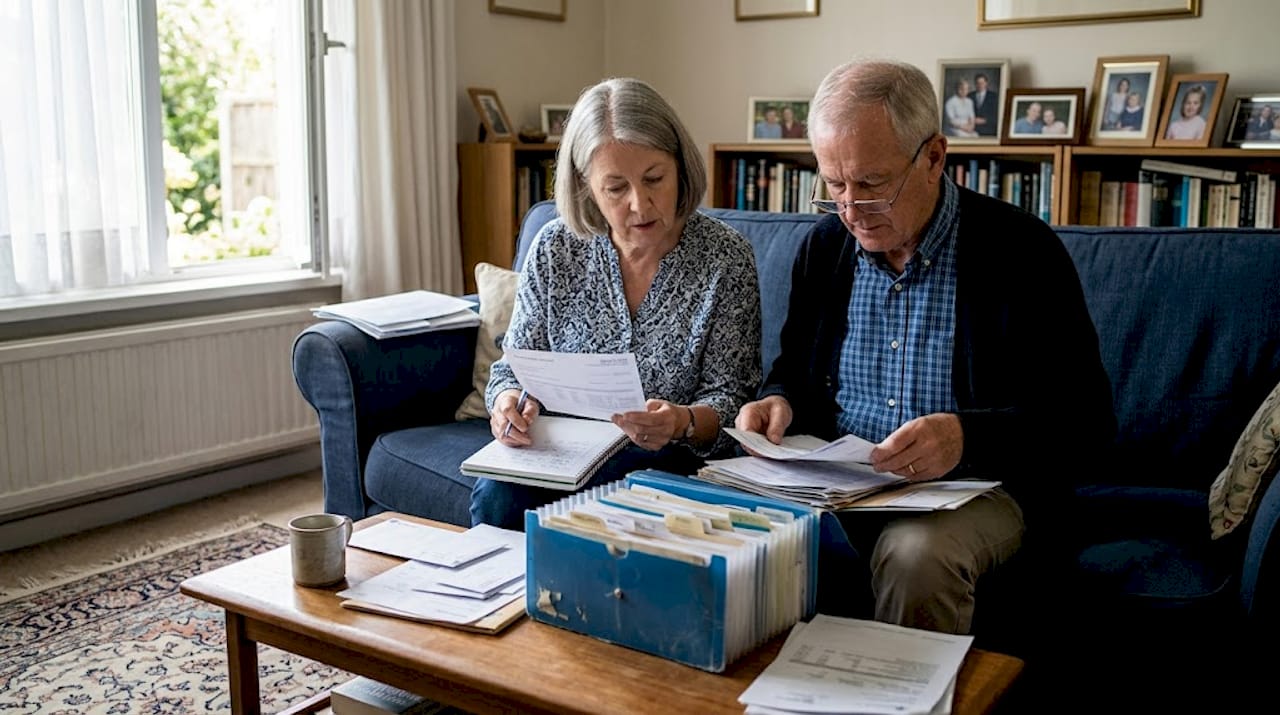
Pro Tip: If you are sponsoring a parent who is under 65, gather at least two years of bank statements showing regular financial transfers to that parent. Spanish immigration officers look for documented, consistent financial support rather than just a signed declaration.
Families on the EU Regime who later separate from the EU citizen sponsor should look into EU long-term residence status, which can protect their right to stay independently after five years of legal residence.
Step-by-step application process
Once you know your pathway and eligibility, the actual application involves several sequential steps. Skipping one or getting the order wrong is one of the most common reasons families face delays.
- Sponsor applies in Spain (General Regime only). The sponsor submits the family reunification application at the local Oficina de Extranjería. The sponsor initiates this process, not the family member abroad.
- Authorization is issued. Once approved, the Oficina issues a family reunification authorization. This document is sent to the relevant Spanish consulate in the family member’s home country.
- Family member applies for a visa at the consulate. The family member abroad visits the consulate application office with their documents. For Spanish nationals and EU citizens, the family member may apply directly at the consulate without a prior authorization step.
- Entry into Spain. Once the visa is granted, the family member travels to Spain. They typically have 90 days to enter.
- TIE card application. Within 30 days of arrival, the family member must apply for the Tarjeta de Identidad de Extranjero (TIE). You can review the full TIE application process to prepare in advance.
Core documents required across all regimes include valid passports, birth or marriage certificates proving family ties, criminal background checks from the home country, a medical certificate, proof of health coverage, and evidence of the sponsor’s income and housing. Review a full documentation checklist before you start collecting paperwork.
Critical reminder: All foreign documents must be apostilled (certified under the Hague Convention) and officially translated into Spanish by a sworn translator. Missing apostilles are the single most common reason applications are rejected or delayed.
Pro Tip: Download the correct forms for Spain immigration before your appointment. Using an outdated form version is a surprisingly frequent mistake that forces families to restart the process.
After approval: rights, renewals, and path to long-term residency
Approval is not the finish line. It is the starting point for building your family’s legal foundation in Spain.
Work rights from day one vary by pathway. For relatives of Spanish nationals, full work authorization is granted immediately upon arrival. Under the General Regime, spouses and children over 16 do not need a separate work permit after arriving, but they must wait until their TIE card is issued before starting employment.
Renewal cycles to keep in mind:
- General Regime initial permit: 1 year, then renewable for 2-year periods
- EU Family Card: 5 years initially, renewable
- Spanish Family Card: typically 5 years, renewable
- All renewals must be filed before the current permit expires to avoid gaps in legal status
The path to long-term residency is one of the most underappreciated benefits of family permits. After five years of continuous legal residence in Spain, family members can apply for long-term or permanent residency independently of the sponsor. This is a major milestone because it removes dependency on the original family relationship.
Key statistic: Processing times range from 2 to 6 months for the General Regime, while EU and Spanish national routes are typically resolved in 20 to 60 days. Planning around these timelines helps families avoid gaps in income, schooling, or healthcare enrollment.
Time on a family permit also counts toward Spanish citizenship, which requires 10 years of legal residence for most nationalities (or as few as 2 years for citizens of Latin American countries and others with historical ties to Spain). Explore the full path to Spanish citizenship if that is part of your long-term plan. Families who maintain continuous long-term residence status gain access to stronger legal protections and broader employment rights across the EU.
What most guides miss about family residency in Spain
Most articles present Spain’s family residency process as a clean, predictable checklist. In practice, it is messier than that, and the gaps between the written rules and on-the-ground reality are where families lose months.
Regional variation is real. The same application can be processed very differently in Madrid versus Valencia versus a smaller province. Some Oficinas de Extranjería are strict about housing report formats; others barely scrutinize them. This is not a flaw in the system you can argue away. It is a feature of Spanish administrative culture that you have to work with, not against.
Documentation errors are not just about missing papers. They are often about the wrong version of a document, a translation done by a non-sworn translator, or an apostille that expired. These are quiet killers of otherwise solid applications.
The fast path to work rights for relatives of Spanish nationals is genuinely underused. Many families assume they need to wait months before the sponsored person can contribute financially. That is simply not true under the Spanish nationals route.
Always call or visit your local Oficina or consulate before submitting. Interpretations shift, and the most current local guidance often differs from what is published online. For ongoing updates and practical immigration insights, staying informed is part of the process.
How Vive Legal can make residency easier for your family
Navigating three different legal regimes, coordinating documents across countries, and tracking consulate appointments while managing daily life is genuinely difficult. That is exactly the kind of complexity Vive Legal was built to handle.
Our platform combines legal expertise with smart automation to prepare your documents correctly the first time, reducing the risk of rejection. Whether you need Spanish Family Card help or EU Family Card assistance, we manage every stage from document review to appointment scheduling through a secure client portal. With full-service immigration support, your family gets professional oversight without the stress of doing it alone.
Frequently asked questions
How long does the family residency application process take in Spain?
Processing typically takes 2 to 6 months for the General Regime, but relatives of EU or Spanish citizens can receive approval in as few as 20 days.
Which family members are eligible for sponsorship?
Spouses or registered partners, minor or dependent children, and parents (often 65 or older, or with documented exceptions) are eligible under most regimes, with Spanish citizens having the broadest sponsorship options.
Can family members work in Spain after getting residency?
Relatives of Spanish or EU citizens receive full work rights immediately upon arrival, while those reunited under the General Regime can work once their TIE card is issued without needing a separate work permit.
Is health insurance required for Spanish family residency?
Yes, all applicants must provide proof of health coverage, either through public enrollment or a valid private insurance policy.
Does time on a family residency permit count toward permanent residency?
Yes. After five years of continuous legal residence on a family permit, most family members qualify to apply for long-term or permanent residency in Spain independently.
Recommended
Living legally in Spain shouldn't be difficult.
View services and pricesNot sure which procedure you need? Find out in 2 min
Questions? Message us on WhatsApp