
How to Register as EU Citizen Spain for Residency Success

Registering your EU residency in Spain opens the door to full access to healthcare and the job market, but the process can feel as daunting for an American relocating from France as for anyone. With over 500,000 European Union citizens applying for Spanish residency each year, a single missing document can delay your plans. This practical guide shows you exactly how to prepare your paperwork, stay organized, and move one step closer to a successful life in Spain.
Table of Contents
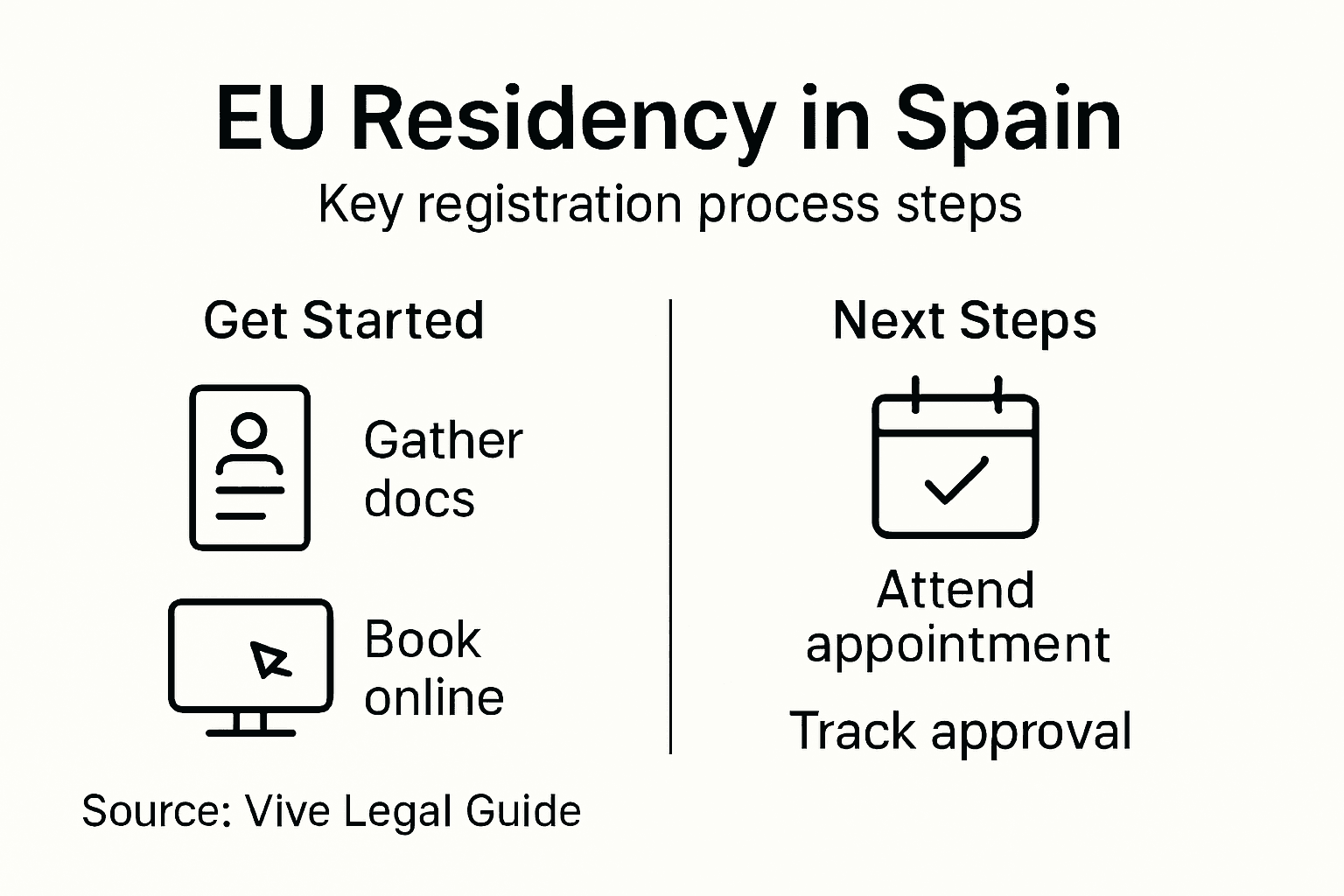
- Step 1: Gather Required Registration Documents
- Step 2: Complete Online EU Residency Application
- Step 3: Schedule Legal Residency Appointment
- Step 4: Attend Registration and Submit Documents
- Step 5: Verify and Track Residency Approval Status
Quick Summary
| Key Point | Explanation |
|---|---|
| 1. Gather essential documents first | Assemble a valid passport, proof of address, and employment or student verification to facilitate the registration process. |
| 2. Complete the online application accurately | Fill out the EX-18 form and upload necessary documents to ensure a smooth residency request submission. |
| 3. Schedule your appointment promptly | Book a visit to the local Extranjeria office ASAP to finalize your residency registration and prepare required paperwork. |
| 4. Attend the appointment with all documents | Present organized documentation, including the EX-18 form, to validate your residency; remain professional during the meeting. |
| 5. Track your application status regularly | Monitor progress through the appropriate channels to stay informed about your residency approval and any required follow-ups. |
Step 1: Gather Required Registration Documents
Registering as an EU citizen for residency in Spain requires careful document preparation. You’ll need to collect specific paperwork that proves your identity, status, and financial stability before visiting the local registration office.
Living legally in Spain shouldn't be difficult.
View services and pricesNot sure which procedure you need? Find out in 2 min
Questions? Message us on WhatsApp
Start by assembling your core documentation. This includes a valid passport or national identity card, which serves as your primary identification. For workers, bring an employment contract or recent work certificate that demonstrates your professional status. EU registration process details recommend having these documents ready to expedite your registration.
Additionally, prepare proof of address through a utility bill or rental agreement, which confirms your local residence. Students should include enrollment confirmation from their Spanish educational institution, while self employed individuals need documentation verifying their professional activities. Health insurance documentation is mandatory, proving you have adequate medical coverage during your stay.
Pro tip: Organize your documents in a clear folder with copies of each original document to streamline your registration appointment and prevent potential delays.
Below is a reference comparing document requirements by applicant type:
| Applicant Type | Additional Required Documentation | Purpose |
|---|---|---|
| Worker | Employment contract or work certificate | Verify employment status |
| Student | Enrollment confirmation from institution | Prove student status |
| Self-employed | Proof of professional activity | Confirm self-employment |
| All applicants | Health insurance, proof of address | Basic eligibility verification |
Step 2: Complete Online EU Residency Application
Now that you have gathered your essential documents, it is time to navigate the online EU residency application process for Spain. This digital submission will officially document your right to reside in the country and establish your legal status.
Begin by scheduling an online appointment with your local Immigration Office or police station. Fill out the official EX-18 form completely and accurately, ensuring all personal and professional details match your supporting documentation. EU residency registration process requires precise information about your employment status, financial resources, or student enrollment. Upload scanned copies of your passport, proof of income, health insurance, and address verification during the digital application.

After submitting your online application, you will receive a confirmation email with further instructions. Typically, the registration certificate processing takes approximately three months from your arrival date. Carefully review all submitted information to prevent potential delays or complications with your residency registration.
Pro tip: Create digital backups of all submitted documents and keep both electronic and physical copies in a secure location for easy reference during your residency application process.
Step 3: Schedule Legal Residency Appointment
Scheduling your legal residency appointment is a critical step in establishing your official status as an EU citizen in Spain. This appointment will finalize your registration and provide you with the necessary documentation to validate your legal residency.
To schedule your appointment, you will need to contact the local Extranjeria (Foreign Affairs) office or police station in your specific region. Most municipalities now offer online booking systems where you can select available time slots that match your documented application. Residency practice guidelines recommend preparing all required documents in advance and arriving at least 15 minutes before your scheduled time.
When booking your appointment, double check the specific requirements for your region, as documentation and processing can vary slightly between different Spanish provinces. Bring multiple copies of all your prepared documents, including your passport, proof of employment or financial means, health insurance, and completed EX-18 application form. Some offices may require additional verification or supporting materials, so being thoroughly prepared will help ensure a smooth appointment process.
Pro tip: Make digital and physical copies of all documents before your appointment and organize them in a clear, chronological order to demonstrate professionalism and efficiency.
Step 4: Attend Registration and Submit Documents
Your registration appointment represents the final critical step in establishing your legal residency as an EU citizen in Spain. This is your opportunity to officially present your carefully prepared documentation and complete the registration process.
Registration documentation process requires careful attention to detail when presenting your materials. Arrive at the Foreigners Office or designated police station with multiple copies of your completed EX-18 application form, original passport, proof of address, employment contract or financial means verification, health insurance documentation, and NIE number. The immigration officer will meticulously review each document, so organize them sequentially and maintain a calm professional demeanor throughout the appointment.
During the submission process, be prepared to answer potential questions about your residency purpose, professional status, or financial stability. The official will stamp and validate your documents, potentially requesting additional information or clarification if any details seem incomplete. After successful document verification, you will receive a confirmation of your registration and instructions for obtaining your official residency certificate.
Pro tip: Maintain a composed and patient attitude during the appointment and keep digital scans of all submitted documents for your personal records.
Step 5: Verify and Track Residency Approval Status
After submitting your residency documents, the waiting period begins. Understanding how to effectively track and verify your application status is crucial for maintaining peace of mind during this administrative process.
Most Spanish immigration offices provide multiple channels for tracking your residency application. Contact the specific Extranjeria office where you submitted your documents to confirm their preferred tracking method. Some regions offer online portals, while others require phone or email communication. TIE residency tracking typically involves checking your application through the local immigration website using your application reference number or personal identification details.
The standard processing time for EU citizen residency applications ranges from three to six months. During this period, remain patient and keep all original documentation readily accessible. You may be asked to provide additional information or attend a supplementary interview. Once approved, you will receive an official notification instructing you to collect your registration certificate or TIE card from the designated government office.
Pro tip: Create a digital folder with screenshots and copies of all communication regarding your application to maintain a comprehensive record of your residency process.
Here is a summary of key steps and their outcomes during the EU residency application process:
| Step | Main Action | Expected Outcome | Typical Timeline |
|---|---|---|---|
| Gather Documents | Collect all required paperwork | Prepared for application | 1-2 weeks |
| Complete Online Application | Submit EX-18 form and upload scans | Confirmation email received | Same day |
| Schedule Appointment | Book local Extranjeria visit | Appointment confirmation | 1-4 weeks |
| Attend Appointment | Present documents in person | Registration validated | Appointment day |
| Track Approval | Monitor application status | Residency certificate ready | 3-6 months |
Secure Your EU Residency in Spain with Expert Help from Vive Legal
Registering as an EU Citizen in Spain can feel overwhelming when faced with complex paperwork like the EX-18 form, proof of employment, health insurance, and timely appointment scheduling. The risk of delays or errors during document submission and tracking approval status makes this process stressful and confusing. If you want to avoid these common challenges and confidently complete every step, professional support is key.
Vive Legal is designed to simplify your residency journey by offering personalized document review, form preparation, appointment booking, and real-time case tracking in one seamless online platform. Whether you are a worker, student, or self-employed EU Citizen, our AI-powered system combined with legal experts ensures your application is accurate and complete to maximize your chances of success. Don’t let unnecessary paperwork or procedural uncertainty hold you back. Take control today by visiting Vive Legal and discover how efficient and transparent your residency registration can be with the right partner by your side.
Frequently Asked Questions
What documents do I need to register as an EU citizen for residency in Spain?
To register as an EU citizen for residency in Spain, you need a valid passport or national identity card, proof of employment or student enrollment, proof of address, and health insurance documentation. Start by gathering these documents to streamline your registration process.
How do I complete the online EU residency application for Spain?
To complete the online EU residency application, you must fill out the official EX-18 form accurately and upload the required documents. Ensure your information matches your supporting papers and submit it through the designated online platform.
What should I do after submitting my residency application in Spain?
After submitting your application, keep track of your application status by contacting the local immigration office via their preferred method. Be prepared to provide your application reference number to monitor your residency approval.
How long does it take to receive my residency certificate after applying?
The typical processing time for residency applications ranges from three to six months. Remain patient during this period and keep all original documents easily accessible in case further information is requested.
How can I ensure a smooth appointment at the Extranjeria office?
To ensure a smooth appointment, arrive at the Extranjeria office at least 15 minutes early and bring multiple copies of all required documents. Organize your paperwork systematically to present a professional appearance during your registration appointment.
What should I do if my residency application is delayed or requires additional information?
If your application is delayed or requires additional information, respond promptly to any requests from the immigration office. Maintain open communication and be ready to provide any additional documentation they may need to expedite your application.
Recommended
Living legally in Spain shouldn't be difficult.
View services and pricesNot sure which procedure you need? Find out in 2 min
Questions? Message us on WhatsApp