
Why Legalize Foreign Documents: Residency Success

Applying for residency in Spain often brings an unexpected challenge—legalizing foreign documents before they count for official use. Without this crucial step, diplomas, birth certificates, and other paperwork from outside Spain remain invisible to Spanish authorities. The process builds trust between countries, helping foreign professionals and students gain recognition and legal compliance for their credentials. Discover how online legal support removes frustration and keeps your application moving efficiently.
Table of Contents
- Legalizing Foreign Documents: Essential Concepts
- Types of Legalization and Apostille Explained
- How Legalization Works in Spain
- Legal Requirements for Residency Applications
- Risks and Common Pitfalls to Avoid
Key Takeaways
| Point | Details |
|---|---|
| Document Legalization is Essential | Verify that documents such as diplomas and birth certificates are authentic for acceptance by Spanish authorities. |
| Apostille vs. Traditional Legalization | Apostilles provide a faster verification method for Hague Convention countries, while traditional legalization may take weeks. |
| Translation Requirements | Legalized documents must be translated into Spanish by certified translators to be accepted by Spanish authorities. |
| Common Pitfalls to Avoid | Ensure all documents are complete and properly legalized to prevent delays or rejections in your residency application. |
Legalizing Foreign Documents: Essential Concepts
Document legalization verifies that your foreign documents are authentic and legally recognized in Spain. Without this process, your diplomas, birth certificates, marriage documents, and other official papers won’t be accepted by Spanish authorities.
Living legally in Spain shouldn't be difficult.
View services and pricesNot sure which procedure you need? Find out in 2 min
Questions? Message us on WhatsApp
Think of legalization as an official stamp of approval. Your home country’s government confirms that the document is genuine and that all signatures are real. This verification allows Spanish institutions to trust your paperwork without needing to contact your country directly.
What Legalization Actually Does
Legalization serves specific purposes for residency applicants:
- Confirms document authenticity and signature genuineness
- Makes documents suitable for official use in Spain
- Establishes legal compliance with Spanish immigration requirements
- Enables smoother processing for visa and residency applications
Document legalization verifies authenticity so that Spanish authorities can confidently review your credentials without doubt.
Which Documents Need Legalization
You’ll typically need legalization for:
- University degrees and educational transcripts
- Birth certificates
- Marriage or divorce decrees
- Employment contracts or work experience letters
- Police clearance certificates
- Medical records or vaccination records
The exact documents depend on your residency type. EU registration requires different papers than arraigo procedures.
Here is a summary of document types and their legalization needs for Spain:
| Document Type | Legalization Needed | Possible Exceptions |
|---|---|---|
| University diploma | Yes | Issued by Spanish institutions |
| Birth certificate | Yes | Issued by Spanish authorities |
| Marriage/divorce decree | Yes | Processed by Spanish consulate |
| Police clearance | Yes | Spanish police reports |
| Medical record | Yes | Spanish hospital-issued certificates |
The Two Primary Methods
Apostille is the faster option. This simplified legalization process works between Hague Convention countries (which includes both your home country and Spain). A single official apostille stamps your document, and you’re done.
Traditional legalization takes longer. The document travels through embassies and consulates, with multiple verification steps. This applies if your country doesn’t participate in the Hague Convention.
Most countries now use apostilles, making the process dramatically faster than traditional legalization methods.
Spain accepts both methods, but apostilles typically process in days rather than weeks.
Translation Requirements
Legalized documents almost always need translation into Spanish. You can’t simply legalize a document and submit it—Spanish officials need to read it.
Use certified translators recognized in Spain. Vive Legal’s document review process identifies whether your specific documents require translation before submission.
Pro tip: Request apostilles directly from the issuing authority in your home country (usually the Secretary of State or equivalent government office) rather than through third parties—it’s cheaper and faster.
Types of Legalization and Apostille Explained
Your document needs one of two certifications to work in Spain: an apostille or a traditional legalization. Which one depends entirely on your country’s relationship with the Hague Apostille Convention.
Think of it this way. If your country signed the Hague Convention, you get the fast track. If not, you’re taking the scenic route through embassies.
Apostilles: The Fast Track
An apostille is a simplified certification that confirms your document’s authenticity. A single official stamp from a designated authority in your home country proves the document is genuine.
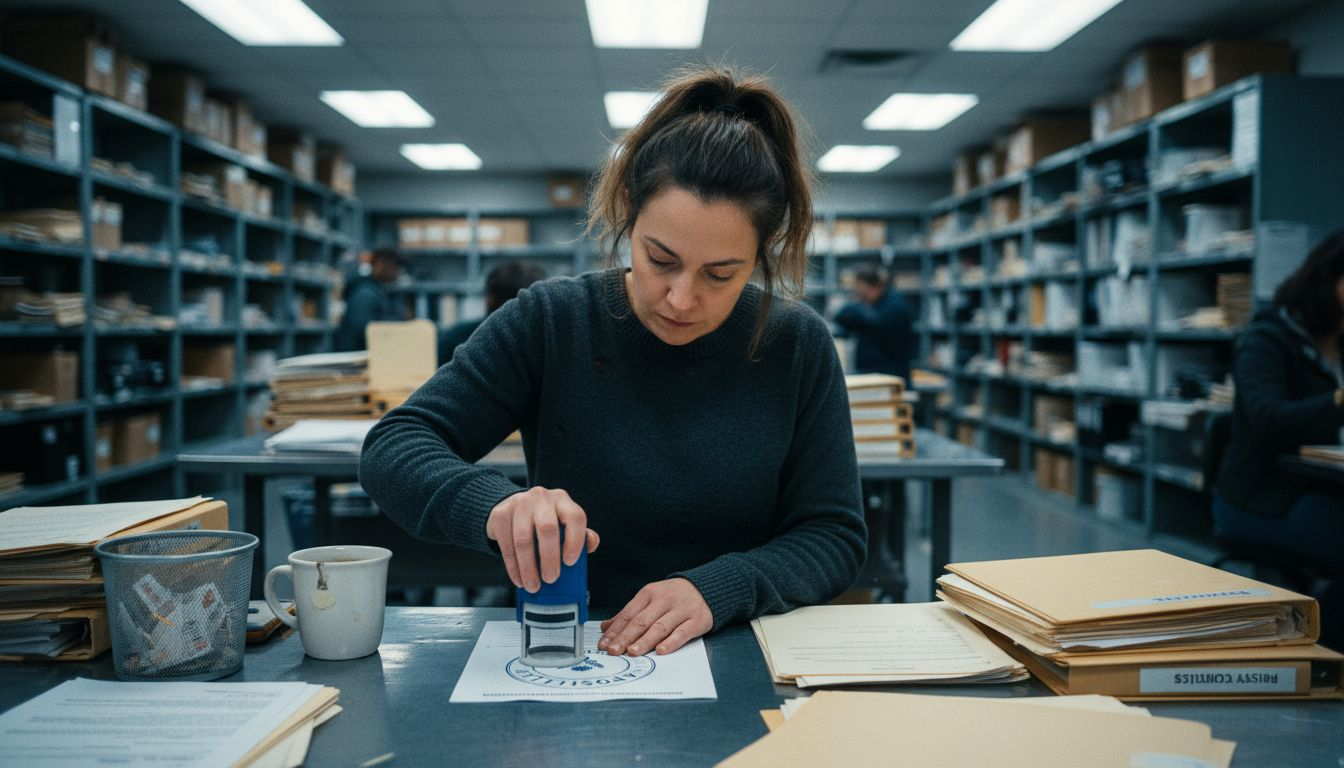
An apostille streamlines certification between Hague Convention countries, eliminating the need for embassy involvement. Spain recognizes apostilles from over 140 countries worldwide.
Apostilles typically arrive within days:
- Request apostille from the issuing authority (Secretary of State, court, university, etc.)
- One official stamp certifies authenticity
- No embassy or consulate involvement required
- Valid immediately upon receipt
Traditional Legalization: The Detailed Process
If your country isn’t part of the Hague Convention, you’ll need traditional legalization. This involves multiple steps and several government entities verifying your document.
The process works like this:
- Local government authority in your country verifies the document
- Your country’s ministry confirms the local verification
- Spanish embassy or consulate in your country stamps and approves it
- Document is now legally recognized in Spain
This typically takes 2-4 weeks, sometimes longer depending on government efficiency.
The key difference: apostilles take days, legalization takes weeks. Both achieve the same result—Spanish recognition of your document.
Quick Comparison
| Factor | Apostille | Legalization |
|---|---|---|
| Speed | Days | 2-4 weeks |
| Steps | One authority | Multiple agencies |
| Cost | Lower | Higher |
| Hague Convention | Required | Not needed |
Why This Matters for Your Residency
Your residency timeline depends on document processing speed. Delays in legalization mean delays in submitting your complete application to Spanish authorities.
If you’re applying for EU registration or arraigo procedures, you need your documents ready before submitting your case. Slow legalization creates bottlenecks.
Pro tip: Check whether your country uses apostilles before requesting any legalization. Contact your issuing authority directly and ask: “Do you issue apostilles under the Hague Convention?” This single question saves weeks of waiting.
How Legalization Works in Spain
Spain’s legalization process is straightforward if you understand the key players and steps involved. The Spanish government recognizes two legalization methods depending on your document’s origin and your country’s treaty status.
Here’s the reality: Spain doesn’t legalize documents itself. Instead, Spanish authorities verify that your documents are properly legalized by the issuing country before accepting them.
Spain’s Official Recognition Process
Spain’s Ministry of the Presidency handles apostilles for Hague Convention countries. For traditional legalization, Spanish embassies and consulates in your home country perform the final verification step.
Diplomatic legalization validates public documents by verifying signatures, authority seals, and official stamps. Spain accepts documents legalized through either method without preference.
The key point: once your document arrives in Spain with proper legalization, Spanish institutions trust it automatically. No additional Spanish verification is needed.
What Spanish Authorities Check
When you submit legalized documents to Spanish authorities, they verify:
- Document authenticity from the issuing country
- Valid apostille or legalization stamps
- Proper translation into Spanish
- Document relevance to your residency application
Spanish officials don’t re-verify the source country’s work. They trust the legalization already completed.
Which Documents Skip Legalization
Some documents issued by Spanish authorities or Spanish diplomatic missions don’t need legalization. If you obtained a document in Spain or from a Spanish embassy abroad, it already carries Spanish authority.
Examples include:
- Documents issued by Spanish government agencies
- Records created by Spanish courts or notaries
- Certificates from Spanish universities
- Official correspondence from Spanish embassies
Check with Spanish authorities if you’re unsure whether your specific document needs legalization.
Timeline for Your Residency Application
Legalization doesn’t delay your Spanish application once documents are legalized. The timing issue happens before submission.
You need legalized documents ready before filing your residency application. Spanish processing begins once your case is complete and submitted.
Spanish authorities accept legalized documents immediately upon receipt. The bottleneck is getting documents legalized before you apply, not Spanish processing afterward.
For residency types like EU registration or arraigo procedures, submit your complete case only when all documents are legalized and translated.
Pro tip: Order legalized documents from your home country while gathering other application materials. Don’t wait until your Spanish application is ready—parallel processing saves weeks of waiting time.
Legal Requirements for Residency Applications
Spain’s residency requirements depend on your specific visa category, but all applications share common documentation standards. Spanish immigration authorities expect legalized, translated documents proving your eligibility before processing your case.
Meeting these requirements before applying saves months of delays. Incomplete applications get rejected, forcing you to restart.
Universal Documentation Requirements
Every residency application in Spain requires:
- Valid passport with at least six months validity
- Legalized and translated birth certificate
- Proof of financial stability or employment
- Criminal background clearance from your home country
- Medical health certificate (in some cases)
- Proof of accommodation in Spain
Residency eligibility requires financial stability and clean criminal record to demonstrate you won’t burden public services. Spain enforces these standards strictly.
Category-Specific Legal Requirements
Your documentation needs change based on residency type. EU registration requires different proof than internship residence or arraigo social.
EU citizens need:
- Proof of EU citizenship
- Evidence of economic activity or family ties
- Registration certificate from local authorities
Workers need:
- Employment contract from Spanish employer
- Social security registration
- Income statements showing sufficient earnings
Students need:
- Acceptance letter from Spanish educational institution
- Proof of tuition payment
- Accommodation confirmation
The Criminal Record Requirement
Spain requires a clean criminal background from your home country and any country where you’ve lived for extended periods. This isn’t optional.
Criminal records from abroad are grounds for automatic rejection. Even minor convictions can disqualify applications. Obtain police clearance certificates well before applying.
Income and Financial Proof Standards
Spain sets minimum income thresholds based on family size and residency category. You must prove you won’t require public assistance.
Documentation includes:
- Bank statements showing continuous funds
- Employment contracts with salary details
- Investment documentation or property ownership
- Pension statements (if applicable)
Spanish authorities verify financial claims. Don’t submit inflated figures—they check.
Missing or incomplete financial documentation is the leading cause of residency application rejection in Spain. Submit clear, verifiable proof from day one.
Translation and Legalization as Legal Requirements
Translation isn’t just bureaucratic—it’s a legal requirement. Spanish authorities cannot process documents in other languages.
All foreign documents must be:
- Legalized in your home country
- Translated into Spanish by certified translator
- Submitted with original signatures and stamps intact
Digital copies don’t satisfy Spanish requirements. Submit originals with certified translations.
Pro tip: Create a checklist for your specific residency type and verify every single requirement with Vive Legal before submitting anything. Spanish immigration doesn’t accept “close enough”—they accept complete or rejected.
Risks and Common Pitfalls to Avoid
Document legalization mistakes are expensive. A single error can cost you months of delays, thousands of dollars in additional fees, and rejection of your residency application. Understanding these pitfalls helps you avoid them entirely.
Most mistakes are preventable with planning and attention to detail.
Use this table to avoid common mistakes and speed up your residency process:
| Common Pitfall | Impact on Application | How to Prevent It |
|---|---|---|
| Wrong legalization method | Several weeks delay | Check Hague Convention status |
| Uncertified translation | Automatic rejection | Hire Spanish-certified translator |
| Incomplete documentation | Immediate denial | Use a tailored document checklist |
| Late legalization | Missed deadlines | Start process months in advance |
The Cost of Skipping Legalization
Skipping legalization or doing it incorrectly creates serious consequences. Spanish authorities won’t accept documents without proper certification from your home country.
Failing to legalize documents risks non-recognition by foreign authorities, causing visa rejections and application denials. You cannot submit incomplete applications and expect Spanish officials to fix them.
If your application gets rejected:
- You must restart the entire process
- Additional fees apply for resubmission
- Processing delays extend by weeks or months
- Your residency timeline collapses
Legalization Type Mistakes
Choosing the wrong legalization method wastes time and money. You must know whether your country uses apostilles or traditional legalization before requesting anything.
Common error: requesting traditional legalization from a Hague Convention country. That country will send you to get an apostille instead, wasting weeks. Verify your country’s treaty status first.
Another mistake: assuming all documents need the same legalization type. Some documents (like diplomas) require apostilles while others (like notarized statements) might need traditional legalization. Check document-by-document requirements.
Translation Errors
Certified translation isn’t optional. Spanish authorities reject documents translated by unqualified people, even if the translation is accurate.
Mistakes include:
- Using machine translation services
- Hiring non-certified translators
- Submitting English translations (Spanish required)
- Missing translator credentials on documents
Use translators officially recognized in Spain. Vive Legal’s document review identifies whether your translations meet Spanish standards.
Incomplete Documentation Submissions
Incomplete applications get automatic rejections. Spanish immigration doesn’t contact you asking for missing documents—they simply deny your case.
Common gaps:
- Missing signatures or stamps on legalized documents
- Expired certifications or apostilles
- No certified Spanish translation provided
- Original documents not submitted (only copies)
Submitting incomplete applications is the quickest way to get rejected. Verify every document is complete, legalized, and translated before sending anything to Spanish authorities.
Processing Timeline Underestimation
Failing to plan for processing time creates application delays. Legalization takes weeks—apostilles take days, traditional legalization takes 2-4 weeks or longer.
Starting legalization after deciding to apply means unnecessary waiting. Begin the process months before your target application date.
Using Unqualified Service Providers
Cheap legalization services often cut corners. They submit incomplete paperwork, miss deadlines, or provide documents that don’t meet Spanish standards.
Vet service providers carefully. Verify they understand Spanish residency requirements, not just general legalization.
Pro tip: Gather all documents requiring legalization immediately and submit legalization requests to your home country authorities while preparing other application materials. Parallel processing prevents timeline bottlenecks that sink residency applications.
Simplify Your Document Legalization for Residency Success
Legalizing your foreign documents is a crucial step toward securing your Spanish residency but it can be complex and time-consuming. From verifying whether your country uses an apostille to ensuring certified translations and avoiding costly mistakes, the process requires careful attention to detail. If you want to avoid delays and rejection due to incomplete or incorrectly legalized paperwork, expert guidance is essential.
Take control of your residency journey with Vive Legal, the online legal consultancy designed to streamline immigration procedures in Spain. Our platform offers personalized document reviews to confirm your legalization compliance and translation needs. We combine automation with professional oversight to reduce errors, help you meet Spanish legal requirements, and keep your application moving forward smoothly. Don’t risk months of delays—start your legalization and residency process today with confidence by visiting Vive Legal and learn how our expert services can fast-track your application to approval.
Frequently Asked Questions
What is the purpose of legalizing foreign documents?
Legalizing foreign documents verifies their authenticity, making them legally recognized for official use in Spain. This process ensures that Spanish authorities can trust your documents without further verification.
Which documents typically require legalization for residency applications?
Common documents that require legalization include university degrees, birth certificates, marriage or divorce decrees, police clearance certificates, and medical records. The specific documents may vary depending on your residency type.
What are the two primary methods of legalization?
The two primary methods of legalization are Apostille and traditional legalization. Apostille is a faster process used between countries that are part of the Hague Convention, while traditional legalization involves multiple verification steps through embassies for countries that are not part of the Convention.
Do I need to translate my legalized documents?
Yes, all legalized documents must be translated into Spanish by a certified translator. Spanish authorities cannot process documents that are not in Spanish, so proper translation is essential.
Recommended
Living legally in Spain shouldn't be difficult.
View services and pricesNot sure which procedure you need? Find out in 2 min
Questions? Message us on WhatsApp