
Steps to Renew Residency in Spain Online

Every American and other non-European expatriates living in Spain eventually face the complicated renewal process for residency permits. Submitting the right paperwork on time is vital since even a small error can put your legal status at risk. With recent changes and electronic platforms, understanding the key requirements has never been more crucial. This guide will help you avoid common pitfalls, explain new rules, and show how an online legal consultancy can make your residency renewal as painless as possible.
Table of Contents
- Residency Renewal In Spain: Key Concepts
- Types Of Residency And Their Renewal Process
- 2026 Law Changes Affecting Renewals
- Required Documents And Eligibility Checks
- Digital Platform Application: Step-By-Step
- Costs, Pitfalls, And Avoiding Delays
Key Takeaways
| Point | Details |
|---|---|
| Understand Renewal Requirements | Different residency types in Spain have unique renewal criteria, including documentation and timing. Start your application process at least three months before expiration to avoid issues. |
| Utilize Digital Platforms | The online residency renewal process simplifies applications and allows for document submission without in-person visits. Ensure you have a valid digital certificate for the application. |
| Be Aware of Costs and Timelines | Renewal fees vary, and additional costs may arise from translations and legal services. Pay careful attention to the timing windows for application submission to maintain legal status. |
| Prepare for New Regulations | Significant changes to the renewal process will occur in 2026, including grace periods and longer renewal intervals. Stay informed to adapt to new requirements and enhance your renewal experience. |
Residency Renewal in Spain: Key Concepts
Renewing your residency permit in Spain is a critical process for non-EU expatriates seeking continued legal status. Understanding the key concepts surrounding residency renewal can help streamline your application and prevent potential complications. The Spanish immigration system requires precise documentation and timely submission to maintain your legal residence.
Living legally in Spain shouldn't be difficult.
View services and pricesNot sure which procedure you need? Find out in 2 min
Questions? Message us on WhatsApp
The renewal process involves several fundamental elements that applicants must comprehend. Most temporary residency permits require renewal before their expiration, typically every one to two years depending on your specific authorization type. Applicants must demonstrate continuous legal residence, sufficient financial means, and adherence to Spanish immigration regulations. Importantly, the telematic procedures for residence authorization now allow electronic submissions, making the process more convenient for expats.
Key documentation for residency renewal generally includes your current permit, passport, proof of economic means, health insurance, and evidence of continued legal status in Spain. Each permit type (work, study, family reunification) has specific requirements. For instance, work permit renewals typically require proof of employment or continued professional activities, while student permits need documentation of academic enrollment and progression.
Pro tip: Always start gathering renewal documents at least three months before your current permit expires to ensure a smooth, stress-free application process.
Types of Residency and Their Renewal Process
Spain offers multiple residency categories, each with unique renewal requirements and processes. Understanding these distinctions is crucial for non-EU expatriates seeking to maintain legal status. The primary residency types include temporary residence, work permits, student visas, and long-term residency, each demanding specific documentation and compliance criteria.
Temporary residence permits are typically valid for one to two years and require systematic renewal. These permits can be based on different grounds such as employment, family reunification, or professional training. Professional practice visas for example, have specific renewal criteria involving proof of continued professional engagement and financial stability. Work permits necessitate demonstrating ongoing employment or professional activities, while student visas require evidence of academic progression and enrollment.
The renewal process varies significantly across different residency categories. Long-term residency permits, which become available after five continuous years of legal residence, offer more stability and fewer renewal complications. Each permit type demands precise documentation, including updated passport, proof of financial means, health insurance, and specific supporting documents relevant to the particular residency category. Applicants must initiate the renewal process well in advance of their current permit’s expiration to prevent potential legal complications.
Pro tip: Maintain a comprehensive digital and physical file of all immigration documents, organized chronologically, to streamline your renewal process and quickly access necessary paperwork.
Here’s a summary of the main residency types in Spain and their typical renewal criteria:
| Residency Type | Validity Period | Key Renewal Criteria |
|---|---|---|
| Temporary Residence | 1-2 years | Proof of residence, finances |
| Work Permit | 1-2 years | Ongoing employment evidence |
| Student Visa | 1 year (renewable) | Academic enrollment, progress |
| Long-term Residency | 5-10 years (by 2026) | Uninterrupted legal status, finances |
2026 Law Changes Affecting Renewals
The Spanish immigration landscape is undergoing significant transformations with the new Residency Regulation set to take effect in 2026, bringing substantial changes to renewal procedures for non-EU expatriates. These modifications aim to streamline the residency process while introducing more standardized renewal criteria across different permit categories.
According to the new residency regulation updates, the most critical changes involve renewal periods for long-term residence cards. The new framework establishes a more structured approach to permit renewals, with specific timelines based on the resident’s age and status. For residents under 30, the first renewal will occur after five continuous years, with subsequent renewals every five years. After reaching 30, the renewal cycle extends to ten-year intervals, providing more stability for long-term expatriates.
One of the most significant improvements is the grace period for renewals. Applicants can now submit renewal applications up to three months after the permit’s expiration without risking their legal status. This flexibility addresses a major concern for expatriates who might face challenges in timely document submission. However, residents must still be proactive, as failure to renew within the extended period could result in administrative penalties and potential complications with their residency status.
Pro tip: Create digital and physical reminders at least six months before your permit’s expiration, tracking the new three-month grace period for renewals to ensure seamless legal compliance.
This table highlights upcoming 2026 regulatory changes and their practical impacts for residents:
| Change | Previous Rule | New Rule (2026) | Practical Impact |
|---|---|---|---|
| Long-term renewal gap | Every 5 years (all ages) | 5 years (<30), then 10 yrs | Increased stability for over 30s |
| Grace period | No formal grace period | 3 months after expiration | Reduces risk of late penalties |
| Standardization | Varies by permit type | More uniform intervals | Easier planning for all permits |
Required Documents and Eligibility Checks
Renewing your Spanish residency requires a comprehensive compilation of documents that demonstrate your legal and financial stability. Each residency category demands specific documentation, making it crucial to understand the precise requirements tailored to your individual circumstances and permit type.

According to official residency registration guidelines, applicants must prepare a robust document package. Essential documents typically include a valid passport or national identification, proof of financial resources, comprehensive health insurance, and documentation specific to your residency category. Workers must provide employment contracts or business registration certificates, while students need academic enrollment verification.
Eligibility checks extend beyond documentation. Spanish immigration authorities conduct thorough assessments of financial means, continuous legal residence, and social integration. Key eligibility criteria include demonstrating sufficient income (typically 400% of the monthly public income indicator), maintaining uninterrupted legal status, and showing no criminal record. The documentation must prove you have stable accommodation, typically through a rental contract or property ownership documents, and health insurance coverage equivalent to the Spanish national healthcare system.
Pro tip: Create a digital and physical checklist of required documents at least six months before renewal, organizing them systematically to streamline the application process and minimize potential delays.
Digital Platform Application: Step-by-Step
The Spanish immigration system has modernized its residency renewal process through a comprehensive digital platform, eliminating much of the traditional bureaucratic complexity. This online system allows non-EU expatriates to complete their entire renewal application from the comfort of their home, reducing time-consuming in-person visits and streamlining documentation submission.
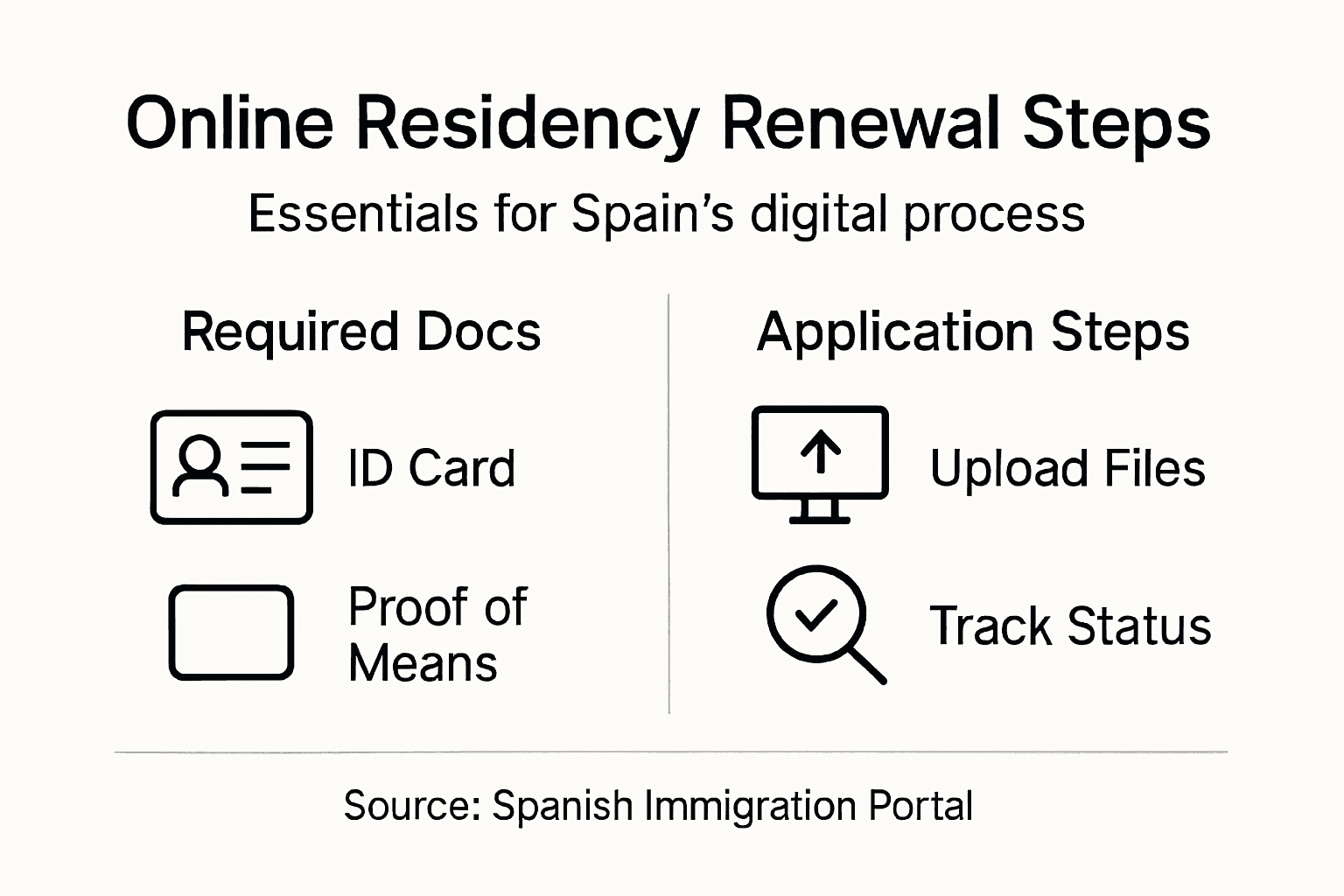
Navigating the official digital residency platform requires careful preparation and attention to detail. Applicants must first obtain a valid digital certificate, which serves as their primary authentication method. The application process involves several critical steps: selecting the appropriate residency renewal form, uploading high-quality scanned documents, verifying personal information, and paying the required administrative fees electronically. Each section of the online application demands precision, with mandatory fields that must be completed accurately to prevent potential rejections.
The digital platform offers real-time tracking and status updates, providing transparency throughout the renewal process. Applicants can monitor their application’s progress, receive electronic notifications about missing documents or additional requirements, and communicate with immigration authorities through secure messaging systems. Key sections typically include personal details verification, document upload zones, fee payment portals, and a comprehensive review section where applicants can confirm their submitted information before final submission.
Pro tip: Create digital copies of all documents in PDF format with clear, high-resolution scans, and maintain a backup of your entire application package to expedite potential resubmissions or address any technical issues.
Costs, Pitfalls, and Avoiding Delays
Navigating the Spanish residency renewal process requires strategic financial planning and meticulous attention to administrative details. Costs vary depending on residency type, with fees typically ranging from 10 to 250 euros, and additional expenses potentially arising from document translation, authentication, and potential legal consultation services.
According to residency renewal guidelines, applicants must be acutely aware of critical timing windows. The application can be submitted between 60 days before permit expiration and 90 days after, with precise adherence to this window being crucial. Common pitfalls include missing documentation, incorrect form completion, payment errors, and failure to obtain necessary digital certificates. Each mistake can trigger significant processing delays or outright application rejection, potentially jeopardizing your legal residency status.
Financial preparation is essential beyond the basic renewal fees. Applicants should budget for potential additional costs such as certified translations, medical certificates, background checks, and potential legal advisory services. The total expenditure can range from 300 to 800 euros depending on individual circumstances. Immigration authorities conduct thorough reviews, scrutinizing financial stability, continuous legal residence, and comprehensive documentation. Even minor discrepancies can result in time-consuming requests for additional information or complete application invalidation.
Pro tip: Maintain a dedicated savings fund specifically for renewal expenses, and start collecting required documents at least six months in advance to mitigate unexpected financial and administrative challenges.
Simplify Your Residency Renewal in Spain with Professional Support
Renewing your residency permit online in Spain involves complex documentation, strict deadlines, and precise eligibility checks. Common challenges like gathering the right documents, navigating evolving 2026 regulations, and using digital platforms can cause stress and costly delays. Key concepts such as maintaining continuous legal residence, meeting financial requirements, and understanding new grace periods make the process overwhelming for many expatriates.
Vive Legal understands these pain points and offers a seamless solution to streamline your renewal journey. Our platform combines expert legal oversight with automated tools to help you prepare accurate forms, review documents, schedule appointments, and track your case status securely. This means avoiding common pitfalls and ensuring timely submissions while keeping you informed every step of the way.
Take control of your residency renewal today by trusting Vive Legal. Visit our site to explore our comprehensive digital services and start your personalized application process. Don’t wait until deadlines become stressful — act now and benefit from transparent pricing, expert guidance, and a modern online experience tailored to expatriates, workers, and students navigating Spain’s immigration system.
Frequently Asked Questions
What documents do I need to renew my residency permit in Spain?
To renew your residency permit, you typically need a valid passport, proof of financial means, health insurance, and documents relevant to your specific residency category, such as proof of employment for work permits or enrollment documents for student visas.
How long before my residency expires should I start the renewal process?
It is recommended to start gathering your renewal documents at least three months before your residency permit expires to ensure a smooth and timely application process.
What is the new grace period for residency renewals in Spain starting in 2026?
Starting in 2026, applicants can submit their renewal applications up to three months after their permit’s expiration without risking their legal status, allowing for more flexibility in the renewal process.
How can I submit my residency renewal application online?
You can submit your residency renewal application online through the official Spanish immigration digital platform. You’ll need to obtain a valid digital certificate to authenticate your submission, complete the necessary forms, upload your documents, and pay the required fees electronically.
Recommended
Living legally in Spain shouldn't be difficult.
View services and pricesNot sure which procedure you need? Find out in 2 min
Questions? Message us on WhatsApp