
7 Essential Documents Required for Expatriates in Spain

Preparing to move to Spain as an expatriate means facing a long checklist of legal and practical requirements. It can be overwhelming to figure out which documents are truly necessary and how to meet specific residency rules—especially with unique demands like proof of financial means, health insurance requirements, and critical passport validity standards.
The good news is that with the right guidance, you can avoid costly delays and stay on the correct side of Spanish immigration law. This list reveals the most important documents and supporting papers you must gather before and after your arrival.
Living legally in Spain shouldn't be difficult.
View services and pricesNot sure which procedure you need? Find out in 2 min
Questions? Message us on WhatsApp
Get ready to uncover the actionable steps that will help you secure your legal residency, gain access to essential services, and start your new life in Spain with confidence.
Table of Contents
- Valid Passport And Visa For Entry
- Proof Of Financial Means For Residency
- Health Insurance Documentation
- NIE Application And Supporting Papers
- TIE Card Requirements And Process
- Proof Of Address And Registration
- Employment Or Enrollment Verification
Quick Summary
| Takeaway | Explanation |
|---|---|
| 1. Valid Passport Required | Ensure your passport is valid for at least three months past your EU departure. |
| 2. Demonstrate Financial Stability | Prepare comprehensive financial documents to prove you can support yourself in Spain. |
| 3. Health Insurance Is Mandatory | Obtain comprehensive health insurance that meets Spanish residency requirements for legal status. |
| 4. NIE Essential for Transactions | Apply for a Foreigner Identification Number (NIE) for legal and financial activities in Spain. |
| 5. Proof of Residence Necessary | Register your address with local authorities to access services and healthcare as a resident. |
1. Valid Passport and Visa for Entry
Navigating entry into Spain begins with having the right travel documents. Your passport is your golden ticket to international travel and the first critical requirement for expatriates planning their Spanish adventure.
For most travelers entering Spain, a valid passport is mandatory. The passport must meet specific criteria established by the Schengen Borders Agreement. Here are the key passport requirements:
- Passport must be valid for at least three months beyond your planned departure from the European Union
- Contains at least two blank pages for entry and exit stamps
- Issued within the last 10 years
- Issued by an officially recognized government authority
Visa requirements vary depending on your nationality and intended length of stay. For many countries, short visits up to 90 days do not require a separate visa. However business travelers and long-term residents need specific documentation.
Tip: Always verify your specific visa requirements with the Spanish Embassy or Consulate before traveling, as regulations can change.
If you are planning to stay longer than 90 days, you will need to apply for a specific visa type based on your purpose - whether it is work, study, or family reunification. Each visa type has unique documentation and application processes.
Pro tip: Create digital and physical copies of your passport and store them separately in case of loss or theft.
2. Proof of Financial Means for Residency
When moving to Spain, proving you can financially support yourself is not just a recommendation - it is a legal requirement. Spanish immigration authorities demand concrete evidence that you can sustain your lifestyle without becoming a public financial burden.
To demonstrate financial stability, you will need to prepare comprehensive financial documentation. These documents help officials verify that you have sufficient resources for living expenses, housing, healthcare, and other essential needs.
Key financial documents typically include:
- Bank statements showing consistent income or savings
- Proof of employment or professional contracts
- Investment portfolio statements
- Pension or retirement fund documentation
- Sponsorship letters with official financial guarantees
The specific requirements vary based on your residency type. Students, professionals, and retirees might need different financial proof standards.
Financial documentation is your passport to legal residency in Spain. Be thorough and precise in your paperwork.
Most immigration officials recommend having liquid assets that cover at least 12 months of living expenses. This typically means demonstrating access to funds equivalent to approximately €27000 per year for an individual.
Pro tip: Always keep your financial documents translated into Spanish by a certified translator and organize them chronologically for easy verification.
3. Health Insurance Documentation
Health insurance is not just a recommendation for expatriates in Spain - it is a critical legal requirement for obtaining residency and accessing healthcare services. Navigating the Spanish healthcare system demands comprehensive and valid insurance documentation.
The Spanish healthcare framework requires expatriates to demonstrate continuous and comprehensive medical coverage. This ensures you can access medical services without becoming a burden on the national healthcare system.
Key health insurance documentation must include:
- Detailed policy coverage statement
- Proof of current and valid insurance
- English and Spanish translations of insurance documents
- Emergency medical evacuation coverage
- Minimum coverage amounts meeting Spanish government requirements
Spain offers multiple pathways for health insurance, including:
- Private international health insurance plans
- European Health Insurance Card (for EU citizens)
- Spanish public healthcare registration
- Employer-sponsored health insurance
The Spanish healthcare system emphasizes equal access for legal residents, but expatriates must navigate specific documentation requirements.
Health insurance is your gateway to medical care and legal residency in Spain. Ensure your documentation is precise and comprehensive.
Most residency applications require health insurance that covers 100% of potential medical expenses with no co-payment requirements. The minimum recommended coverage is typically around €30000 per year.
Pro tip: Request a comprehensive insurance document that explicitly states it meets Spanish residency requirements and have it professionally translated.
4. NIE Application and Supporting Papers
The NIE (Foreigner Identification Number) is your essential legal identifier for virtually all official transactions in Spain. This unique number is crucial for expatriates planning to work, open bank accounts, sign contracts, or establish residency.
Your NIE application requires precise documentation to navigate Spain’s administrative landscape successfully. Understanding the required papers can make the difference between a smooth or challenging registration process.
Essential documents for NIE application include:
- Original valid passport
- Completed official Form EX-15
- Proof of payment for administrative fees (Form 790 Code 012)
- Documentation justifying your reason for obtaining NIE
- Recent passport-sized photographs
- Proof of Spanish address
The NIE application process involves specific steps at designated police stations or immigration offices. You will need to schedule an appointment and appear in person or send an authorized representative.
Your NIE is more than a number. It is your official gateway to legal and financial integration in Spain.
Most NIE applications are processed within five business days. However processing times can vary depending on local immigration office workload and the completeness of your submitted documentation.
Pro tip: Make multiple copies of all original documents and have them translated by a certified Spanish translator to prevent potential processing delays.
5. TIE Card Requirements and Process
The TIE (Tarjeta de Identidad de Extranjero) is your critical legal identification document for long-term residency in Spain. This biometric card serves as proof of your legal status and enables you to work, study, and access essential services.
For non-European Union nationals staying in Spain longer than six months, obtaining a TIE is mandatory and time-sensitive. You must apply within one month of arriving in the country to maintain legal residency status.
Key requirements for TIE application include:
- Original valid passport
- Completed Form EX17
- Proof of address in Spain
- NIE number documentation
- Payment receipt for administrative fees
- Recent passport-sized photographs
- Valid residence visa
The TIE application process involves multiple steps that require careful preparation. You will need to schedule an appointment at a local police station or foreigners’ office and provide comprehensive documentation.
Your TIE card is more than identification. It is your official gateway to living and working in Spain.
The card typically contains your photograph, NIE number, residence details, and is valid for the duration of your approved residency permit. Processing times can vary but generally take between two to six weeks.
Pro tip: Make digital and physical copies of all submitted documents and track your application number meticulously to ensure a smooth TIE registration process.
6. Proof of Address and Registration
Proving your residential address is a critical step in establishing your legal presence in Spain. This documentation serves as an official record linking you to your specific location and is essential for numerous administrative processes.
Address registration in Spain, known as empadronamiento, is more than just a bureaucratic formality. It is a fundamental requirement that opens doors to accessing local services, healthcare, and other essential rights.
Key documents for proving your address include:
- Rental contract or property deed
- Utility bills in your name (electricity, water, internet)
- Recent bank statement with home address
- If renting a room: signed statement from property owner
- Official tax documents with residential address
The registration process typically involves:
- Gather required documentation
- Visit local town hall (ayuntamiento)
- Complete official registration form
- Submit documents for verification
- Receive official registration certificate (certificado de empadronamiento)
Your address registration is your first step toward becoming an integrated resident in your Spanish community.
Most municipalities require you to register within three months of establishing residence. The certificate is valid for three months and can be renewed as needed.
Pro tip: Always request multiple certified copies of your registration certificate, as many government and private institutions will require an original document.
7. Employment or Enrollment Verification
Proving your purpose of stay is a critical requirement for expatriates seeking residency in Spain. Whether you are a student or professional, official documentation verifying your status is essential for legal recognition.
Employment and enrollment verification serves multiple crucial functions in your residency application. It demonstrates your economic contribution and legitimate reason for residing in the country.
Essential documents for verification include:
- Official university acceptance letter
- Employment contract with company letterhead
- Professional work permit
- Detailed enrollment certificate
- Internship or research agreement
- Scholarship or grant documentation
These documents must typically include:
- Full legal name of institution or employer
- Your specific role or academic program
- Start and end dates of enrollment or contract
- Official stamp or signature
- Contact information for verification
The international student documentation requirements emphasize the importance of authenticity and comprehensive information.
Your verification documents are the bridge between your aspiration and legal residency in Spain.
Most Spanish immigration offices require documents to be recently issued (within three to six months) and officially translated into Spanish.
Pro tip: Request multiple certified copies of your verification documents and keep digital backups in secure cloud storage for quick access during the application process.
Below is a comprehensive table summarizing the essential requirements and steps for expatriates planning to establish temporary or permanent residency in Spain based on the article’s guidelines.
| Requirement Category | Key Details | Additional Notes |
|---|---|---|
| Valid Passport and Visa | Documents Needed: - Passport valid for at least three months beyond departure. - Meets Schengen criteria. - Visa based on nationality and duration. | Business or long-term stays require specific visa applications. Verify with the Spanish consulate. |
| Financial Documentation | Proof Required: - Bank statements. - Employment proof. - Investments or sponsored support. | Assets sufficient for one year, translated to Spanish. Recommended amount: €27,000 for one person annually. |
| Health Insurance | Required for residency, includes inpatient and outpatient coverage, minimum €30,000 annually. | Protects access to Spanish healthcare and ensures financial independence. Documents should be professionally translated. |
| NIE Application | Key Documents: - Passport. - Completed form EX-15. - Proof of fee payment. | This number is necessary for official transactions. Application reviews are typically completed in five business days. Multiple copies recommended. |
| TIE Card Process | Required for non-EU citizens staying over six months. Specific forms, fees, and photos required. | Used as biometric proof of legal residency. Apply within one month of arrival to avoid delays. |
| Proof of Address | Rental contracts or utility bills required. Official registration at your local Spanish town hall (empadronamiento). | Certificates need renewal every three months unless otherwise stated by the municipality. Keeps residents eligible for local services. |
| Proof of Stay Purpose | Official documents from employer/school. Includes signed contracts, acceptance letters, and permits. | Essential for confirming reason for residence. Demands recent issuance and certified translations. |
Simplify Your Residency Journey in Spain with Expert Legal Support
Navigating the complex requirements for expatriates in Spain demands precision, up-to-date knowledge, and thorough documentation. From securing a valid passport and visa to mastering the NIE and TIE application processes, each step involves critical paperwork and strict deadlines. The challenges of proving financial means, health insurance compliance, and address registration can feel overwhelming and error-prone without the right guidance.
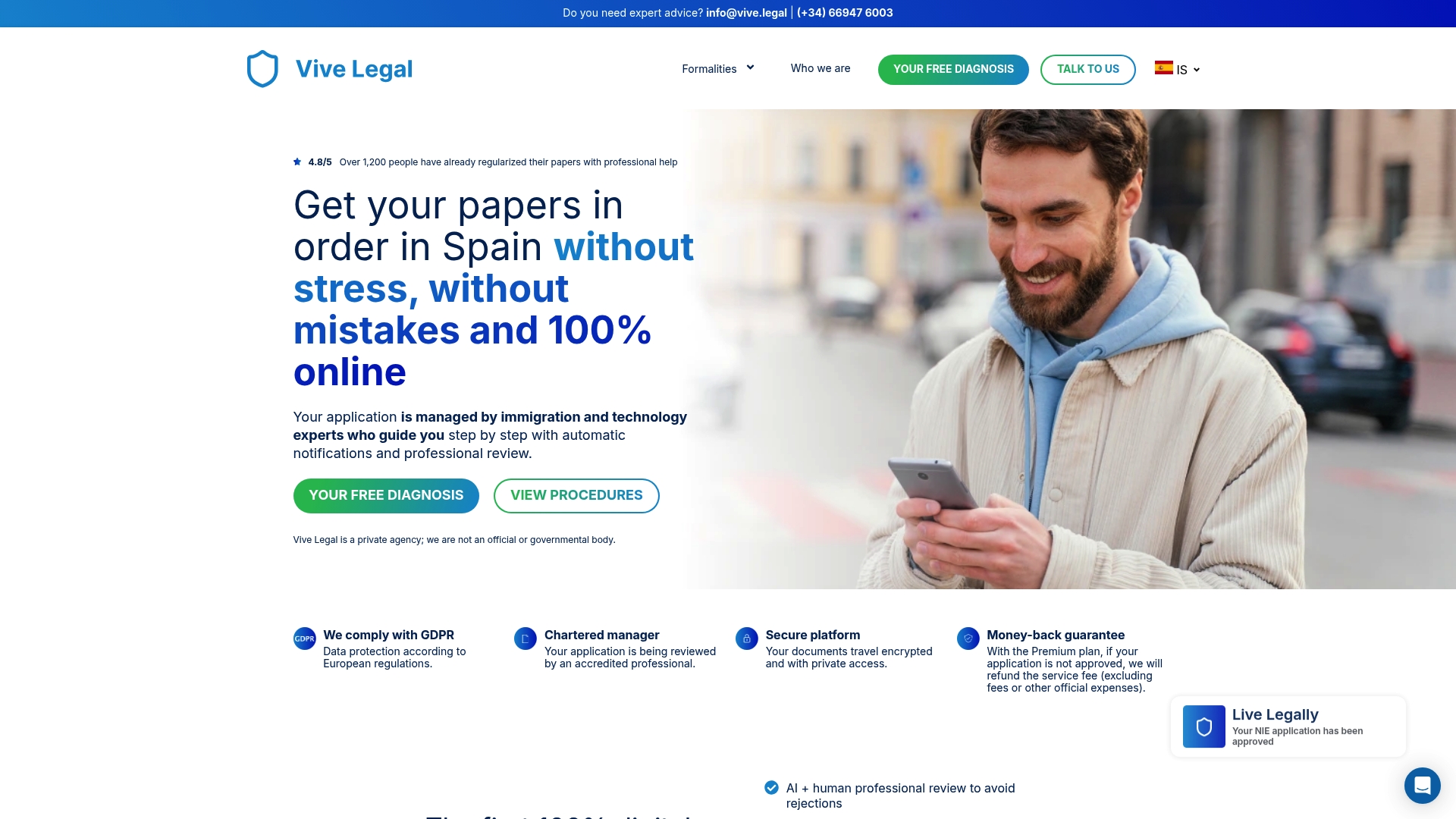
Take control of your residency application with Vive Legal, a trusted online legal consultancy dedicated to immigration and residency procedures in Spain. Our platform combines advanced automation and professional expertise to help you prepare, review, and submit essential documents quickly and accurately. Whether you need assistance with your NIE, TIE, or proof of enrollment, we provide personalized diagnostics, appointment scheduling, and continuous case tracking to keep you informed every step of the way. Avoid common pitfalls and maximize your chances of approval by starting your journey today with Uncategorized Archives - Vive Legal. Don’t risk delays or rejections - visit Vive Legal now and experience a streamlined, secure, and user-friendly solution tailored for expatriates striving to live and thrive in Spain.
Frequently Asked Questions
What documents do I need to enter Spain as an expatriate?
To enter Spain, you will need a valid passport and, depending on your nationality, a visa if you plan to stay longer than 90 days. Ensure your passport is valid for at least three months beyond your planned departure date from the European Union and has at least two blank pages.
How can I prove my financial means for residency in Spain?
To demonstrate your financial means, prepare comprehensive documentation such as bank statements, proof of employment, or pension documentation. Make sure to gather recent documents showing access to funds equivalent to about €27,000 per year, which will help establish your financial stability.
What health insurance documentation is required for expatriates in Spain?
Expatriates need to provide proof of comprehensive health insurance coverage to obtain residency. Ensure your insurance policy covers at least €30,000 in medical expenses and includes emergency medical evacuation, with translations available in both English and Spanish.
How do I apply for a NIE (Foreigner Identification Number) in Spain?
To apply for a NIE, gather necessary documents such as your valid passport and completed Form EX-15, and visit a designated police station or immigration office. Be prepared to submit proof of payment for administrative fees and documentation justifying your need for a NIE, completing the process typically within five business days.
What are the requirements to obtain a TIE (Tarjeta de Identidad de Extranjero) in Spain?
To obtain a TIE, you need to provide documents including your valid passport, proof of address, and your NIE number. Make your application within one month of arrival in Spain to maintain legal residency, and expect processing times to range from two to six weeks.
How do I register my address in Spain, and why is it important?
To register your address, visit your local town hall and provide needed documents such as a rental contract, utility bills, or tax documents. Completing this registration is crucial as it opens access to local services and healthcare, and must be done within three months of establishing residency.
Recommended
Living legally in Spain shouldn't be difficult.
View services and pricesNot sure which procedure you need? Find out in 2 min
Questions? Message us on WhatsApp