
Residencia Comunitaria Explained: EU Rights in Spain

Starting a new chapter in Spain as a European professional or student often means untangling unfamiliar residency rules and bureaucracy. For many, understanding the requirements for Residencia Comunitaria can make the difference between a smooth start and months of frustration. Knowing what this official status provides, who qualifies, and how to secure the right documents will help you live, work, or study in Spain with confidence and legal peace of mind.
Table of Contents
- What Is Residencia Comunitaria in Spain?
- Who Qualifies for Community Residency
- Registration Process and Key Documents
- Rights and Responsibilities for Residents
- Legal Obligations and Common Pitfalls
Key Takeaways
| Point | Details |
|---|---|
| Residencia Comunitaria Definition | It is a legal status for EU, EEA, and Swiss citizens to live and work in Spain, offering access to social services. |
| Eligibility Requirements | Applicants must have a valid passport, proof of financial means, and health insurance to qualify. |
| Registration Process | EU citizens must register within three months of arrival, providing necessary documentation to local authorities. |
| Rights and Responsibilities | Residents enjoy rights such as healthcare and employment access while also needing to uphold legal obligations to maintain their status. |
What Is Residencia Comunitaria in Spain?
Residencia Comunitaria is the official legal status granted to European Union, European Economic Area, and Swiss citizens who wish to establish legal residence in Spain. This specialized residency permit allows citizens to live, work, and access social services within Spanish territory under specific European Union rights and regulations.
Living legally in Spain shouldn't be difficult.
View services and pricesNot sure which procedure you need? Find out in 2 min
Questions? Message us on WhatsApp
The core purpose of Residencia Comunitaria is to provide a standardized framework for EU citizens to integrate smoothly into Spanish society. Unlike third-country nationals, these individuals benefit from streamlined administrative processes that recognize their fundamental right to move and reside freely within European member states. This status essentially confirms an EU citizen’s legal standing and provides them comprehensive access to healthcare, employment opportunities, and social benefits.
To qualify for Residencia Comunitaria, applicants must typically meet several key requirements. These include holding a valid European passport, demonstrating sufficient financial resources to support themselves, and having comprehensive health insurance coverage. The registration process involves submitting documentation to local Spanish authorities, who will then issue an official registration certificate confirming the individual’s legal residence status.
Pro tip: Always ensure your documentation is current and translated into Spanish by a certified translator to expedite your Residencia Comunitaria application process.
Who Qualifies for Community Residency
Under European Union regulations, Community Residency in Spain is specifically designed for citizens from EU member states, the European Economic Area, and Switzerland who intend to establish long-term residence. Specific eligibility criteria define multiple pathways for obtaining legal residency status based on an individual’s professional and economic circumstances.
The primary qualification categories for Community Residency include workers, self-employed professionals, students, and individuals with sufficient financial resources. Employed individuals must demonstrate a genuine work contract or proof of professional activity in Spain. Self-employed professionals need to provide documentation showing their independent economic activity, such as business registration or professional licensing. Students must be enrolled in an accredited educational institution and possess comprehensive health insurance coverage and adequate financial means to support themselves during their stay.
Family members of EU citizens also have specific pathways to obtain Community Residency. This includes spouses, direct descendants under 21 years old, dependent children, and dependent direct relatives. These family members can join or accompany the primary EU citizen resident, provided they meet specific documentation and financial requirements. Each family member’s application is evaluated individually, considering their relationship to the primary resident and their ability to support themselves economically.
Here’s a comparison of Community Residency qualification categories and core requirements:
| Category | Primary Requirement | Example Documentation |
|---|---|---|
| Employed Worker | Valid job contract in Spain | Signed employment contract |
| Self-Employed Professional | Proof of business activity | Business registration certificate |
| Student | Enrollment in a Spanish institution | Letter of acceptance |
| Non-Employed with Means | Sufficient financial resources | Recent bank statements |
Pro tip: Prepare a comprehensive documentation portfolio in advance, including translated and certified copies of all required documents to streamline your Community Residency application process.
Registration Process and Key Documents
Residencia Comunitaria registration is a structured process that requires EU citizens to complete specific administrative steps within three months of arriving in Spain. Official registration procedures mandate in-person application at local Foreigners Offices or designated police stations, where applicants must present comprehensive documentation proving their eligibility and intent to reside.
The documentation requirements vary depending on an individual’s specific circumstances, but typically include several critical elements. Applicants must provide a valid passport or national identification card, comprehensive proof of employment or financial means, and current health insurance documentation. For workers, this means presenting an original work contract or business registration. For students, acceptance letters from accredited institutions and proof of financial sustainability are crucial. Self-employed professionals need to submit business registration documents and evidence of ongoing economic activity.
The registration process culminates in receiving an official Certificate of Registration (Certificado de Registro), which serves as legal proof of Community Residency. This document includes critical personal details and confirms the individual’s legal right to reside in Spain. Applicants should be prepared for potential additional verification steps, where authorities might request supplementary documentation to validate the initial application. The entire process is designed to ensure that EU citizens can integrate smoothly while maintaining proper legal documentation.
Pro tip: Create digital and physical copies of all required documents before your appointment, and schedule your registration as close to your arrival date as possible to avoid administrative complications.
Rights and Responsibilities for Residents
EU citizens holding Residencia Comunitaria are granted a comprehensive set of legal protections and social entitlements in Spain. Specific resident rights encompass fundamental aspects of social and professional integration, ensuring equal treatment and access to critical services across Spanish society.

The core rights for Community Residents include unrestricted access to employment markets, comprehensive healthcare services, and social security benefits. Workers enjoy the same employment protections as Spanish nationals, including minimum wage guarantees, workplace safety standards, and unemployment support. Students can access educational institutions under equivalent conditions, while self-employed professionals can establish businesses with minimal bureaucratic restrictions. Additionally, residents are protected against discrimination and have the right to participate in local elections, fostering genuine social inclusion.
With these expansive rights come corresponding responsibilities that Community Residents must diligently maintain. Individuals are required to comply with Spanish legal frameworks, maintain valid registration documentation, and demonstrate sufficient financial resources to support themselves. Family members also receive specific legal protections, ensuring their residency status remains stable even through potential relationship changes. Critically, residents must continuously prove they are not becoming an undue burden on the Spanish social assistance system, which involves maintaining active employment, pursuing education, or demonstrating consistent financial independence.
Key rights and responsibilities for Community Residents in Spain are summarized below:
| Right or Responsibility | Description | Practical Impact |
|---|---|---|
| Access to Employment | Work in any sector without restriction | Broader career opportunities |
| Healthcare Coverage | Use public and private systems | Improved health security |
| Social Security Benefits | Receive unemployment and welfare | Financial safety net |
| Maintain Documentation | Keep all permits updated | Avoid legal complications |
| Financial Self-Sufficiency | Must not burden Spanish social system | Continued residency stability |
Pro tip: Maintain a comprehensive file of all official documentation and regularly update your registration to ensure continuous compliance with Spanish residency requirements.
Legal Obligations and Common Pitfalls
EU citizens with Residencia Comunitaria must navigate a complex landscape of legal responsibilities to maintain their residency status in Spain. Critical legal obligations require precise adherence to administrative requirements, with strict timelines and documentation standards that demand meticulous attention.
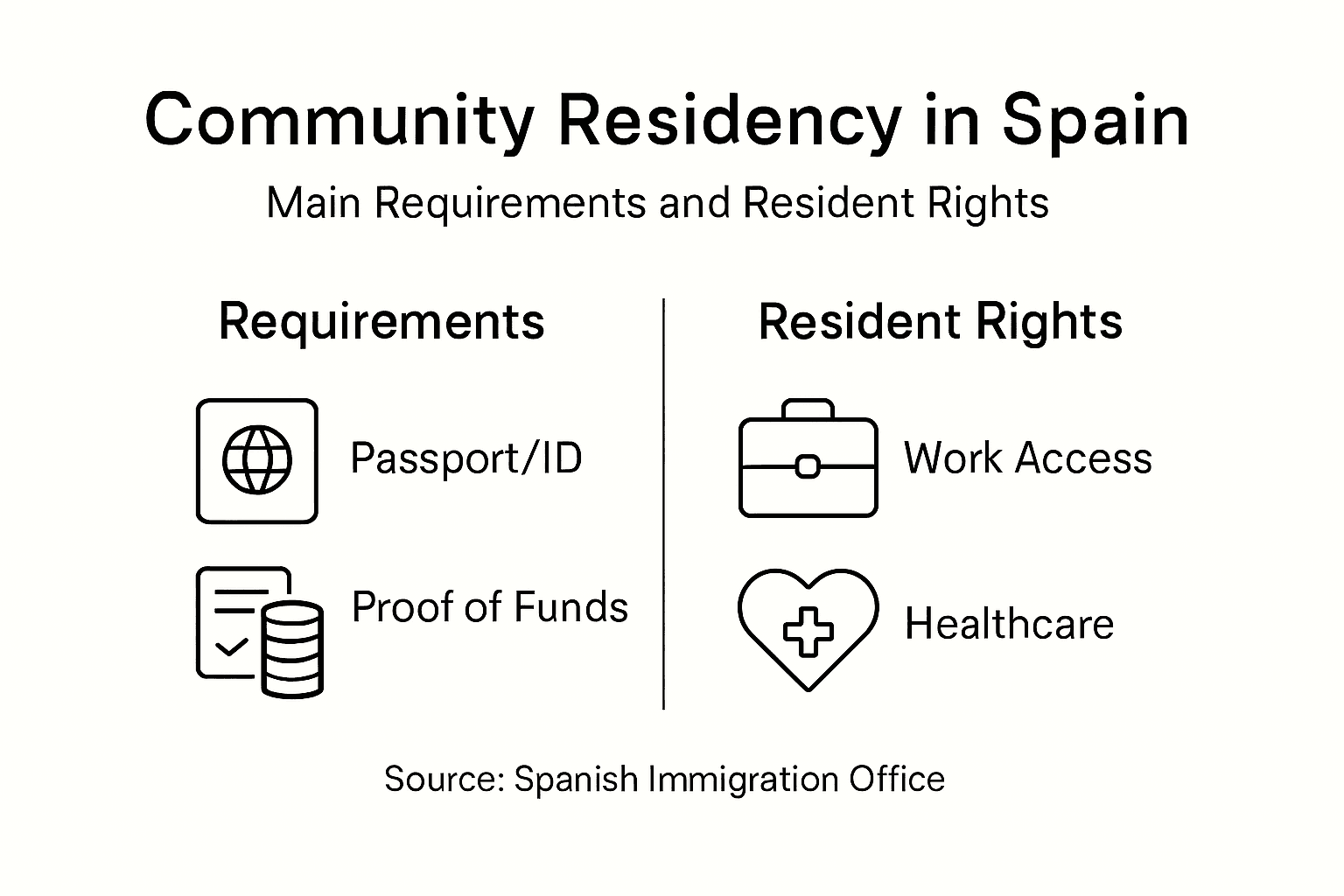
The primary legal obligations include registering within three months of arrival, maintaining continuous proof of economic self-sufficiency, and carrying valid identification at all times. Residents must demonstrate ongoing employment, active student status, or sufficient financial resources to support themselves without becoming a burden on the Spanish social system. Health insurance coverage is mandatory, and gaps in documentation can trigger immediate review of residency status. Common pitfalls emerge when individuals fail to renew registration certificates, experience unexpected job loss, or do not update their personal information with local authorities.
Specific documentation challenges can quickly escalate into serious legal complications. Incomplete or outdated paperwork, missed renewal deadlines, or inability to prove economic stability can result in administrative warnings, fines, or even potential loss of residency rights. Family members are equally vulnerable, with their residency status closely tied to the primary resident’s compliance. Authorities conduct periodic reviews to ensure continued eligibility, meaning consistent documentation and proactive management of legal requirements are crucial for maintaining long-term residency in Spain.
Pro tip: Create a digital and physical archive of all residency documents, setting calendar reminders for renewals and important administrative deadlines to prevent unexpected legal complications.
Simplify Your Residencia Comunitaria Process Today
Navigating the complexities of obtaining or renewing your Residencia Comunitaria in Spain can feel overwhelming. This article highlights the critical need for thorough document preparation, timely registration, and continuous compliance with Spanish regulations. If you are an EU citizen looking to secure your legal residency status without the stress of administrative pitfalls or uncertainty about requirements like employment proof, health insurance, or financial self-sufficiency Vitally avoid common delays and maintain your rights with professional support.
Discover how Vive Legal streamlines every step of your residency journey with personalized diagnostics, expert document review, and hassle-free appointment scheduling. Whether you are a worker, student, or self-employed professional, our fully digital platform combines AI precision with expert oversight to maximize your approval chances while keeping you informed at every stage. Start simplifying your residency procedure now by exploring our Uncategorized Archives - Vive Legal for detailed guides and legal insights. Take action today to secure your future in Spain with confidence and ease.
Frequently Asked Questions
What is Residencia Comunitaria?
Residencia Comunitaria is the legal status granted to EU, EEA, and Swiss citizens, allowing them to live, work, and access social services in Spain under EU rights.
Who qualifies for Community Residency in Spain?
EU citizens, self-employed professionals, students, and individuals with sufficient financial resources qualify for Community Residency. Family members of EU citizens can also apply under specific criteria.
What documents are required for the Residencia Comunitaria registration process?
Key documents typically include a valid passport or ID, proof of employment or financial means, and health insurance documentation. Students must also provide proof of enrollment in an accredited institution.
What rights do Community Residents in Spain have?
Community Residents have the right to access employment, healthcare, and social security benefits. They also enjoy protections against discrimination and have the right to participate in local elections.
Recommended
Living legally in Spain shouldn't be difficult.
View services and pricesNot sure which procedure you need? Find out in 2 min
Questions? Message us on WhatsApp