
Residency appeal process Spain 2026: 35% higher success

Many believe every residency denial in Spain can be challenged, but approximately 10% of residency denials are non-appealable due to public safety reasons. Understanding appeal steps and deadlines can improve success in challenging denials. This guide covers legal grounds, documentation, rights, appeal routes, and support options to help you navigate the process confidently.
Table of Contents
- Overview Of Residency Application Denials In Spain
- Understanding The Residency Appeal Process: Administrative And Judicial Routes
- Essential Documentation And Legal Requirements For Appealing
- Rights And Legal Status During The Appeal Process
- Common Misconceptions About The Residency Appeal Process
- Leveraging Legal Assistance For Residency Appeals In Spain
- Next Steps And Outcomes Post-Appeal
- Get Expert Help With Your Spanish Residency Appeal Today
- Frequently Asked Questions
Key takeaways
| Point | Details |
|---|---|
| Common denial reasons | Incomplete documents, criminal records, or non-compliance with residency criteria lead to most rejections. |
| Strict appeal deadlines | Administrative appeals require filing within 30 days; judicial appeals within 2 months of denial. |
| Documentation matters | Complete and accurate evidence increases appeal success rates by over 35%. |
| Legal status protection | Timely suspension requests maintain legal residence during the appeal process. |
| Professional assistance | Expert legal support significantly improves approval chances and reduces procedural errors. |
Overview of residency application denials in Spain
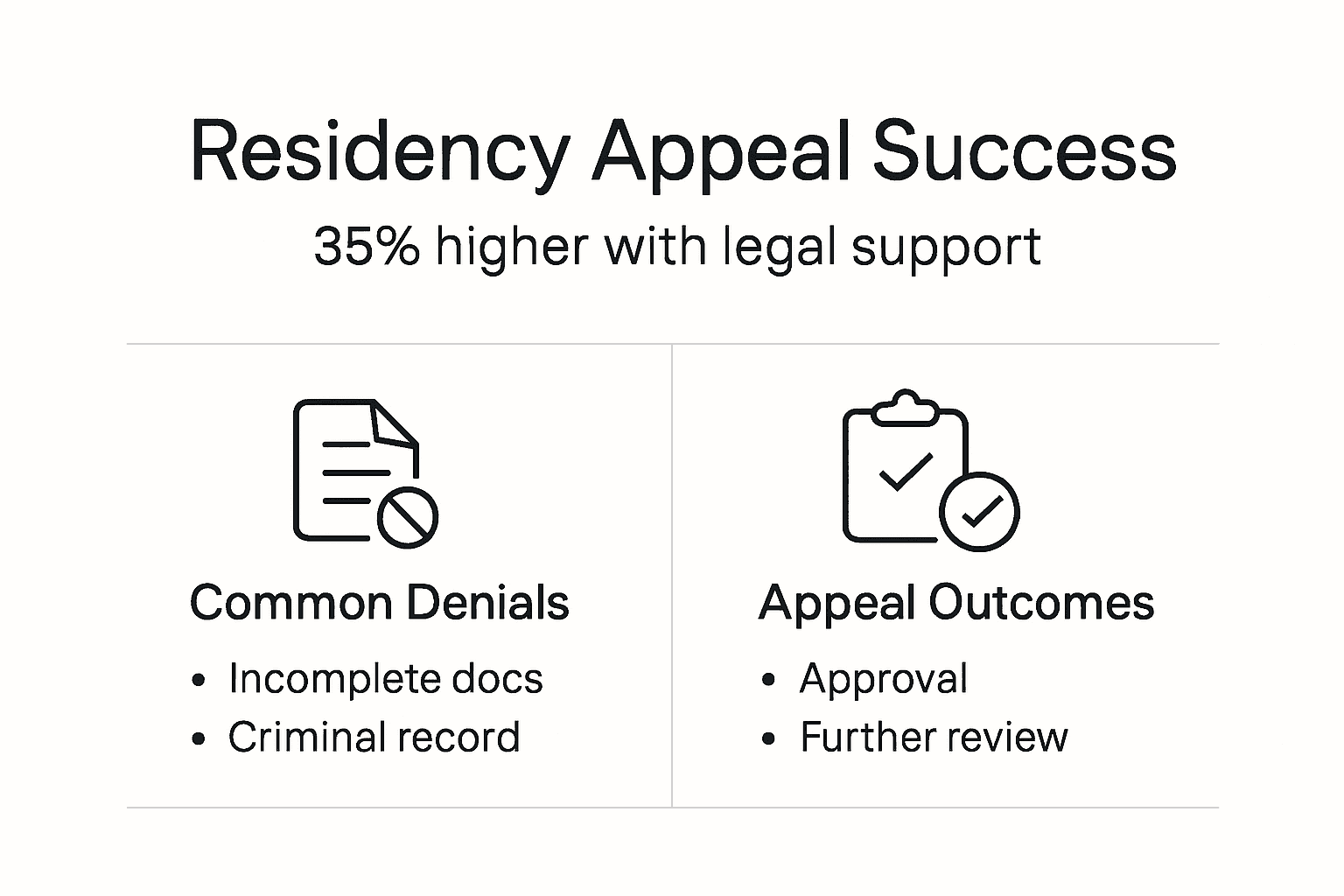
Residency applications in Spain face rejection for several reasons. Incomplete documents, criminal records, and non-compliance with residency criteria account for most denials. Up to 15% of Spanish residency applications are initially denied, which underscores the importance of understanding your appeal rights.
Living legally in Spain shouldn't be difficult.
View services and pricesNot sure which procedure you need? Find out in 2 min
Questions? Message us on WhatsApp
Legal grounds for appeal typically include procedural errors and misapplication of law by immigration authorities. When officials make mistakes in processing your application or incorrectly interpret regulations, you have solid grounds to challenge their decision. These errors happen more often than you might think.
Denied applicants face significant barriers but retain rights to appeal in most cases. The exception involves public order concerns, where authorities can restrict appeal options based on safety considerations. Knowing which category your denial falls into helps you determine next steps.
Common denial reasons include:
- Missing or expired supporting documents
- Insufficient proof of financial means
- Criminal background checks revealing issues
- Failure to meet specific visa category requirements
- Inconsistencies in application information
The 15% denial rate creates uncertainty for many applicants. Understanding the basis of your denial prepares you for an effective challenge. Review your Vive Legal immigration guides to identify specific issues in your case and build a stronger appeal strategy.
Understanding the residency appeal process: administrative and judicial routes
Spain offers two distinct appeal paths for challenging residency denials. The administrative appeal must be filed within 30 calendar days after receiving your denial notice. This first route focuses on procedural and legal errors made by immigration officials during the initial review.
Judicial appeals occur within 2 months if your administrative appeal is unsuccessful. This second option involves court proceedings where judges examine whether authorities applied the law correctly. The judicial route takes longer but provides another opportunity to reverse unfavorable decisions.
Here’s how to proceed with your appeal:
- Review your denial letter carefully to identify stated reasons
- Gather all supporting documents and evidence within the first week
- Consult with legal experts to determine the strongest grounds for appeal
- Prepare your written appeal addressing each denial reason specifically
- Submit your appeal through official channels before the deadline expires
- Request suspension of the denial to maintain legal status during review
| Appeal Type | Timeline | Decision Maker | Processing Time | Effect on Status |
|---|---|---|---|---|
| Administrative | 30 days to file | Immigration office | 3-6 months | Can suspend with request |
| Judicial | 2 months to file | Court system | 6-18 months | Depends on case type |
Pro Tip: File your administrative appeal filing immediately after receiving denial. These strict deadlines are non-extendable, and missing them eliminates your appeal options entirely. Even weekends and holidays count toward the 30-day window.
Essential documentation and legal requirements for appealing
Your appeal success depends heavily on the documentation you submit. Complete and accurate documentation improves appeal success rates by over 35%, making this step crucial for your case outcome. Start by organizing your original denial letter, which serves as the reference point for all appeal grounds.

Proof of eligibility must demonstrate you meet valid residency criteria. This includes employment contracts, proof of financial means, health insurance coverage, and any documents showing ties to Spain. New or previously overlooked documents can significantly strengthen your position.
Essential documents for your appeal:
- Original denial notification with official stamps
- Valid passport and identification documents
- Completed appeal forms with accurate information
- Evidence addressing each specific denial reason
- Supporting letters from employers or sponsors
- Financial statements proving economic stability
- Criminal background checks if relevant
Legal identification and properly filled appeal forms are mandatory requirements. Errors or omissions in these basic documents lead to technical rejections before authorities even review your case merits. Double-check every detail before submission.
Review EU long-term residence documents requirements if you’re applying for permanent status. Cross-reference your materials with official immigration guides and arraigo social requirements to ensure completeness. Accuracy and thoroughness reduce rejection risks due to technicalities.
Rights and legal status during the appeal process
Applicants can maintain legal stay if appeal is timely and suspension of denial is requested. This protection allows you to remain in Spain legally while authorities review your case. Filing within the deadline and explicitly requesting suspension are both necessary for this benefit.
Certain cases might lead to revocation despite the appeal. Public safety grounds represent the most common exception where authorities can proceed with removal even during active appeals. Review your denial letter carefully to identify whether your case falls into this category.
Your appeal status impacts several areas:
- Employment authorization may continue with proper suspension request
- Healthcare access through public system typically remains active
- Social services eligibility depends on your specific residency type
- Travel outside Spain becomes complicated without valid documentation
Applicants must submit suspension requests to avoid illegal stay status. Without this explicit request, your legal residence expires when the denial becomes effective. The administrative burden falls on you to assert this right proactively.
Pro Tip: Always confirm document acceptance dates and maintain copies proving timely submission. Immigration offices sometimes dispute receipt dates, and your copies serve as essential proof. Request stamped acknowledgment receipts whenever possible to create an official record of your filing date.
Common misconceptions about the residency appeal process
Many applicants assume all denials can be challenged, but this isn’t accurate. Cases involving public order concerns often face restricted appeal rights, and approximately 10% of denials fall into non-appealable categories. Understanding which situations allow appeals helps set realistic expectations.
Appeal deadlines are strict and cannot be extended under any circumstances. Unlike some legal processes that allow extensions for cause, Spanish immigration law treats these timeframes as absolute. Missing a deadline by even one day eliminates your appeal rights completely.
Key misconceptions to avoid:
- Believing automatic appeal approval with new documents
- Assuming legal residence continues without suspension request
- Thinking lawyers are unnecessary for straightforward cases
- Expecting quick decisions within weeks rather than months
- Believing verbal explanations substitute for proper documentation
Appeal approval is not guaranteed regardless of documentation quality. Legal and evidentiary strength determines outcomes, but authorities maintain discretion in applying regulations. Strong cases still face rejection when officials interpret requirements differently.
“Understanding appeal limitations and realistic timelines prevents disappointment and helps applicants make informed decisions about their residence options in Spain.”
Legal assistance is not compulsory but greatly enhances success probabilities. While you can file appeals independently, professional guidance addresses technical requirements that non-lawyers often miss. The complexity of Spanish immigration law makes expert support valuable for most cases.
Leveraging legal assistance for residency appeals in Spain
Legal experts guide you through complex appeal procedures and strict deadlines that confuse many applicants. They understand which arguments resonate with immigration officials and how to frame your case for maximum impact. Legal consultancy improves appeal success rates significantly and reduces submission errors.
Professionals help assemble comprehensive documents and cite proper legal grounds for challenging denials. They know exactly which evidence addresses specific rejection reasons and how to present information persuasively. This targeted approach prevents the scattershot documentation that weakens many self-filed appeals.
Benefits of professional support:
- Expert review of denial reasons and viable appeal strategies
- Complete document preparation meeting all technical requirements
- Proper legal citations supporting your eligibility arguments
- Deadline management ensuring timely submission of all materials
- Communication with authorities on your behalf throughout the process
Professional oversight reduces errors and missed deadlines that cause denials. Immigration forms contain numerous fields where incorrect information triggers automatic rejections. Lawyers catch these issues before submission, saving months of delays.
Success rates improve by over 35% with professional legal help compared to self-filed appeals. This significant difference reflects the value of experience in navigating Spanish immigration bureaucracy. The investment in legal support often proves worthwhile given the stakes involved.
Pro Tip: Use platforms like Vive Legal consulting services for document tracking and case updates to stay informed. Digital case management gives you real-time visibility into your appeal status and upcoming deadlines. These tools complement professional representation by keeping you engaged in the process.
Next steps and outcomes post-appeal
Possible outcomes after appeal submission include approval, outright rejection, or requirements for further appeals. Understanding each scenario helps you prepare appropriate responses and maintain realistic expectations throughout the waiting period.
If approved, you obtain legal residency status and benefits as per Spanish regulations. This includes work authorization, access to healthcare, and the ability to travel freely within Schengen countries. Your approval notice specifies the exact rights and duration of your residence permit.
Rejection opens additional options:
- Filing judicial appeal within 2 months if administrative appeal fails
- Seeking reconsideration with newly discovered evidence
- Applying for alternative residency categories that fit your situation
- Exploring extraordinary regularization programs when eligible
- Preparing voluntary departure if all options are exhausted
Applicants should prepare for each outcome with documentation and legal advice. Organizing materials in advance allows quick action if you need to escalate to judicial appeals. Delay between administrative and judicial stages can work against you if you’re unprepared.
Taking timely further actions is critical to maintaining residence eligibility. The window for judicial appeals closes just as firmly as administrative deadlines. Keep your legal team engaged and ready to proceed immediately if your first appeal receives an unfavorable decision.
Get expert help with your Spanish residency appeal today
Navigating residency appeals requires precision and expertise you might not have. Vive Legal offers expert guidance and document review to successfully file appeals with higher approval chances.
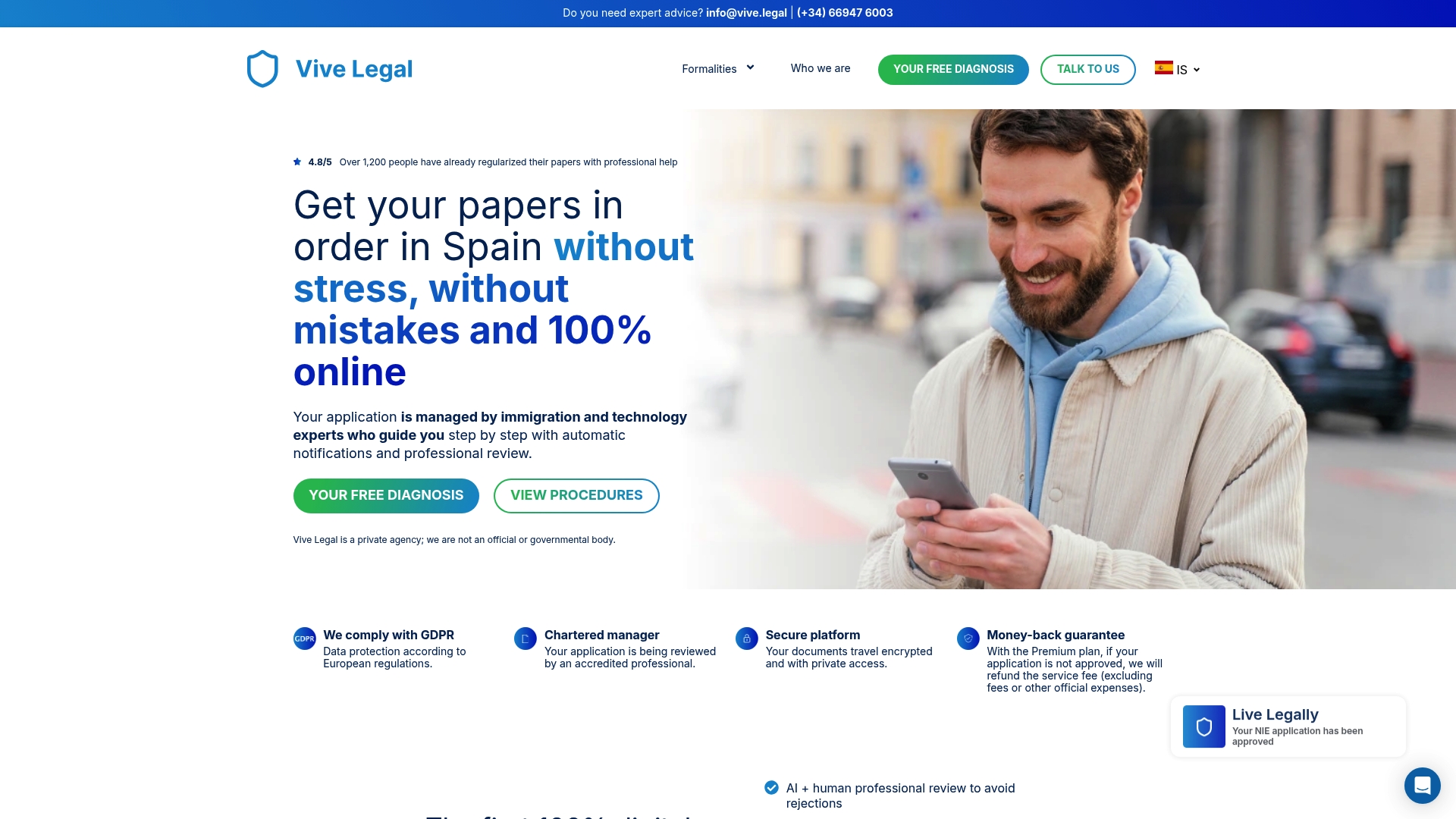
Our comprehensive immigration services simplify complex requirements and track case progress seamlessly through secure client portals. You receive notifications at each stage, ensuring you never miss critical deadlines or document requests. Legal professionals on our platform ensure deadlines and legal bases are respected for optimal success outcomes.
We provide specialized support for challenging situations, including extraordinary regularization services and residency appeal case assistance. Our combination of AI-powered document review and human legal expertise minimizes errors while increasing approval chances. Using trusted services minimizes risks and improves your chances of obtaining residency in Spain through proper legal channels.
Frequently asked questions
What is the deadline for filing a residency appeal in Spain?
Administrative appeals must be filed within 30 calendar days of receiving your denial notice. Judicial appeals are allowed within 2 months after administrative refusal. These deadlines are absolute and cannot be extended for any reason.
Can I stay legally in Spain while my appeal is being processed?
You can maintain legal stay if you file the appeal and explicitly request suspension of the denial within the deadline. Certain cases involving public order may still lead to loss of status despite active appeals. Always submit the suspension request as part of your appeal package.
Is hiring a lawyer mandatory for filing a residency appeal?
Legal assistance is not mandatory but strongly increases approval chances by over 35%. Professional help reduces errors and streamlines the appeal process through proper documentation and legal arguments. Most successful appeals involve expert guidance.
What happens if my residency appeal is rejected?
You may file a judicial appeal within 2 months if the administrative appeal is denied. Consider gathering new evidence or seeking legal advice for reconsideration or alternative residency pathways. Exploring all options quickly maintains your possibility of legal residence in Spain.
Recommended
Living legally in Spain shouldn't be difficult.
View services and pricesNot sure which procedure you need? Find out in 2 min
Questions? Message us on WhatsApp