
Spain Citizenship Explained: Clear Steps for Expats

More than 40 percent of foreign nationals face delays or rejections when applying for Spanish citizenship. For American digital nomads and international expatriates, the legal differences between residency and full citizenship can be confusing and expensive. Understanding exactly what Spanish citizenship means—and how it impacts your rights in Spain and the European Union—helps you avoid costly mistakes and secure long-term protections. Discover which legal requirements and essential documents matter most for fast, error-free approval.
Table of Contents
- What Spanish Citizenship Means Legally
- Main Paths to Spanish Citizenship
- Eligibility Criteria and Required Documents
- Residency, Naturalization, and Key Distinctions
- Dual Citizenship, Taxes, and Legal Risks
- Common Mistakes and How to Avoid Them
Key Takeaways
| Point | Details |
|---|---|
| Comprehensive Rights | Spanish citizenship provides full legal standing, including voting rights, healthcare access, and EU movement privileges. |
| Citizenship Pathways | Routes include citizenship by descent, residence, birth, and marriage, each with unique requirements. |
| Documentation Importance | Properly prepared and legalized documents are critical to a successful citizenship application. |
| Understanding Dual Citizenship | Manage obligations and potential tax implications carefully when considering dual citizenship opportunities. |
What Spanish Citizenship Means Legally
Spanish citizenship represents far more than a legal document – it’s a gateway to comprehensive rights, privileges, and belonging within both Spain and the European Union. Spanish nationality law fundamentally defines citizenship through bloodline (jus sanguinis), with additional provisions for birthplace (jus soli) and residency pathways.
Living legally in Spain shouldn't be difficult.
View services and pricesNot sure which procedure you need? Find out in 2 min
Questions? Message us on WhatsApp
At its core, Spanish citizenship grants individuals full legal standing within the Spanish state, including critical entitlements like voting rights, passport access, and unrestricted work permissions. Unlike temporary residency permits, citizenship provides permanent legal protection and eliminates many bureaucratic barriers faced by foreign nationals. EU citizenship comes as an automatic benefit, enabling free movement across member countries, participation in European political processes, and access to social services.
The legal implications extend beyond personal rights. Spanish citizens enjoy comprehensive protections under national and European law, including diplomatic representation abroad, healthcare access, educational opportunities, and social security benefits. Importantly, citizenship acquired through legal channels – whether by descent, marriage, or long-term residency – cannot be involuntarily revoked, providing significant personal security and stability.
Key Legal Rights of Spanish Citizens:
- Full political participation in national elections
- Right to hold Spanish government positions
- Unrestricted work and travel within European Union
- Access to public healthcare and social services
- Protection under Spanish and European legal frameworks
Pro tip: Consult with a legal professional specializing in Spanish immigration law to understand the nuanced pathways and specific requirements for obtaining citizenship based on your individual circumstances.
Main Paths to Spanish Citizenship
Navigating the path to Spanish citizenship involves understanding multiple legal routes defined by Spanish nationality law. These pathways are strategically designed to accommodate diverse personal backgrounds, family histories, and individual circumstances, ensuring fair and comprehensive access to citizenship.
The primary routes to Spanish citizenship include citizenship by descent, citizenship by residence, citizenship by birth, and citizenship by option. Citizenship by descent remains the most straightforward path, allowing individuals with Spanish parents or grandparents to claim nationality relatively easily. Residency-based citizenship typically requires a substantial commitment, with standard requirements of 10 years of continuous legal residence, though certain groups like refugees or nationals from specific countries may qualify for expedited processes.
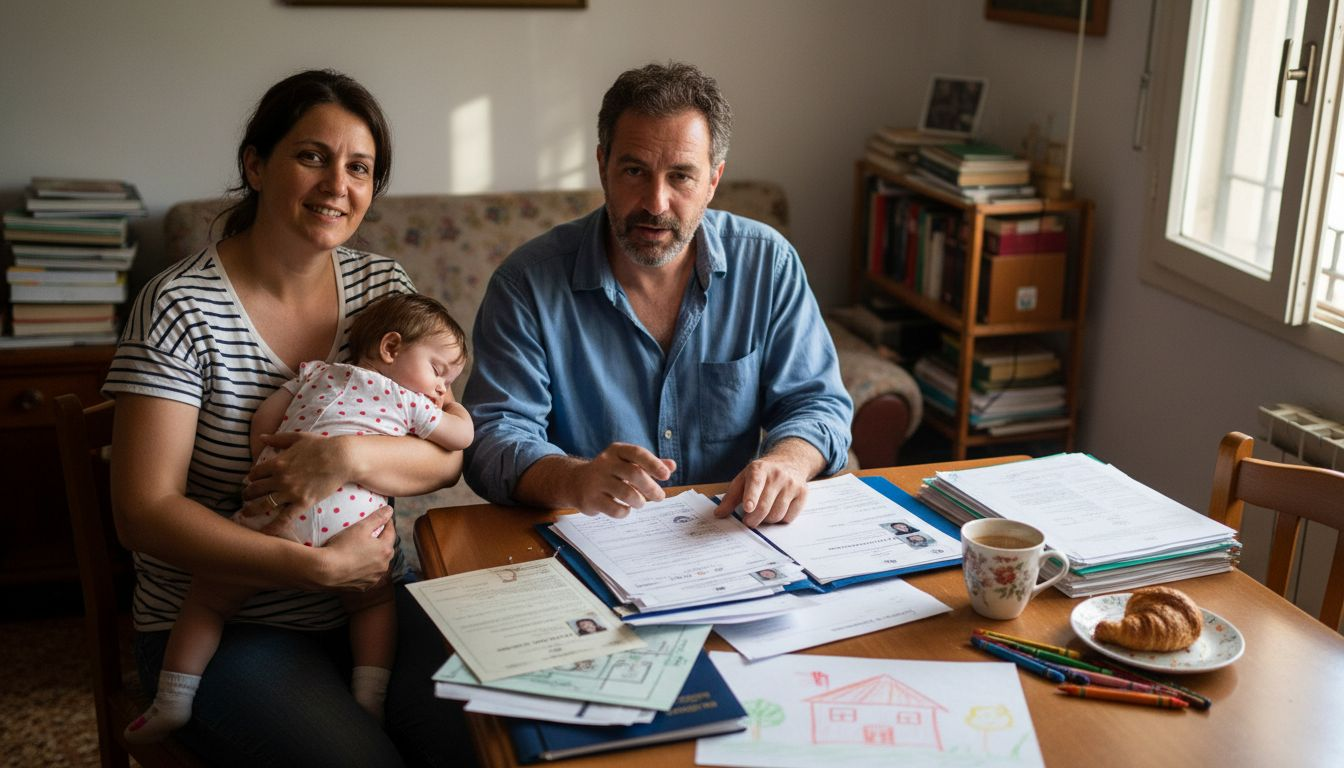
Each citizenship pathway carries unique requirements and documentation needs. Citizenship by residence demands proven legal integration, including language proficiency, cultural knowledge, and a clean criminal record. Marriage to a Spanish citizen can also provide an accelerated route, though applicants must still demonstrate genuine relationship commitment and meet standard legal criteria. For those born in Spain to foreign parents, specific generational and legal residency conditions determine eligibility.
Primary Citizenship Pathways:
- Citizenship by Descent
- Spanish parent or grandparent
- Documentation proving familial lineage
- Citizenship by Residence
- Typically 10 years continuous legal residence
- Language and cultural integration requirements
- Citizenship by Birth
- Born in Spain to foreign parents
- Specific generational conditions
- Citizenship by Marriage
- Married to Spanish citizen
- Proven relationship authenticity
Pro tip: Compile and organize all potential documentation early in your citizenship journey, as comprehensive and accurate paperwork significantly streamlines the application process.
Here’s how the main citizenship pathways compare in terms of requirements and advantages:
| Pathway | Minimum Residency | Unique Advantage | Common Challenge |
|---|---|---|---|
| Descent | Not required | Fast track for Spanish ancestry | Proving lineage documentation |
| Residence | 10 years typical | Path for long-term residents | Integration and exams |
| Birth | Varies | Automatic for some born in Spain | Generational restrictions |
| Marriage | 1 year residency | Accelerated process via spouse | Verifying marriage authenticity |
Eligibility Criteria and Required Documents
Understanding the eligibility criteria for Spanish citizenship requires navigating a complex landscape of legal requirements, personal documentation, and integration assessments. Each citizenship pathway demands specific documentation and proof of qualification, making thorough preparation essential for a successful application.
The core eligibility criteria typically encompass several key components: legal residency duration, language proficiency, cultural integration, and personal background verification. For most naturalization routes, applicants must demonstrate continuous legal residence, usually spanning 10 years, though exceptions exist for specific nationalities, refugees, and individuals with Spanish heritage. Critically, candidates must pass the DELE A2 Spanish language exam and the CCSE cultural knowledge test, which evaluate language skills and fundamental understanding of Spanish history, culture, and constitutional principles.
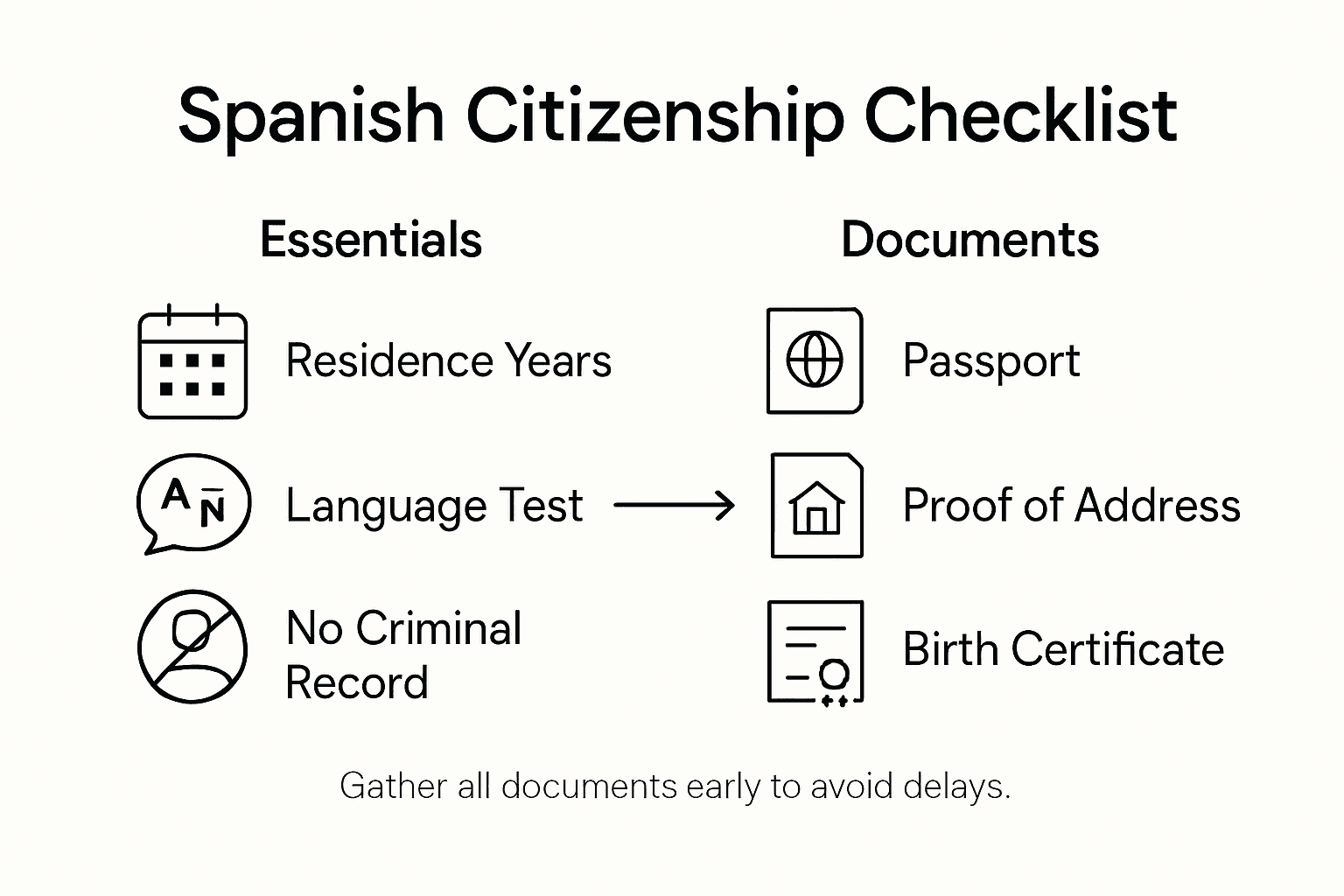
Documentation requirements are comprehensive and meticulously scrutinized by Spanish authorities. Applicants must compile an extensive portfolio of personal and legal documents, all requiring official translations and legalization. Standard documentation typically includes valid passports, residence permits, criminal background checks, birth certificates, and proof of legal residence. For citizenship by descent, additional genealogical documentation becomes crucial, including ancestral birth certificates and proof of Spanish lineage.
Required Document Checklist:
- Valid International Passport
- Residence Permit/Card
- Proof of Continuous Legal Residence
- Criminal Background Check
- Birth Certificate
- Apostilled or officially translated
- Spanish Language Proficiency Certificate (DELE A2)
- Cultural Knowledge Test Certificate (CCSE)
- Additional Documents by Pathway
- Descent: Ancestral Birth Certificates
- Marriage: Marriage Certificate
- Refugee Status: Specific Legal Documentation
Pro tip: Create digital and physical backup copies of all documents, and have them professionally translated and authenticated well in advance of your application submission to prevent last-minute complications.
Residency, Naturalization, and Key Distinctions
The path to Spanish citizenship through naturalization involves complex legal processes that extend far beyond simple residency requirements. Each applicant’s journey is unique, with specific legal provisions tailored to different personal backgrounds, national origins, and individual circumstances.
Under standard naturalization rules, most applicants must demonstrate continuous legal residence spanning 10 years. However, significant variations exist that can dramatically reduce this timeframe. Ibero-American nationals, refugees, and individuals from specific countries may qualify for expedited processes, with residency requirements potentially dropping to 2-5 years. The core requirements remain consistent: maintaining legal status, demonstrating language proficiency, passing cultural integration exams, and maintaining a clean criminal record.
Key distinctions in Spanish nationality law create nuanced pathways that recognize diverse personal histories. Nationality by origin remains fundamentally different from acquired nationality, with critical legal protections for those with ancestral connections. Notably, individuals obtaining citizenship through descent or birth enjoy more robust legal protections, including an absolute prohibition on involuntary citizenship revocation. This means that while naturalized citizens might face potential challenges, those with original Spanish lineage have permanent, irrevocable citizenship status.
Residency Pathway Variations:
- Standard Naturalization: 10 years continuous residence
- Accelerated Pathways:
- Ibero-American Nationals: Reduced to 2-5 years
- Refugees: Potential expedited processing
- Married to Spanish Citizens: Shorter residency requirements
- Special Considerations:
- Ancestry-based citizenship
- Birth in Spain to foreign parents
- Adoption by Spanish citizens
Pro tip: Consult with an immigration specialist to carefully map your specific eligibility pathway, as individual circumstances can significantly impact the naturalization timeline and requirements.
For quick comparison, here are notable differences between original and acquired Spanish nationality:
| Type of Nationality | Revocation Risk | Eligibility Basis | Legal Protections |
|---|---|---|---|
| Original (by descent/birth) | Never revoked | Spanish parent/grandparent | Most comprehensive |
| Acquired (naturalization) | Possible in rare cases | Residency, marriage, naturalization | Standard but conditional |
Dual Citizenship, Taxes, and Legal Risks
Understanding dual citizenship regulations in Spain requires navigating a complex legal landscape with significant financial and personal implications. The Spanish government offers strategic provisions for maintaining citizenship in multiple countries, particularly with Ibero-American nations, creating unique opportunities and potential challenges for international applicants.
Spain’s dual citizenship framework allows retention of original nationality under specific conditions, most notably for nationals from countries with reciprocal agreements. Tax residency becomes the critical factor determining financial obligations, with worldwide income potentially subject to Spanish taxation. American citizens, for instance, can maintain both US and Spanish passports, but must carefully manage tax reporting to comply with regulations in both jurisdictions. The legal complexities extend beyond simple documentation, requiring precise understanding of international tax treaties and reporting requirements.
The potential legal risks of dual citizenship are multifaceted and demand careful navigation. Diplomatic protection can become complicated, with potential conflicts arising from simultaneous obligations to multiple nations. Certain legal responsibilities, such as military service, voting requirements, and tax compliance, may create unexpected complications. Some nationalities might be required to partially renounce citizenship, while others can maintain full dual status. Understanding these nuanced distinctions is crucial for preventing future legal and financial complications.
Dual Citizenship Considerations:
- Reciprocal Agreements
- Primarily with Ibero-American countries
- Specific bilateral arrangements
- Tax Implications
- Worldwide income reporting
- Potential double taxation risks
- Legal Responsibilities
- Potential military service obligations
- Voting requirements in multiple jurisdictions
- Passport and travel document management
Pro tip: Consult with an international tax attorney specializing in dual citizenship to develop a comprehensive strategy for managing legal and financial obligations across multiple jurisdictions.
Common Mistakes and How to Avoid Them
Navigating the intricate process of Spanish citizenship requires strategic preparation and awareness of potential pitfalls. Common application mistakes can derail even the most well-intentioned applicant’s journey, transforming what should be a straightforward process into a complex bureaucratic challenge.
Documentation represents the most critical area where applicants frequently stumble. Incomplete or improperly legalized documents can trigger automatic application rejection. This means every single document must be meticulously translated, authenticated with official apostilles, and precisely matched to the specific citizenship pathway’s requirements. Language and cultural knowledge exams pose another significant hurdle, with many applicants underestimating the depth of preparation required for the DELE A2 and CCSE examinations. Insufficient study or misunderstanding of exam formats can lead to unexpected failures.
Residency requirements create another complex landscape of potential errors. Many applicants mistakenly believe continuous residence is a simple linear concept, failing to understand the nuanced legal definitions. Gaps in legal residency, even brief ones, can reset the entire citizenship timeline. Additionally, applicants often select inappropriate citizenship pathways without fully understanding the specific eligibility criteria for their unique personal circumstances. This can result in wasted time, financial expenditure, and emotional frustration.
Critical Mistake Prevention Strategies:
- Document Preparation
- Obtain certified translations
- Secure official apostille stamps
- Verify document authenticity
- Exam Readiness
- Take comprehensive preparatory courses
- Practice official exam formats
- Understand cultural knowledge requirements
- Residency Tracking
- Maintain meticulous legal residence records
- Understand continuous residence definitions
- Verify legal status consistently
Pro tip: Create a comprehensive digital and physical file tracking your residency documentation, exam preparations, and application progress to prevent administrative oversights.
Simplify Your Journey to Spanish Citizenship with Expert Legal Support
Navigating the complex legal pathways to Spanish citizenship requires precise document preparation, understanding residency requirements, and successful completion of language and cultural exams. Many expats face challenges such as compiling properly legalized documents, tracking continuous residence, and selecting the correct citizenship pathway that matches their unique situation. If you feel overwhelmed by the intricate rules around naturalization, dual citizenship, or eligibility criteria, you are not alone. Our platform is designed to help you overcome these obstacles with ease.
Take control of your Spanish citizenship process today by trusting Vive Legal. We combine automated tools with professional oversight to provide personalized diagnostics, thorough document reviews, and step-by-step form preparation all online. Our reliable appointment scheduling and secure case tracking give you peace of mind while minimizing errors that can delay approval. Don’t let bureaucratic complexity hold you back from the rights and protections that come with Spanish nationality. Visit Vive Legal now to start your smooth path toward Spanish citizenship with clarity and expert support.
Frequently Asked Questions
What are the main paths to obtain Spanish citizenship?
The main pathways to Spanish citizenship include citizenship by descent, citizenship by residence, citizenship by birth, and citizenship by marriage. Each route has specific requirements and documentation needs.
What documents are required to apply for Spanish citizenship?
Common required documents for Spanish citizenship include a valid passport, residence permit, proof of continuous legal residence, criminal background check, birth certificate, language proficiency certificate, and cultural knowledge test certificate. Additional documents may be required based on the specific pathway.
How long does it typically take to become a Spanish citizen?
The typical residence requirement for Spanish citizenship is 10 years, although certain groups like refugees or Ibero-American nationals may qualify for a faster process, with reduced residency requirements of 2-5 years.
What are the potential risks of holding dual citizenship in Spain?
Potential risks of dual citizenship in Spain include complications with diplomatic protection, tax obligations on worldwide income, and various legal responsibilities, which may differ depending on the agreements with the other country of citizenship.
Recommended
Living legally in Spain shouldn't be difficult.
View services and pricesNot sure which procedure you need? Find out in 2 min
Questions? Message us on WhatsApp