
Streamline your Spain immigration form workflow in 2026

Filling out Spanish immigration forms incorrectly is one of the most common reasons applications get delayed or rejected outright. A missing apostille, a name spelled differently across two documents, or the wrong form version can send your case back to square one. The good news is that most of these setbacks are completely preventable. With a clear, repeatable workflow, you can move through the process faster, reduce stress, and walk into your appointment knowing everything is in order. This guide covers what you need, how to prepare, what to avoid, and how to stay compliant from start to finish.
Table of Contents
- Understand the requirements for Spanish immigration forms
- Step-by-step form preparation workflow for Spain
- Avoiding common mistakes in form preparation
- Best practices and compliance tips for Spanish legal workflows
- Effortless form preparation with Vive Legal
- Frequently asked questions
Key Takeaways
| Point | Details |
|---|---|
| Know your requirements | Always check the specific forms and documents you need for your immigration type. |
| Follow a workflow | Step-by-step preparation and review minimize errors and speed up processing. |
| Avoid common errors | Mistakes like missing documents or mismatched data can cause delays or rejections. |
| Stay compliant | Use certified translations, observe deadlines, and organize your paperwork for legal compliance. |
| Get expert help | Legal support can streamline the process and improve your chances of approval. |
Understand the requirements for Spanish immigration forms
Before you fill out a single field, you need to know exactly which form applies to your situation. Spain’s immigration system covers a wide range of procedures, and forms and requirements change depending on the type of residency or immigration procedure you are pursuing. Using the wrong form is not a minor inconvenience. It can invalidate your entire application.
Living legally in Spain shouldn't be difficult.
View services and pricesNot sure which procedure you need? Find out in 2 min
Questions? Message us on WhatsApp
Here is a quick overview of the most common procedures and their core document requirements:
| Procedure | Main form | Key supporting documents |
|---|---|---|
| NIE (Foreigner ID Number) | EX-15 | Passport, reason for request, appointment confirmation |
| EU Registration (Certificado de Registro) | EX-18 | Passport, proof of employment or income, health insurance |
| Arraigo Social | EX-10 | Passport, 3-year residence proof, social integration report |
| TIE (Residence Card) | EX-17 | Passport, NIE, biometric photo, supporting residency docs |
| EU Long-Term Residence | EX-11 | 5-year legal residence proof, income, health insurance |
For NIE requirements, the process is relatively straightforward, but you still need to justify the reason for your request. For more complex routes like the Arraigo Social process or EU long-term residence, the document list grows significantly and timelines matter.
When gathering documents, keep these points in mind:
- Certified translations are required for any document not originally in Spanish. Use a sworn translator recognized in Spain.
- Apostilles are needed for foreign public documents. Check whether your country is part of the Hague Convention.
- Official copies are often required. Photocopies are rarely accepted without notarization.
- Expiry dates matter. Many supporting documents must be issued within the last three to six months.
Pro Tip: Build a master checklist before you start collecting anything. List every required document, its source, whether it needs translation or apostille, and its expiry window. This single habit prevents last-minute scrambles.
Step-by-step form preparation workflow for Spain
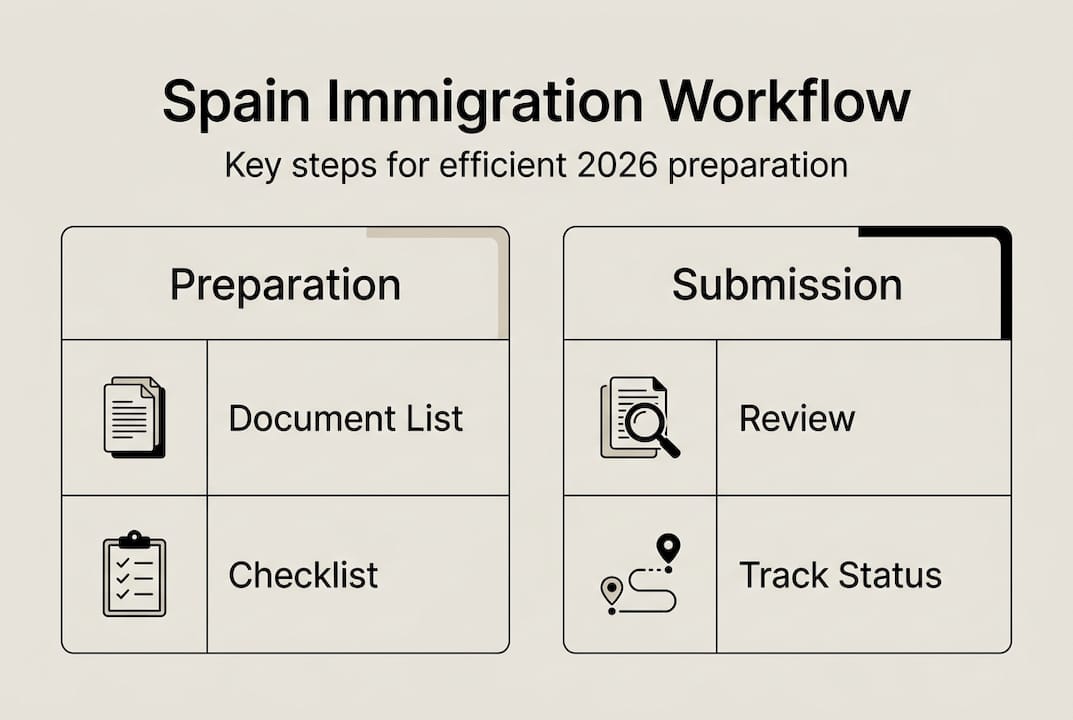
A structured workflow reduces errors and ensures timely submission. Once you have your requirements mapped out, follow this sequence to move efficiently from preparation to submission.
- Identify your procedure type. Confirm which residency category applies to your situation before selecting any form.
- Download the correct form version. Always pull forms directly from the official Spanish government portal to avoid outdated versions.
- Gather all supporting documents. Use your checklist. Collect originals, certified copies, translations, and apostilles as needed.
- Complete the form carefully. Fill in every field. Leave nothing blank unless the instructions explicitly allow it. Use block letters where required.
- Cross-check all personal data. Every name, date, and ID number must match exactly across your passport, forms, and supporting documents.
- Book your appointment. Use the official Sede Electrónica or your autonomous community’s appointment system. Some procedures allow online submission without an in-person visit.
- Submit and track your case. Keep copies of everything submitted. Note your case reference number and follow up if you do not receive confirmation within the expected timeframe.
Here is how manual preparation compares to using a digital platform:
| Step | Manual preparation | Digital platform |
|---|---|---|
| Form selection | Research required | Auto-suggested by profile |
| Data entry | Fully manual | Auto-fill from stored data |
| Document checklist | Self-managed | Generated automatically |
| Error checking | Self-review | AI-assisted review |
| Appointment booking | Manual search | Integrated scheduling |
| Case tracking | No system | Real-time notifications |
For procedures like nationality applications or a student to worker modification, the number of steps and documents involved makes digital tools especially valuable.

Pro Tip: If you are filing multiple forms or updating information across several procedures, use a digital platform with auto-fill features. Entering the same passport number or address repeatedly by hand is where typos happen.
Avoiding common mistakes in form preparation
Even with a solid workflow, small errors can cause serious problems. Submission errors can delay or invalidate your residency process entirely. The most frustrating part is that most of these mistakes are avoidable with a simple review step.
Here are the errors that come up most often:
- Wrong form type. Using an outdated or incorrect form version is one of the top reasons for rejection. Always verify the form code and edition date.
- Incomplete fields. Leaving sections blank, even optional ones, can raise flags during review.
- Data mismatches. Your name on the form must match your passport exactly, including middle names, accents, and spelling variations.
- Missing documents. Forgetting a single required attachment can halt the entire process.
- Missed deadlines. Renewal windows are strict. Filing even one day late can require restarting the process from scratch.
- Incorrect fee payment. Some procedures require a specific tax form (Modelo 790) paid before submission. Paying the wrong code or amount is a common error.
Before submitting anything, run through the EU registration process checklist as a reference model. It is one of the more document-heavy procedures and serves as a useful benchmark for thoroughness.
Critical reminder: Every piece of data on your form must match your supporting documents exactly. A single character difference between your passport and your application can be grounds for rejection. Check names, dates, and ID numbers three times before submitting.
Double-checking is not paranoia. It is the single most effective quality control step you can take before handing anything over.
Best practices and compliance tips for Spanish legal workflows
Getting your application submitted is only part of the job. Staying compliant over time, especially as your residency status evolves, requires ongoing attention. Properly managed workflows help meet Spanish legal standards and keep your case moving forward without unnecessary interruptions.
Here are the practices that make the biggest difference:
- Keep both digital and physical copies of every document you submit. Store digital backups in a secure cloud folder organized by procedure and date.
- Use authorized translators only. Spain requires sworn translations from certified professionals. Using an uncertified translation is grounds for rejection.
- Verify apostille requirements early. Not all foreign documents need an apostille, but checking late in the process can cause significant delays.
- Track your permit expiry dates. Most residency permits must be renewed before they expire. Missing the renewal window can affect your legal status.
- Stay updated on regulation changes. Spanish immigration law evolves. What applied last year may not apply today, especially for newer routes like Arraigo Formativo steps.
Pro Tip: Set calendar reminders at 90 days, 60 days, and 30 days before any permit expiry or renewal deadline. This gives you enough time to gather documents, book appointments, and handle any unexpected complications without rushing.
Organization is not just about being tidy. In immigration procedures, a missing document or a forgotten deadline can have real legal consequences. Treat your immigration records the same way you would treat financial records: keep them current, backed up, and easy to access.
Effortless form preparation with Vive Legal
Knowing the steps is one thing. Executing them correctly, on time, and without errors is another challenge entirely. That is where professional support makes a measurable difference.
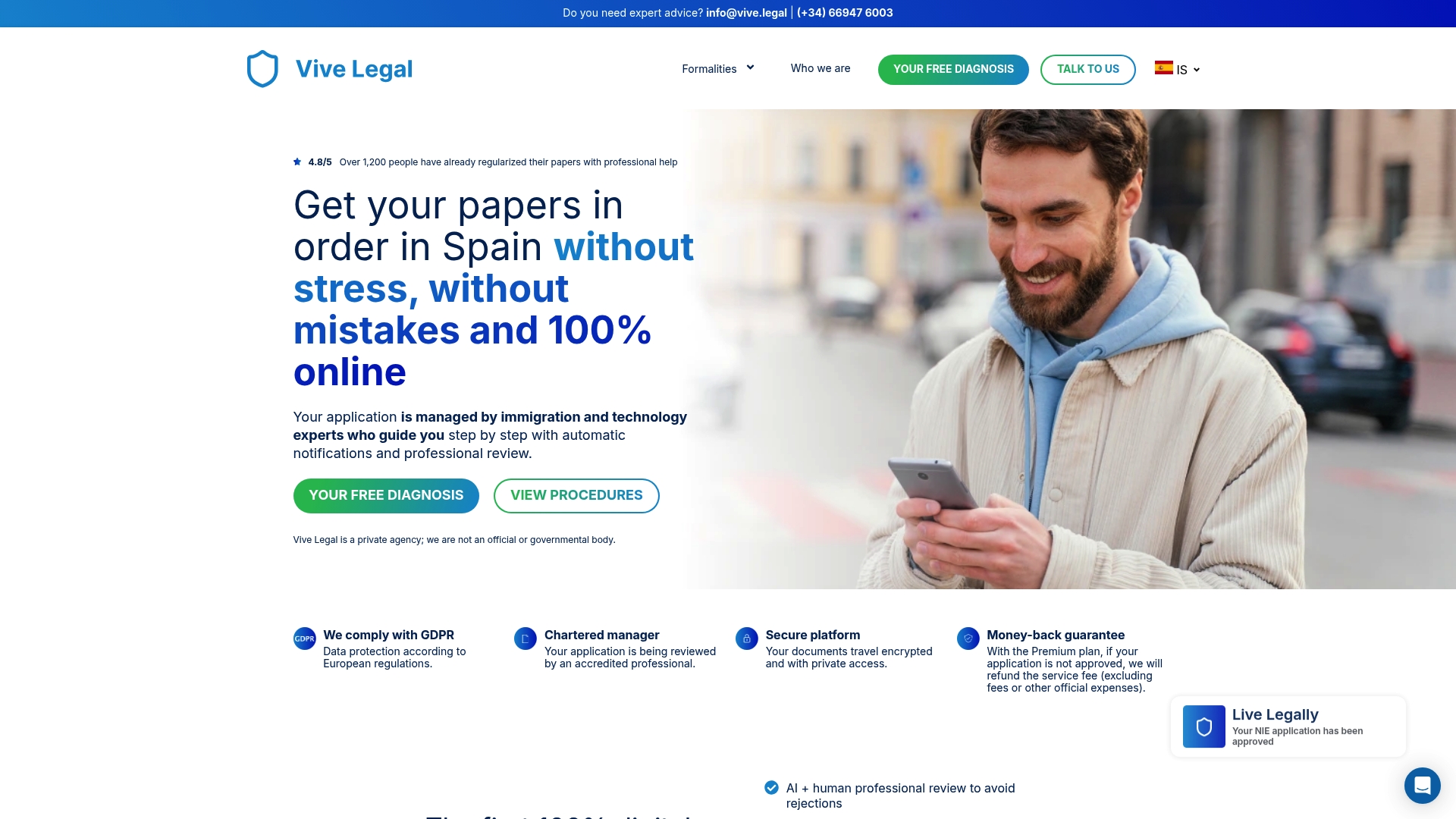
Vive Legal offers immigration legal management that combines AI-assisted document review with expert legal oversight, so your forms are checked before they ever reach the authorities. From personalized diagnostics that identify your exact procedure to real-time case tracking through a secure client portal, every step is handled with precision. Whether you are navigating the Extraordinary Regularization process or managing internship residence cases, Vive Legal prepares your case to the highest standard, minimizing rejections and keeping you informed at every stage.
Frequently asked questions
What is the fastest way to prepare Spanish immigration forms?
Using a digital platform with auto-fill and document tracking features speeds up preparation significantly. A systematic workflow also reduces back-and-forth caused by errors, and digital systems reduce errors throughout the process.
Can I submit Spanish residency forms online?
Yes, many immigration processes support electronic submission through Spain’s official Sede Electrónica or through authorized legal representatives who file on your behalf.
What documents are essential for Spanish residency applications?
The core documents typically include a valid passport, proof of income or employment, health insurance, and the relevant official form. Depending on the procedure, you may also need certified translations or apostilles for foreign documents.
How can I avoid mistakes on immigration forms for Spain?
Use a checklist, verify all personal data against your passport, and never leave required fields blank. Errors or mismatches can invalidate your application or trigger delays that set your timeline back by weeks.
Do I need a legal professional to file immigration forms in Spain?
It is not always legally required, but professional assistance significantly improves accuracy and approval chances, especially for complex procedures or time-sensitive cases where a single error carries serious consequences.
Recommended
Living legally in Spain shouldn't be difficult.
View services and pricesNot sure which procedure you need? Find out in 2 min
Questions? Message us on WhatsApp