
Spanish Immigration Law: Navigating Residency Options
Sorting through Spanish residency paperwork while studying can feel overwhelming, especially as recent reforms reshape application procedures and permit options. International students face new pathways and clearer visa categories, making the journey both promising and complex. This overview highlights practical strategies for securing the right documentation, understanding residency requirements, and leveraging digital tools for efficient support, so you can confidently manage your legal status in Spain.
Table of Contents
- Spanish Immigration Law And Key Concepts
- Types Of Residency Permits For Students
- Application Process And Digital Innovations
- Legal Requirements And Supporting Documents
- Rights, Restrictions, And Work Options
- Common Pitfalls And Regulatory Changes 2026
Key Takeaways
| Point | Details |
|---|---|
| Modernization of Spanish Immigration Law | Spain is updating its immigration framework to enhance accessibility and align migrant rights with labor market needs. |
| Variety of Residency Permits | Multiple residency categories exist for students, workers, families, and individuals with deep social ties, each with specific requirements. |
| Digital Innovations | The immigration application process has been streamlined through digital platforms, simplifying submission and tracking. |
| Awareness of Regulatory Changes | Applicants must stay updated on changing regulations to avoid common pitfalls like documentation errors and timing issues. |
Spanish immigration law and key concepts
Spain’s immigration legal framework is undergoing significant modernization, reflecting the country’s commitment to creating more accessible and comprehensive residency pathways. Recent immigration reforms are designed to balance migrant rights with labor market needs, introducing more flexible strategies for international students, workers, and families seeking legal residency.
Living legally in Spain shouldn't be difficult.
View services and pricesNot sure which procedure you need? Find out in 2 min
Questions? Message us on WhatsApp
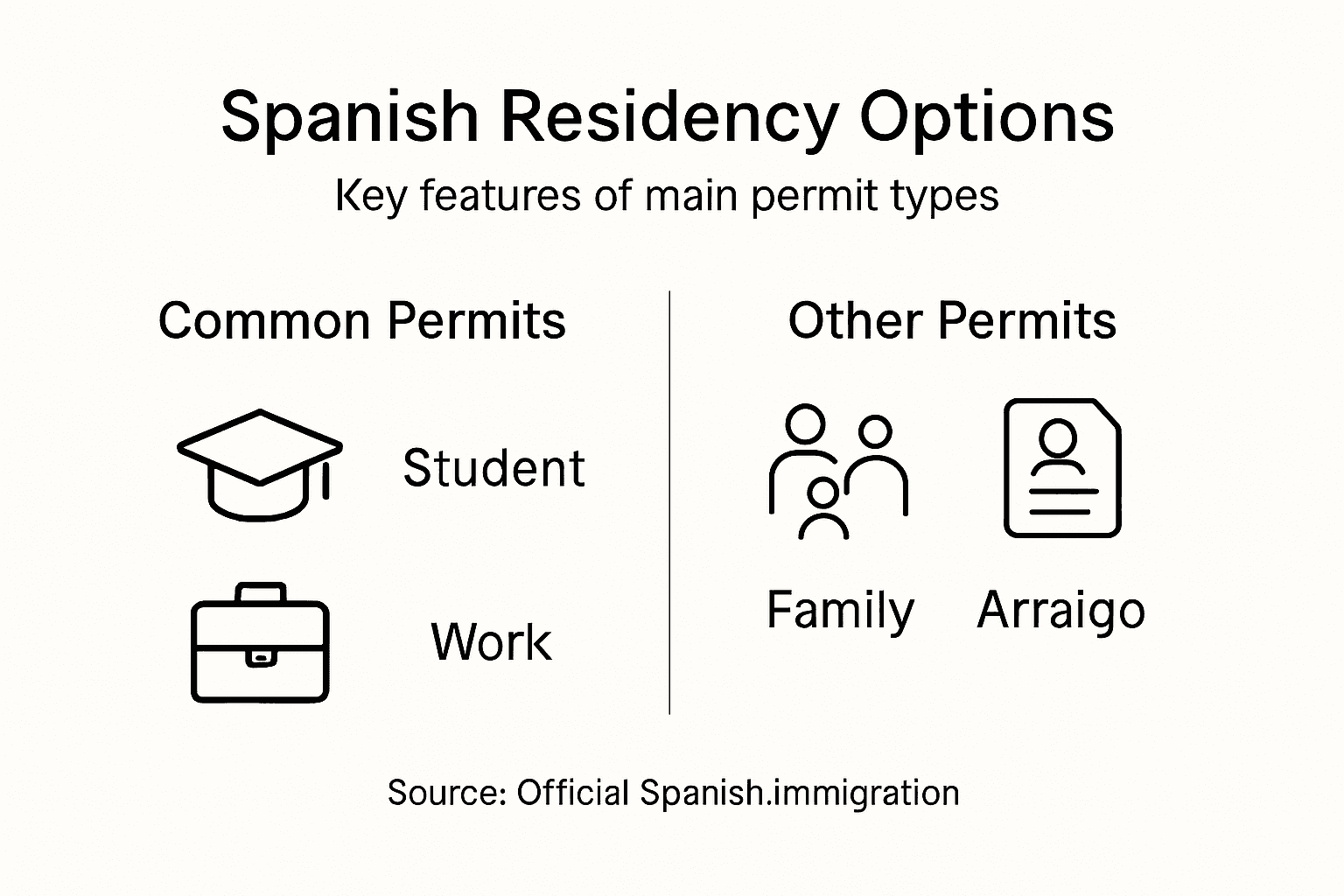
The core of Spanish immigration law centers around several key residency categories that provide pathways for legal entry and long-term settlement. These include:
- Student Residency: Permits for international students enrolled in Spanish educational institutions
- Work Permits: Various categories based on skill level, contract type, and professional qualifications
- Family Reunification: Options for individuals seeking to join family members already residing legally in Spain
- Arraigo Residency: Special provisions for individuals who have established significant personal and professional roots in Spanish society
Under the new regulatory framework, Spain has simplified several bureaucratic processes. The updated immigration regulations introduce clearer visa categories and reduce residency requirement timelines, making it more straightforward for qualified migrants to establish legal status. This approach aims to support approximately 300,000 migrants annually while maintaining robust integration standards.
Here’s a summary comparing main Spanish residency permit types and their practical benefits:
| Residency Permit Type | Duration | Work Rights | Path to Permanent Residency |
|---|---|---|---|
| Student Permit | Program length, renewable | Limited, up to 30 hours/week | May convert after studies |
| Work Permit | 1-2 years, often renewable | Full-time in approved roles | Yes, with continuous stay |
| Family Reunification | Linked to sponsor’s status | Immediate work authorization | Yes, after set years |
| Arraigo Permit | 1 year, renewable | Both employed and self-employed | Possible after renewal |
Pro tip: Always consult official Spanish immigration resources and consider professional legal guidance to navigate the most current residency requirements and maximize your application’s success.
Types of residency permits for students
International students planning to study in Spain have several distinct residency permit options designed to accommodate different academic and personal circumstances. Student immigration regulations provide comprehensive frameworks for non-European Union students seeking legal entry and educational opportunities within the country.
The primary types of student residency permits in Spain include:
- Initial Student Visa: For first-time students admitted to recognized Spanish educational institutions
- Temporary Residence Permit: Allows students to stay during their academic program
- Student Renewal Permit: Enables continuation of studies and potential part-time work authorization
- Research Student Permit: Specialized category for advanced academic and research programs
To qualify for a student residency permit, applicants must meet several critical requirements. These typically include:
- Proof of admission to a recognized Spanish educational institution
- Sufficient financial resources to support living expenses
- Comprehensive health insurance coverage
- Clean criminal background
- Passport valid for the entire duration of the proposed study period
Interestingly, Spanish student permits offer unique flexibility. Students can typically work limited hours while studying, with employers able to apply for additional work authorization. The permit duration matches the academic program length and can be renewed annually, providing stability for international learners pursuing educational goals in Spain.
Pro tip: Always verify current immigration requirements with official Spanish consular services and prepare comprehensive documentation well in advance of your intended study start date.
Application process and digital innovations
Spain’s immigration system has undergone significant digital transformation, streamlining the residency application process for international students and professionals. Registration procedures for non-nationals now emphasize online platforms and digital documentation to enhance efficiency and user experience.
Key digital innovations in the Spanish immigration application process include:
- Online Submission Platforms: Comprehensive digital portals for document uploads
- Electronic Appointment Scheduling: Advanced booking systems for in-person registration
- Digital Document Verification: Automated checks for submitted documentation
- Real-time Application Tracking: Secure online dashboards for application status updates
The application process typically involves several critical steps:
- Complete online pre-registration form
- Gather required digital and physical documentation
- Schedule official appointment through digital platform
- Submit biometric data at designated immigration office
- Track application status through online portal
Modern technological integrations have dramatically reduced processing times and increased transparency. Applicants can now receive notifications, submit supplementary documents, and communicate with immigration authorities through secure digital channels. These technological advancements significantly minimize bureaucratic complexities and provide a more user-friendly experience for international students navigating Spanish residency requirements.
The table below highlights how digital innovations are streamlining Spain’s immigration process and their benefits:
| Innovation | Main Benefit | Example Impact |
|---|---|---|
| Online Submission Platforms | Faster application filing | Reduces paperwork and travel |
| Digital Document Verification | Fewer processing errors | Speeds up eligibility checks |
| Real-time Status Tracking | Greater transparency | Applicants monitor progress easily |
| Electronic Appointment Booking | Efficient scheduling | Easier access to office appointments |
Pro tip: Maintain digital copies of all important documents and ensure consistent email communication to prevent potential application delays.
Legal requirements and supporting documents
Navigating the Spanish immigration process requires meticulous preparation and understanding of comprehensive legal documentation requirements. Applicants must demonstrate their eligibility through a carefully curated collection of official documents that substantiate their personal, professional, and financial circumstances.
Essential documents for most residency applications typically include:
- Identity Documentation: Valid passport or national identification card
- Proof of Purpose: Official admission letter or work contract
- Financial Evidence: Bank statements demonstrating sufficient funds
- Health Insurance: Comprehensive medical coverage valid in Spain
- Criminal Background Check: Official clearance from home country
The specific documentation requirements vary depending on the type of residency permit:
- Student Permits: Academic enrollment proof
- Work Permits: Employment contract and professional qualifications
- Family Reunification: Marriage or birth certificates
- Arraigo Permits: Evidence of established social and economic ties
Spanish immigration authorities conduct thorough assessments, evaluating not just the completeness of documents but also their authenticity and alignment with legal integration criteria. This comprehensive approach ensures that only qualified individuals receive residency permissions, maintaining the integrity of Spain’s immigration system.
Pro tip: Create a digital and physical backup of all important documents, and have them professionally translated into Spanish by certified translators to avoid potential processing delays.
Rights, restrictions, and work options
International residents in Spain navigate a complex landscape of employment regulations and work permit conditions. The legal framework provides specific rights and limitations that vary depending on residency status, permit type, and individual circumstances.
Key work rights for different residency categories include:
- Student Permits: Up to 30 hours weekly work allowance
- Work Permits: Full-time employment in authorized sectors
- Digital Nomad Visas: Remote work flexibility
- Family Reunification Permits: Immediate work authorization
Important work restrictions and considerations:
- Employer must obtain work authorization
- Labor market tests required for most positions
- Specific occupational limitations apply
- Renewal dependent on continuous employment
- Self-employment can be combined with salaried work
Recent legal reforms have significantly expanded work flexibility for permit holders. Non-European Union workers can now combine different employment types, including salaried and self-employed work, without seeking additional authorizations. This approach provides greater economic opportunities and recognizes the diverse professional needs of international residents.
Pro tip: Carefully review your specific permit’s work conditions and maintain accurate documentation to ensure continuous legal compliance with Spanish employment regulations.
Common pitfalls and regulatory changes 2026
Navigating Spanish immigration law requires staying informed about evolving regulatory landscapes and potential procedural complexities. International residents must be vigilant about subtle yet significant changes that could impact their residency status and legal standing.
Common pitfalls in Spanish immigration applications frequently include:
- Documentation Errors: Incomplete or incorrectly translated documents
- Timing Miscalculations: Missing critical renewal deadlines
- Financial Proof Insufficiencies: Inadequate demonstration of economic sustainability
- Healthcare Coverage Gaps: Incomplete or non-compliant insurance documentation
- Work Authorization Misunderstandings: Exceeding permitted work hours
Key regulatory changes anticipated for 2026 involve several critical areas:
- Stricter digital documentation verification processes
- Enhanced background check requirements
- More comprehensive integration evaluation criteria
- Expanded digital nomad visa categories
- Simplified family reunification procedures
The immigration landscape continues to evolve, with authorities implementing more sophisticated digital verification systems and increasingly nuanced assessment criteria. Applicants must remain adaptable, proactively understanding new requirements and maintaining meticulous documentation to successfully navigate these complex regulatory environments.
Pro tip: Consult with immigration professionals annually and maintain a comprehensive digital archive of all immigration-related documents to quickly adapt to regulatory changes.
Simplify Your Spanish Residency Journey with Expert Support
Navigating the complexities of Spanish immigration law can feel overwhelming when facing stringent residency permit requirements, document preparations, and evolving 2026 regulations. Whether you need help understanding student permits, work authorizations, or family reunification processes, the challenge of staying fully compliant and avoiding common pitfalls is real. Vive Legal offers a tailored solution that combines advanced digital tools with professional legal expertise to help you confidently manage your residency applications without delay or confusion.
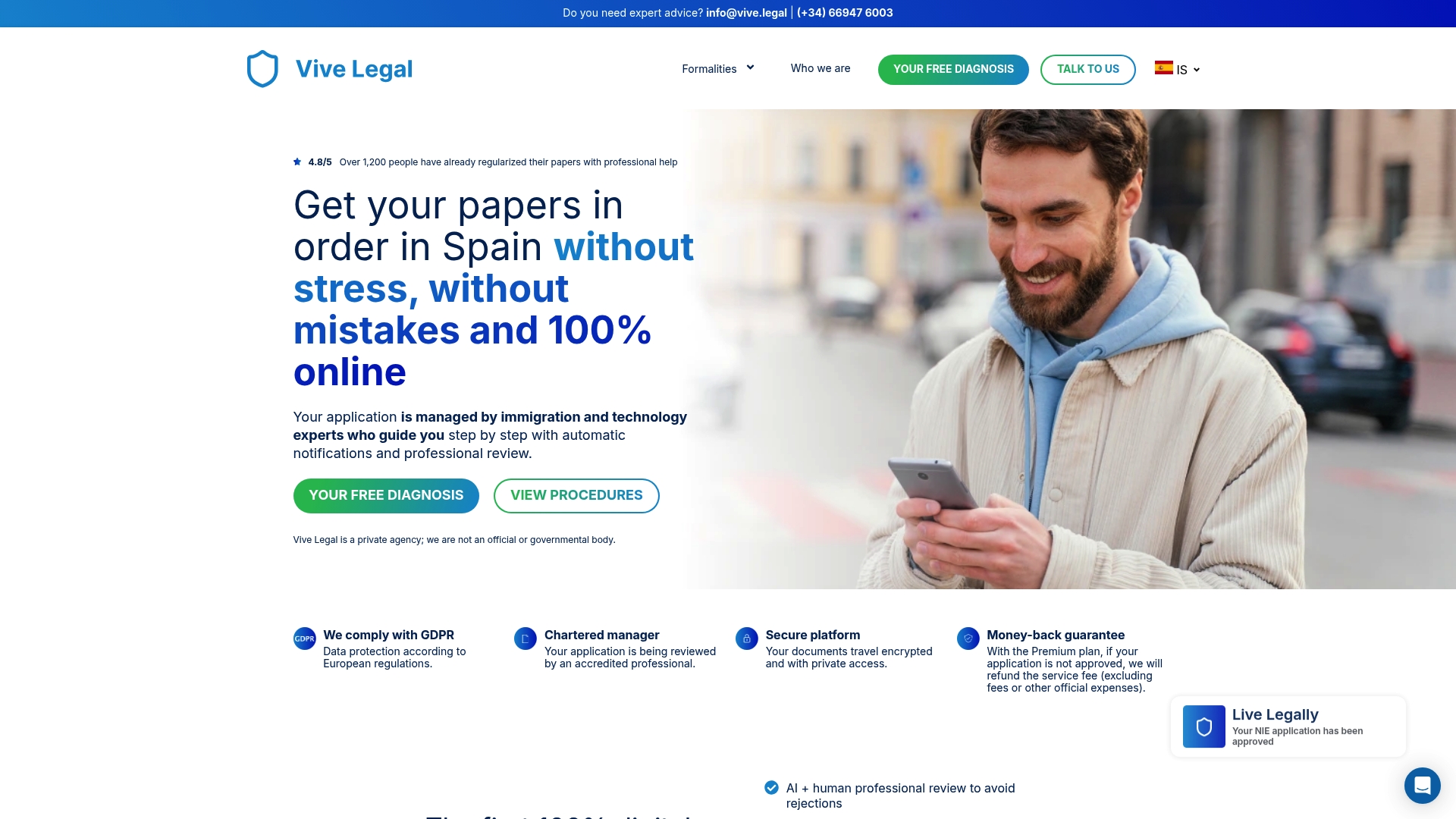
Explore how our innovative platform streamlines your immigration process from start to finish. Benefit from personalized diagnostics, document review, and seamless appointment scheduling, all accessible from your computer or mobile device. Visit Uncategorized Archives - Vive Legal to learn more about how modern immigration assistance works and start your application journey today. Take control of your future in Spain by trusting the secure, transparent, and efficient services at Vive Legal. Act now to avoid unnecessary delays and ensure your residency status is handled with care.
Frequently Asked Questions
What are the main types of residency permits available in Spain?
The main types of residency permits in Spain include Student Residency, Work Permits, Family Reunification, and Arraigo Residency, each designed to serve different purposes and applicant circumstances.
How can international students apply for residency in Spain?
International students can apply for residency by obtaining an Initial Student Visa, which requires proof of admission to a recognized Spanish educational institution, financial resources, health insurance, and a clean criminal background.
What legal documents are needed for a residency application in Spain?
Common legal documents required for a residency application typically include a valid passport, proof of purpose (such as an admission letter or work contract), financial evidence (like bank statements), health insurance documentation, and a criminal background check.
What are the rights to work for different residency permit holders in Spain?
Work rights vary by permit type: Student Permits allow limited working hours, Work Permits enable full-time employment, Digital Nomad Visas permit remote work, and Family Reunification Permits grant immediate work authorization.
Recommended
Living legally in Spain shouldn't be difficult.
View services and pricesNot sure which procedure you need? Find out in 2 min
Questions? Message us on WhatsApp