
Spanish Immigration Workflow 2026: 30% Faster Approvals

Managing Spanish immigration documents feels overwhelming when you’re juggling confusing requirements, shifting regulations, and appointment scarcity. Missing a single detail or deadline can derail your residency plans for months. This guide walks you through a streamlined workflow aligned with 2026 reforms, helping you prepare complete applications, schedule early, avoid common errors, and maximize your approval chances with confidence.
Table of Contents
- Prerequisites And Documentation Requirements
- Step-By-Step Application Procedures
- Common Mistakes And Troubleshooting
- Expected Timelines And Outcomes
- Alternative Approaches And Tradeoffs
- Streamline Your Spanish Residency Process With Vive Legal
- Frequently Asked Questions
Key Takeaways
| Point | Details | |-------|---------|| | 2026 Arraigo Reform | Residence requirement reduced to 2 years from 3, job contract no longer mandatory. | | Digital Workflow | Full online document management and appointment booking minimize errors and expedite processing. | | Early Booking Essential | TIE appointments fill weeks ahead in major cities, requiring immediate scheduling. | | Document Legalization | Official sworn translations and legalization are mandatory for all foreign documents. | | Proof Beyond Empadronamiento | Relying solely on registration without utility bills, contracts, or medical records causes rejections. |
Living legally in Spain shouldn't be difficult.
View services and pricesNot sure which procedure you need? Find out in 2 min
Questions? Message us on WhatsApp
Prerequisites and Documentation Requirements
Before submitting any residency application, you need a clear understanding of what Spanish authorities expect. The 2026 reforms have changed several key requirements, particularly for Arraigo Social permits, making preparation more accessible yet demanding precision.
The biggest change? Arraigo now requires only two years continuous residence instead of three. But here’s the catch: proving those two years demands more than just empadronamiento. You’ll need a comprehensive evidence package spanning the entire period.
Your document checklist varies by permit type, whether you’re pursuing NIE, TIE, UE registration, or Arraigo. Core requirements include:
- Valid passport with at least 12 months remaining validity
- Criminal background check from your home country and Spain if applicable
- Proof of continuous residence: empadronamiento certificates, utility bills, rental contracts, medical records, school enrollment documents
- Financial sufficiency evidence: bank statements showing adequate funds, employment contract, or proof of self-employment income
- Health insurance certificate covering your stay in Spain
- Official translations and Apostille legalization for all foreign documents
Pro Tip: Gather evidence from multiple sources across the full two-year period. A single empadronamiento certificate won’t cut it. Immigration officers want to see utility bills, lease agreements, and medical appointments distributed throughout your residence timeline.
The 2026 reform introduced financial flexibility for Arraigo applicants. You can now demonstrate economic sufficiency through savings or freelance income rather than requiring a traditional job contract. This opens doors for entrepreneurs and self-employed individuals previously excluded.
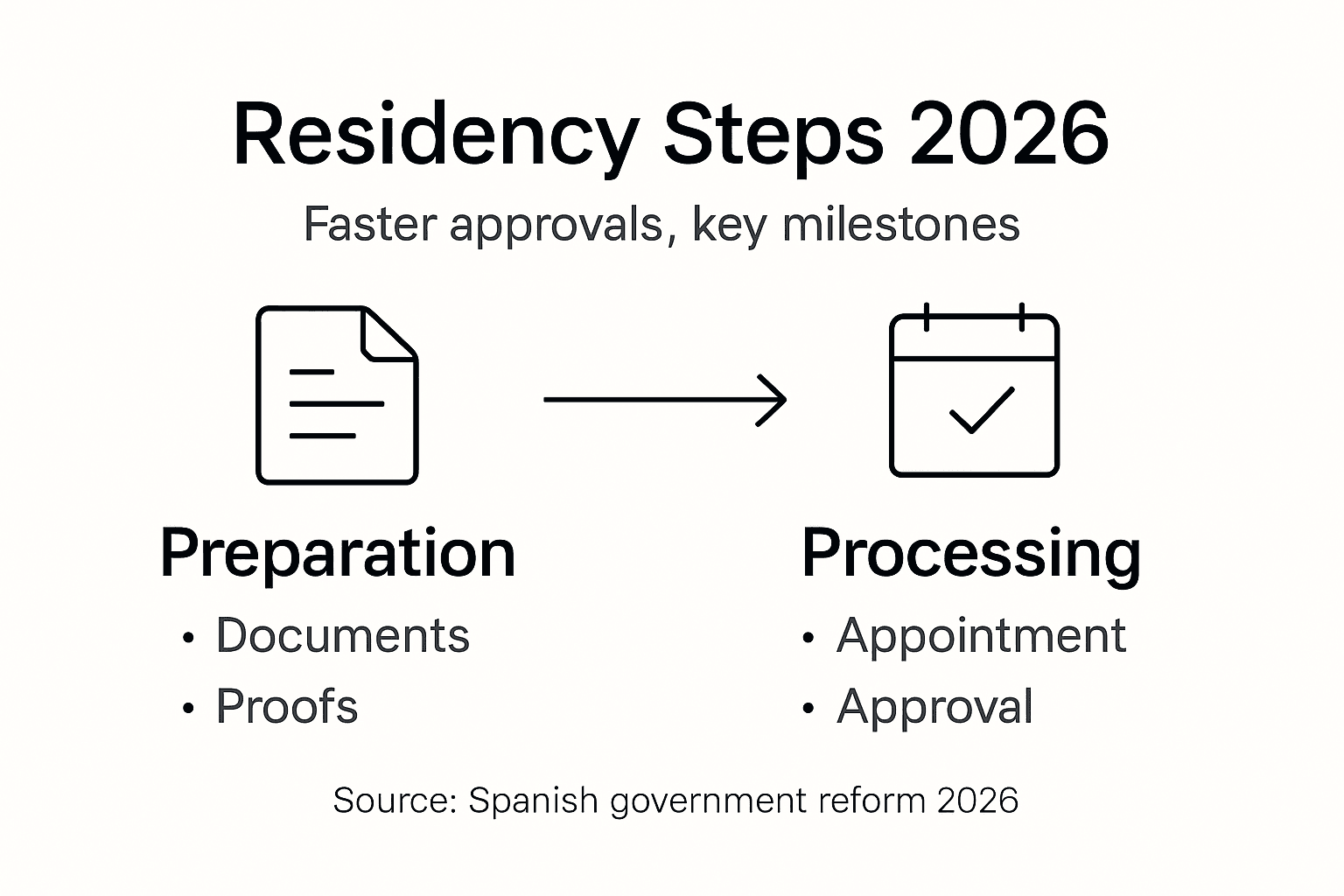
Access to Sede Electrónica, the government’s online portal, is essential for booking appointments. Register early and familiarize yourself with the interface before peak application seasons. Explore more immigration documentation insights to stay ahead of procedural changes.
Step-by-Step Application Procedures
Once your documents are ready, execution becomes critical. Following a structured sequence prevents costly mistakes and delays that can extend processing by months.
Start by verifying every document against official checklists. Missing a single translation or incorrect form version triggers automatic rejection. Cross-reference requirements on Sede Electrónica and consult updated guides to ensure compliance with 2026 standards.
Next, schedule your appointments immediately. TIE biometric appointments remain severely limited in Barcelona, Madrid, and Valencia. Slots disappear within minutes of release. Set calendar reminders to check the booking portal daily, ideally using multiple devices simultaneously to increase your chances.
Here’s your execution sequence:
- Register on Sede Electrónica and verify your digital certificate functionality
- Complete application forms online, double-checking every field for accuracy
- Pay required fees through the designated payment portal and save confirmation receipts
- Book your biometric appointment as early as possible, aiming for 4-6 weeks ahead
- Compile original documents plus certified copies in a labeled folder
- Attend your appointment punctually with all originals and copies
- Submit biometric data and receive your application receipt number
- Track status online and respond immediately to any document requests
For Arraigo applications, emphasize social integration evidence. Include reference letters from community organizations, proof of children’s school enrollment, volunteer work certificates, or language course completion. These details strengthen your case significantly.
Pro Tip: Bring copies of everything to your biometric appointment, even if not explicitly requested. Officers often ask for additional documentation on the spot, and having extras prevents rescheduling.
Submit comprehensive residence proof upfront rather than waiting for requests. Immigration officers process complete applications faster than incomplete ones requiring follow-up. Monitor your case status through the tracking portal weekly and respond to any information requests within 48 hours to avoid processing delays.
Common Mistakes and Troubleshooting
Even experienced applicants make errors that derail their residency timeline. Recognizing these pitfalls helps you avoid frustration and wasted effort.
The most frequent mistake? Treating empadronamiento as sole residence proof. Registration certificates confirm your address but don’t prove continuous physical presence. You need supporting evidence like monthly utility bills, lease renewals, medical appointments, and bank statements showing Spanish transactions throughout the two-year period.
Appointment booking delays cause massive headaches. Waiting until the last minute leaves you scrambling for slots that may not exist for months. Madrid applicants often face 8-12 week waits during peak seasons. Barcelona and Valencia aren’t much better. Book the moment you have complete documentation ready.
Translation shortcuts are equally problematic. Submitting uncertified translations or skipping Apostille legalization guarantees rejection. Every foreign document requires official sworn translation by a certified translator and proper legalization through your country’s competent authority. No exceptions.
Other critical errors to avoid:
- Exceeding allowed absence days from Spain during your residence period damages continuity claims
- Missing the 30-day deadline after visa approval to apply for your TIE card triggers fines and complications
- Providing inconsistent information across different forms raises red flags and triggers additional scrutiny
- Failing to update address changes with authorities creates administrative chaos
- Ignoring certified mail from immigration offices results in automatic case closure
Pro Tip: Create a digital backup folder with scanned copies of every submitted document, payment receipt, and correspondence. If originals get lost or questions arise, you’ll have immediate proof of what you submitted and when.
If you discover an error after submission, contact the processing office immediately. Early correction often allows amendments. Waiting until your application is rejected forces you to restart the entire process. Review common immigration pitfalls to learn from others’ experiences and avoid repeating their mistakes.
Expected Timelines and Outcomes
Understanding realistic processing timeframes helps you plan work arrangements, housing contracts, and travel accordingly. Spanish immigration timelines vary significantly by permit type and regional workload.
Here’s what you can expect:
| Permit Type | Processing Time | Appointment Wait | Application Fee |
|---|---|---|---|
| NIE | 2-6 weeks | 1-3 weeks | €10-15 |
| TIE Card | 45 days after approval | 4-12 weeks | €15-20 |
| Arraigo Social | 3-5 months | 6-10 weeks | €50-60 |
| UE Registration | 1-2 weeks | Same day possible | €10-12 |
| Family Reunification | 4-6 months | 6-12 weeks | €60-75 |
Processing times fluctuate based on regional capacity. Madrid’s immigration office handles higher volumes than smaller cities, often resulting in longer waits. Summer months see increased applications from students and seasonal workers, extending timelines further.
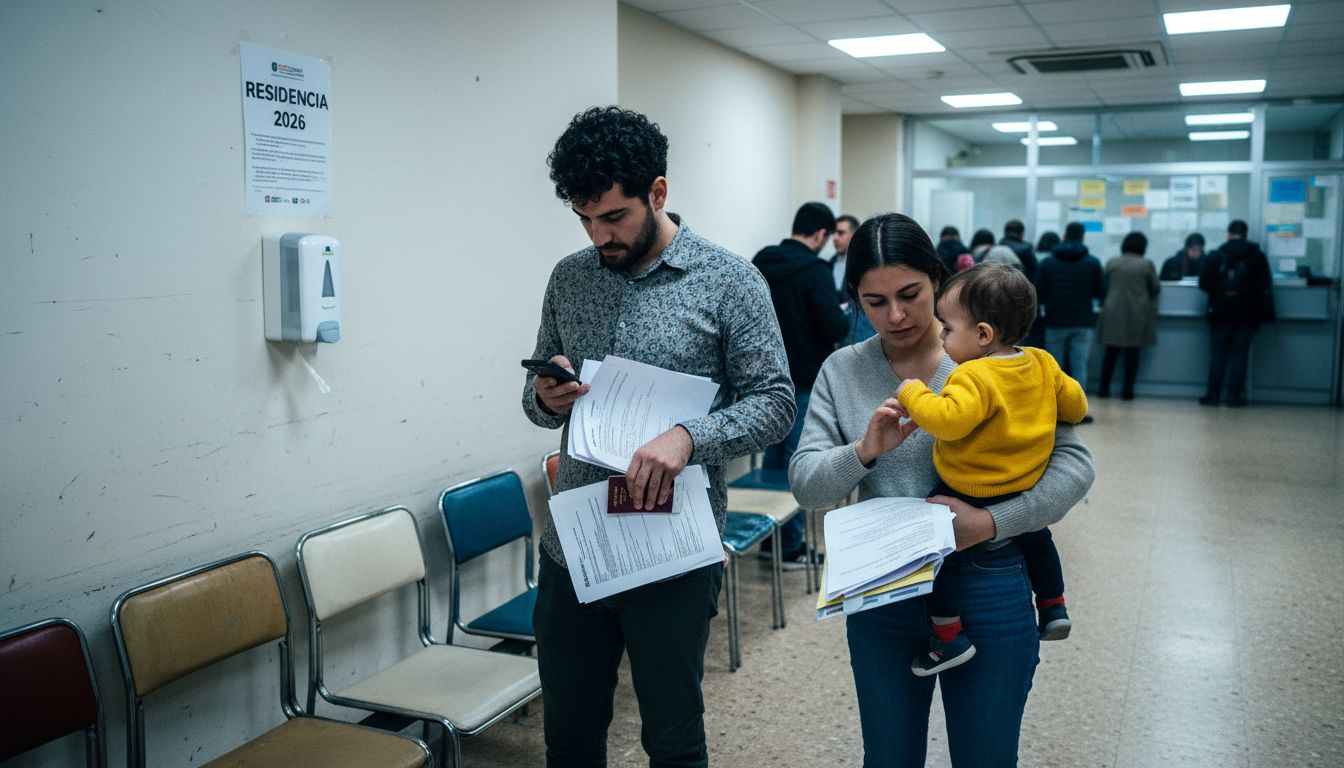
Success rates improve dramatically with complete, properly prepared applications. Professional document preparation and legal review reduce rejection rates by identifying issues before submission. Incomplete applications face 40-60% rejection rates, while professionally prepared cases see 85-95% approval.
Card issuance adds additional time after approval. Once your residency permit is approved, you typically have 30 days to collect your TIE card from the designated police station. Missing this window complicates the process and may require restarting portions of your application.
Budget extra time for unexpected requests. About 30% of applications trigger requests for additional documentation or clarification. Responding quickly keeps your case moving, while delays extend the timeline by weeks or months. Plan for worst-case scenarios rather than minimum processing times to avoid stress and scheduling conflicts.
Alternative Approaches and Tradeoffs
The 2026 reforms opened several pathways to Spanish residency, each with distinct advantages and limitations. Choosing the right approach depends on your situation, timeline, and resources.
The headline change for Arraigo permits involves financial sufficiency replacing mandatory job contracts. You can now qualify by proving adequate savings or consistent freelance income rather than securing formal employment. This benefits digital nomads, entrepreneurs, and retirees who don’t fit traditional employment categories.
Here’s how major options compare:
| Pathway | Key Benefit | Main Tradeoff | Best For |
|---|---|---|---|
| Arraigo Social | No job contract needed | Requires 2 years prior residence | Long-term residents |
| Employment Contract | Straightforward process | Employer dependency | Traditional workers |
| Family Reunification | Faster for EU family | Limited to qualifying relationships | Spouses, children, parents |
| Digital Nomad Visa | Remote work flexibility | Income thresholds and documentation | Remote employees, freelancers |
| Entrepreneur Visa | Business ownership path | Investment and business plan required | Startup founders |
Self-employment versus standard employment contracts present different challenges. Traditional employment offers straightforward documentation but ties you to a specific employer. Self-employment provides flexibility but requires proving consistent income through tax returns, client contracts, and bank statements spanning multiple months.
Family reunification accelerates the process for qualifying relatives of EU citizens or legal residents. Processing typically takes 4-6 months compared to 6-12 months for other permits. However, you must prove genuine family relationships through marriage certificates, birth certificates, and evidence of financial dependency where applicable.
The choice between self-managing your application versus hiring professional assistance significantly impacts outcomes. Digital platforms like Vive Legal streamline document preparation, appointment scheduling, and application tracking while providing legal oversight that catches errors before submission. Self-handling saves upfront costs but risks mistakes that delay approval or trigger rejection.
Consider alternative residency permits like student visas transitioning to work permits, or investor pathways if you’re establishing business operations. Each route demands specific documentation and timelines. Evaluate your priorities around speed, cost, employment flexibility, and long-term residency goals before committing to one approach.
Streamline Your Spanish Residency Process with Vive Legal
Navigating Spain’s immigration system demands precision, timing, and expert knowledge of current regulations. Vive Legal combines digital efficiency with professional legal expertise to simplify every step of your residency journey.
Our platform handles the complex workflow you just learned about, from document preparation to appointment scheduling and case tracking. We specialize in NIE applications, TIE card processing, and Arraigo Social permits aligned with 2026 reforms. Clients receive ready-to-submit cases within 24 hours for key permits, significantly reducing the stress and uncertainty of self-managing applications. Our integrated approach catches errors before submission, books appointments during optimal windows, and provides real-time status updates through your secure portal. Professional preparation increases approval rates while minimizing delays, giving you confidence your residency process moves forward smoothly.
Frequently Asked Questions
What documents prove two years of continuous residence in Spain?
Empadronamiento certificates establish your registered address, but you need complementary evidence spanning the full period. Utility bills, rental contracts, medical records, school enrollment documents, and bank statements showing regular Spanish transactions strengthen your proof significantly. Multiple document types distributed across 24 months demonstrate genuine continuous presence more convincingly than registration alone.
How early should I book my TIE biometric appointment?
Book immediately once your documents are complete, ideally targeting 6-8 weeks ahead of your preferred date. Major cities like Madrid, Barcelona, and Valencia experience severe appointment scarcity, with slots filling within hours of release. Use multiple devices, check the portal daily during early morning hours, and consider enlisting help to refresh booking pages simultaneously for better chances.
Can I apply for Arraigo without a job contract in 2026?
Yes, the 2026 reform allows financial sufficiency through savings accounts or freelance income to replace traditional employment contracts. You must demonstrate adequate economic means to support yourself without public assistance. This change broadens eligibility for entrepreneurs, digital nomads, and self-employed individuals who previously struggled to meet job contract requirements.
What happens if I miss the 30-day deadline for TIE application?
Missing the deadline can result in financial penalties, delayed card issuance, and potential complications with your legal status. Immigration authorities may require additional documentation or impose fines ranging from minor administrative fees to more substantial penalties. Schedule your TIE appointment immediately upon receiving residency approval and seek professional assistance if you’re approaching the deadline without an appointment secured.
Are translations always required for foreign documents?
Official sworn translations and proper Apostille legalization are mandatory for all foreign documents submitted to Spanish immigration authorities. Unofficial translations, machine translations, or documents lacking proper authentication face automatic rejection. Hire certified translators registered with Spanish authorities and complete Apostille procedures through your country’s designated competent authority before submission.
Recommended
Living legally in Spain shouldn't be difficult.
View services and pricesNot sure which procedure you need? Find out in 2 min
Questions? Message us on WhatsApp