
Spanish Residency Documents Explained for Expats

Trying to secure or renew your Spanish residency can feel like stepping into a maze where every turn matters. For British and American expats, these documents are far more than paperwork—they are your gateway to working, banking, and using healthcare in Spain. Whether you need a NIE, TIE, or Certificado de Residencia, knowing the right steps ensures you enter Spain’s legal system smoothly while keeping your personal data safe. This guide explains the essentials so you can handle your residency documents confidently.
Table of Contents
- Understanding Spanish Residency Documents
- Key Types: NIE, TIE, EU Certificates, Arraigo
- Application Process and Legal Framework
- Requirements for Expats and Common Pitfalls
- Rights, Obligations, and Costs Involved
Key Takeaways
| Point | Details |
|---|---|
| Understanding Residency Types | Identify the correct residency document (NIE, TIE, EU Certificate, Arraigo) based on your citizenship and purpose to avoid wasted time and application errors. |
| Importance of Early Action | Begin your residency application within three months of arriving in Spain to navigate the process smoothly and avoid complications. |
| Documentation is Key | Ensure all required documents are complete, accurate, and in the correct format to prevent rejections and extensive delays. |
| Rights and Obligations | Residency grants you rights similar to Spanish citizens but comes with obligations, including maintaining documentation and adhering to Spanish law. |
Understanding Spanish Residency Documents
Spanish residency documents form the legal foundation for anyone who isn’t a Spanish citizen wanting to live in Spain. These aren’t just paperwork formalities - they’re your official proof that you have the right to be here, work here, and access the country’s services. Whether you’re a British professional relocating for work, an American entrepreneur, or someone moving for personal reasons, understanding what these documents are and what they do is your first step toward legal residence.
Living legally in Spain shouldn't be difficult.
View services and pricesNot sure which procedure you need? Find out in 2 min
Questions? Message us on WhatsApp
At their core, Spanish residency documents establish the legal framework that allows non-nationals to live in the country lawfully. The system requires registration within three months of your entry into Spain, and you’ll need to apply in person at your provincial office with the appropriate documentary evidence. This could mean proof of employment, economic means, or other qualifying circumstances depending on your situation. The registration process generates key documents: your registration certificate containing your personal data, your non-national identification number (NIE), and confirmation of health insurance compliance. These pieces work together to create your legal residency status and determine what rights and services you can access under Spanish and European Union law.
The central document in this system is the Certificado de Residencia (Residence Certificate). Think of this as your residency passport - it’s the document that legalizes your presence in Spain for administrative, legal, and fiscal purposes. Unlike temporary paperwork or tourist documentation, the Certificado de Residencia works for both EU and non-EU citizens and remains valid as your proof of legal residence. This certificate opens doors to practical necessities like healthcare services, banking, employment contracts, and social benefits. The specific version you receive varies based on your nationality and the reason you’re staying in Spain. An American investor applying under different criteria receives different documentation than a British employee sponsored by a company, even though both establish legal residency. The Certificado de Residencia ensures you’re compliant with Spain’s residency regulations and provides the documentation needed when authorities or institutions ask for proof that you belong here.
Here’s where many expats get confused: obtaining these documents requires multiple steps, and the requirements differ based on your citizenship status and residency category. You might need the NIE before you can register, or you might be eligible for registration that eventually grants you the NIE. The whole process typically involves coordination between provincial offices, tax authorities, and various administrative departments. Understanding the order of operations and which documents you need first prevents frustrating delays. Many expats waste weeks submitting incomplete applications or missing critical deadlines because the residency document system isn’t intuitive if you haven’t navigated Spanish bureaucracy before. When you’re starting out, having a clear picture of what each document is and how they connect reduces confusion and accelerates your path to legal residency.
Pro tip: Start your residency document process as early as possible after arriving in Spain. The three-month registration window passes quickly, and attempting to regularize your status after missing this deadline creates unnecessary complications that could have been avoided with early planning.
Key Types: NIE, TIE, EU Certificates, Arraigo
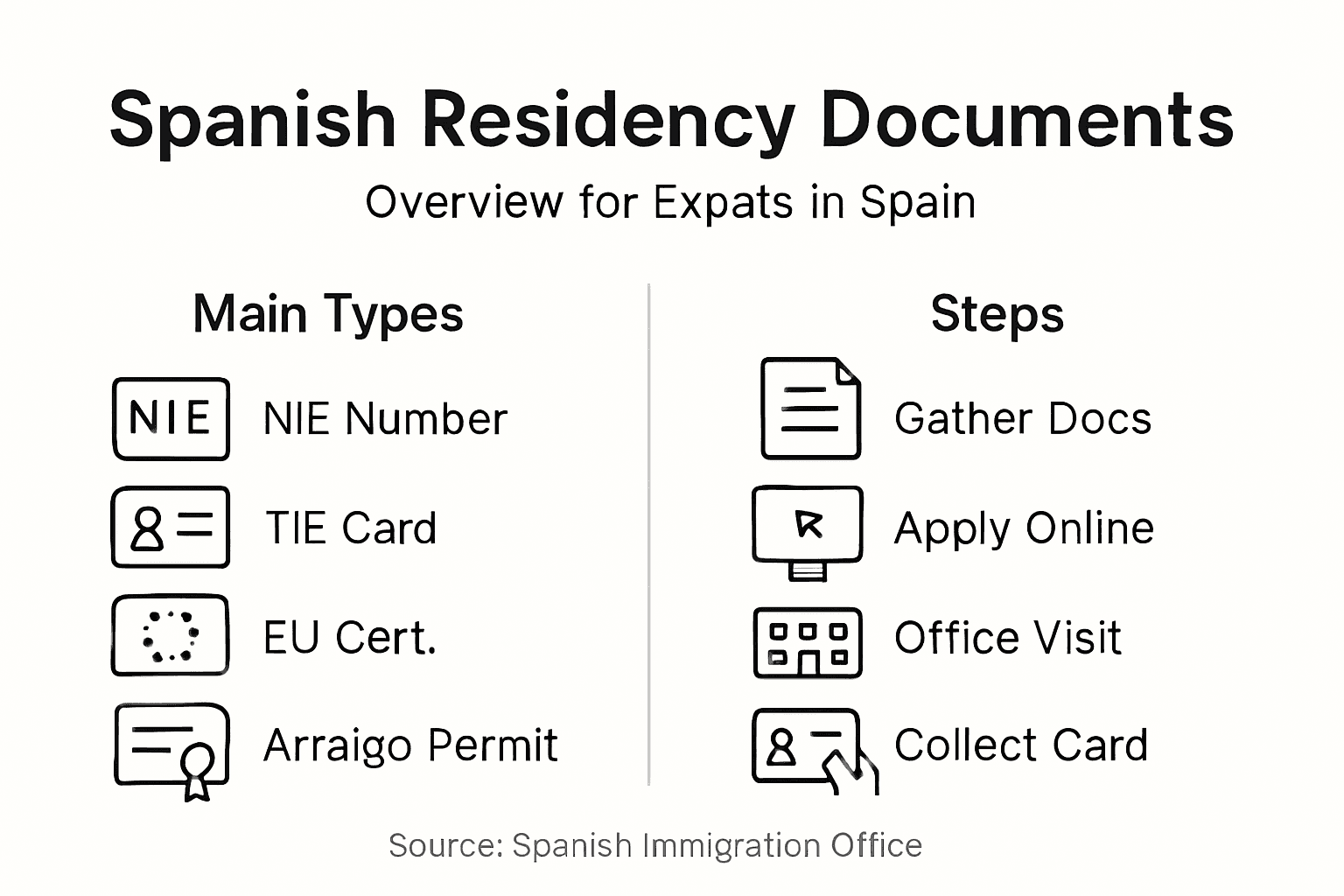
Spain’s residency system isn’t one-size-fits-all. Instead, you have several distinct document types, each serving different purposes and tailored to different situations. Understanding which document applies to your circumstances is critical because applying for the wrong one wastes time and money. The main types you’ll encounter are the NIE (personal identification number), the TIE (biometric residency card), EU citizen registration certificates, and Arraigo permits for special circumstances. Let’s break down what each one actually is and when you’d use it.
The NIE (Número de Identidad de Extranjero) is your personal identification number as a foreigner in Spain. Think of it as your Spanish tax ID and residency reference number combined. You’ll use this number on employment contracts, tax returns, bank accounts, and virtually every official document you’ll touch. The NIE stays with you for life and doesn’t expire, even if your residency status changes. What confuses many expats is that the NIE isn’t the same as proof of residency. You can have a NIE without being legally resident, or you can obtain it as part of your residency process. The NIE is typically a prerequisite for other residency documents, so it often comes first in your paperwork chain. American and British citizens frequently obtain their NIE early in the process because banks, employers, and government offices demand it before proceeding with other applications.
The TIE (Tarjeta de Identidad de Extranjero) is different from the NIE. While the NIE is just a number, the TIE serves as a biometric card that proves you have legal residency in Spain. It’s a physical plastic card containing your photograph, fingerprints, and detailed personal information. If the NIE is your identification reference, the TIE is your actual proof of legal status. You’ll carry it like a passport for identification purposes, and Spanish authorities recognize it as official documentation of your right to be in the country. The TIE applies primarily to non-EU citizens staying in Spain for extended periods. EU citizens have a separate, simpler process, so if you’re a British or other EU national, you likely won’t need a TIE.
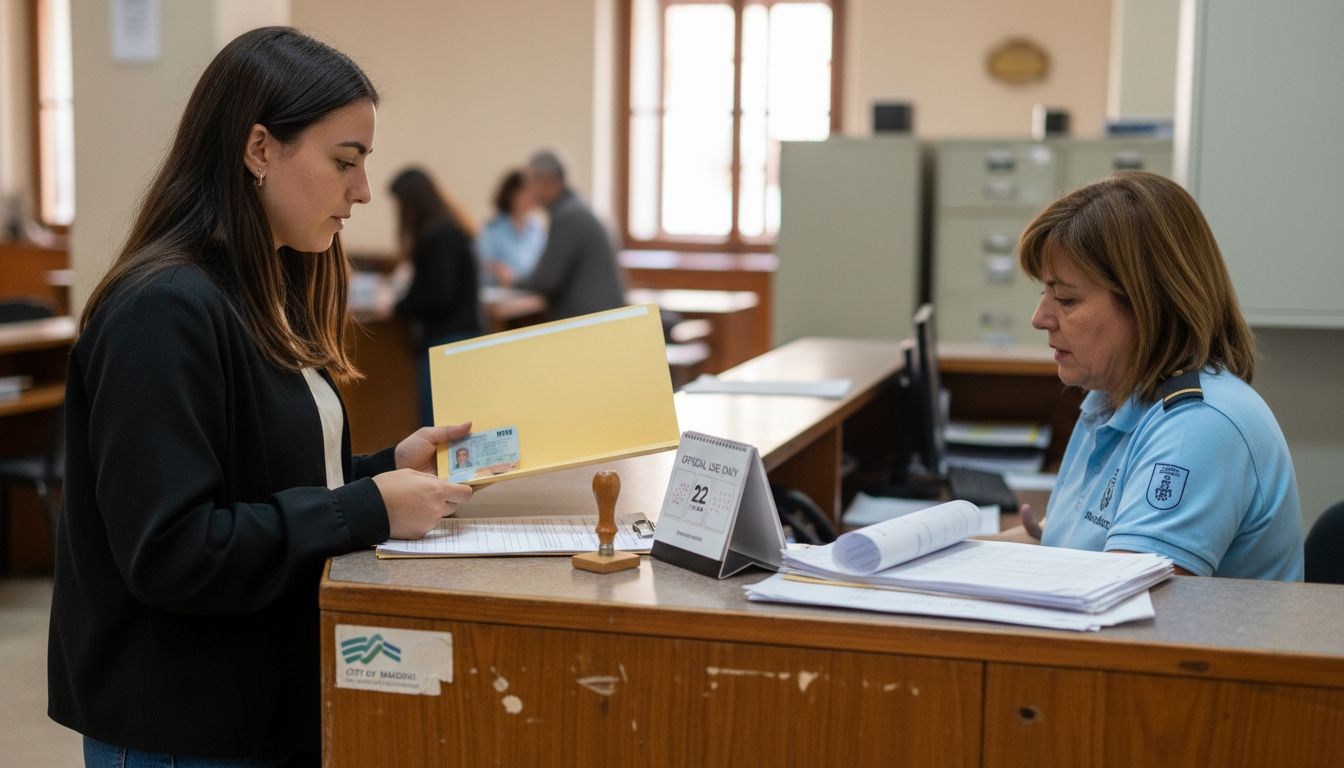
EU Citizen Registration Certificates represent the simplified pathway for European Union nationals. If you hold a British passport (pre-Brexit, this applied), or citizenship from any EU member state, you follow different procedures than non-EU expats. EU citizens can register more easily through streamlined processes that recognize the freedom of movement principles within the European Union. Your EU registration certificate serves as proof of your right to reside in Spain under European law. The application requirements are less stringent than for non-EU citizens, though you still need to demonstrate certain conditions like employment or economic means depending on your specific situation.
Arraigo permits address a different need entirely. These permits target people who don’t fit neatly into the standard employment or economic categories but have compelling reasons to stay in Spain. The main Arraigo pathways include family integration (Arraigo Familiar), social integration (Arraigo Social), and labor integration (Arraigo Laboral). An Arraigo permit might apply if you’re in a long-term relationship with a Spanish citizen, have Spanish citizen children, have been in Spain for years without formal status, or face extenuating circumstances. These permits essentially say, “You have roots here, and those roots justify legal residency.” For many expats, especially those facing unique situations that don’t align with standard categories, Arraigo represents a viable path to legalization.
Here’s the practical reality: your circumstances determine which document you need. Your nationality, employment status, family situation, and length of stay all factor into which residency document you’re eligible for and which one you should prioritize. An American company executive moves through a different process than a British retired person, who follows a different path than someone with Spanish family ties. Getting professional guidance early prevents you from pursuing the wrong document type, which could mean restarting your entire application six months later. The process involves coordination between multiple Spanish agencies, and each document type has its own timeline and requirements. By understanding these distinctions upfront, you can make informed decisions about which pathway matches your situation.
Here’s an at-a-glance comparison of Spain’s main residency document types and their typical uses:
| Document Type | Who Needs It | Main Purpose | Validity |
|---|---|---|---|
| NIE | All foreigners | Identification & tax number | Lifetime |
| TIE | Non-EU nationals | Proof of legal residency | Varies by permit |
| EU Certificate | EU nationals | Right to reside in Spain | Per residency status |
| Arraigo Permit | Special cases/long-term residents | Legalize irregular status | Based on category |
Pro tip: Determine your correct residency document category before submitting any applications. Your nationality, employment status, and family circumstances dictate which document you actually qualify for, so getting this wrong upfront costs time and money.
Application Process and Legal Framework
Spain’s approach to residency isn’t random bureaucracy. It’s a structured legal system built on European Union directives and Spanish immigration law that distinguishes between two main categories: EU nationals and non-EU nationals. Understanding this framework helps you navigate what feels like complexity but is actually a logical sequence of requirements. The application process differs based on your citizenship, your reason for staying, and your economic situation. Both pathways require you to prove certain things through documentation, but the hoops you jump through depend on which category you fall into.
For non-EU citizens, the process involves registering with Spanish authorities and getting included in the Central Register of Non-nationals, which is the official record system Spain maintains. You’ll need to submit your application in person or digitally, depending on your residency category and local procedures. The application requires you to demonstrate specific things: proof that you have sufficient economic resources to support yourself without becoming a burden on Spanish social services, valid health insurance coverage, and documentation showing your purpose in Spain (employment contract, enrollment in studies, business registration, or other qualifying reasons). These aren’t arbitrary demands. They reflect Spain’s legal obligation to ensure that non-EU nationals won’t drain public resources and that they have legitimate reasons to be in the country. The validity period of your permit depends on your category. A work permit might be valid for one year, renewable annually. A student visa might cover your study period plus some buffer time. Family-based permits can extend longer. Each has different conditions attached.
EU nationals follow a different path because of European Union freedom of movement principles. If you’re a British citizen (post-Brexit), you’re treated as a non-EU national, but if you’re from another EU member state, you have streamlined registration procedures. EU citizens still need to register with Spanish authorities, but the requirements are simplified. You don’t need pre-approval or specific permits in the same way. Instead, you register to document your presence and obtain a registration certificate. You’ll still need to demonstrate certain conditions depending on your status: if you’re working, you need employment documentation; if you’re retired or self-sufficient, you need proof of income; if you’re studying, you need enrollment confirmation. The legal framework recognizes that EU citizens have the right to move and work freely within the union, so Spain can’t impose the same restrictive requirements as it does for non-EU nationals.
Here’s where most expats get tripped up: the document preparation workflow involves coordinating documents from multiple sources. You might need your employment contract from your employer, financial statements from your bank, health insurance documents from your insurer, and certified copies of your birth certificate from your home country. These documents need to be in the right format, sometimes translated, sometimes apostilled, sometimes certified. Spanish authorities align their immigration enforcement with EU directives, which means they’re strict about compliance but also predictable about requirements. There’s no gray area. Either your documents meet the standard or they don’t. Either you fit the category or you don’t. The legal framework provides clarity, but only if you understand it correctly.
The residency permit itself carries specific conditions and obligations. You’re required to maintain whatever status qualified you for the permit. If you applied as an employee, you can’t suddenly stop working without losing your residency. If you applied as self-sufficient, your income needs to remain above the minimum threshold. If you’re studying, you need to stay enrolled. Authorities track whether you’re complying with these conditions. The permit has validity periods, and you must renew before expiration or face irregular status. Your rights during residency include access to healthcare, education, and social services on the same basis as Spanish citizens in most cases. Your obligations include following Spanish law, reporting address changes, and maintaining the conditions that justified your residency.
Pro tip: Gather all required documents before starting your application, and get certified copies from original sources rather than making copies yourself. Authorities often reject photocopied documents or those certified by informal means, which means starting over with your application timeline.
Requirements for Expats and Common Pitfalls
Every expat applying for Spanish residency faces the same core requirements, but the devil is in the details. You need to submit proof of identity, proof of financial means, and valid health insurance coverage. Sounds straightforward, right? The problem is that “proof” doesn’t mean whatever you think it means. Spanish authorities have specific expectations about what documents qualify, how recent they need to be, and in what format they should arrive. Missing even one piece of documentation or submitting the wrong version sends your application back to the starting line. Beyond these baseline requirements, your specific residency category adds its own demands. A work permit requires an employment contract. An investor visa requires business registration and capital proof. A family-based permit requires relationship documentation. The complexity multiplies quickly, which is why understanding your exact requirements upfront is critical to avoiding delays.
The most common pitfall expats encounter involves incomplete or incorrect documentation. You think you’ve gathered everything, submit your application, and weeks later receive a rejection notice listing missing pieces. Maybe your birth certificate needs an apostille and you didn’t know that. Maybe your employment contract needs specific language that your employer didn’t include. Maybe your bank statement doesn’t clearly show your account balance in the format Spanish officials expect. These rejections don’t mean you’re ineligible. They mean you submitted incomplete information. You then restart the entire process, reapply, and wait again. British and American expats often underestimate how strict Spanish officials are about documentation standards because their home countries might be more flexible. Another critical mistake is missing deadlines or failing to renew permits on time. Your residency permit has an expiration date. If you don’t renew before that date passes, you shift from legal resident to someone in irregular status. The consequences include fines, employment complications, inability to access services, and potential deportation procedures. Many expats lose track of renewal dates because they’re focused on settling into their new life, not calendar management. One missed deadline creates cascading problems that take months to resolve.
Processing times represent another underestimated pitfall. Spanish authorities don’t work on your schedule. Your application might take three months, six months, or longer depending on the category, the provincial office’s backlog, and whether your documentation raises questions requiring verification. Expats frequently assume processing takes a few weeks, make life plans based on that assumption, and then panic when months pass without resolution. During this waiting period, you’re in legal limbo. You can’t renew your visa if your application isn’t approved. You can’t change jobs easily if you’re on a work permit still under review. You can’t access certain services with confidence. Underestimating these timelines creates unnecessary stress and sometimes forces poor decisions made under pressure. Additionally, many expats don’t realize that different residency categories have different requirements. What works for an EU citizen doesn’t work for a non-EU citizen. What works for an employee doesn’t work for someone claiming self-sufficiency. What works for someone with Spanish family doesn’t work for someone without local ties. Applying under the wrong category wastes enormous amounts of time because your application either gets rejected outright or gets flagged for inconsistencies that trigger additional investigation.
Here’s the practical reality that most expats learn too late: navigating this process without professional guidance is unnecessarily difficult. The legal and bureaucratic complexities aren’t designed to be intuitive for foreigners. Spanish officials assume you understand their system, even though you don’t. They use specific terminology, follow specific procedures, and expect specific documentation formats. A single misunderstanding costs you months. Making an appointment with a gestoria (legal services firm) or using digital services that specialize in residency documents seems expensive upfront, but it’s an investment that prevents far costlier mistakes. These professionals know exactly what each provincial office wants, how to format documents correctly, and which shortcuts exist. They know processing times realistically and can flag problems before you submit. They know the renewal timeline and can ensure you don’t miss critical dates. They handle the coordination between multiple agencies so you don’t fall through cracks between different departments.
Pro tip: Start your residency process at least two months before any critical deadline, and use a document checklist specific to your residency category before submitting anything. Verify every requirement three times because a single missing document means months of delay.
Rights, Obligations, and Costs Involved
Once you obtain Spanish residency, you’re not just getting permission to stay. You’re entering a legal relationship with Spain that grants you specific rights while imposing specific obligations. Understanding this balance is crucial because many expats assume residency is a one-way ticket to freedom without realizing they’ve accepted responsibilities in return. The rights you gain are substantial and worth the effort you’ve invested. You get access to employment on the same basis as Spanish citizens, meaning employers can’t discriminate against you based on nationality. You gain access to education for your children, including public schooling and university. You receive access to healthcare and social services on the same terms as Spanish residents. You can open bank accounts, sign rental contracts, and conduct business without the legal uncertainty that haunts people in irregular status. These aren’t minor conveniences. These are the foundations of a normal life in a new country. For British expats who previously enjoyed automatic EU rights, these same services now come through formal residency documentation, which is why the process feels more bureaucratic than it once did.
But those rights come with obligations. You’re required to maintain valid residency documentation throughout your stay. This means renewing your permits before expiration, updating address registrations when you move, and keeping your residency status aligned with the conditions that qualified you for it. If you’re a resident based on employment and you stop working, your residency status becomes questionable. If you’re there based on economic self-sufficiency and your income drops below minimum thresholds, you’re no longer compliant. You must abide by Spanish laws like any other resident, which sounds obvious but has real implications. You’re subject to Spanish tax obligations, including reporting worldwide income if you’re considered tax resident. You must comply with local regulations, vehicle registration requirements, and rental agreements. You can be fined, prosecuted, or deported for serious violations. You have tax duties that require filing annual tax returns if your income exceeds thresholds, registering with tax authorities, and declaring assets in some cases. American expats face additional complications because the United States taxes citizens on worldwide income regardless of where they live, creating overlapping obligations to both Spanish and American tax systems. These obligations aren’t optional. They’re legally binding conditions of your residency.
The financial costs of obtaining and maintaining Spanish residency vary significantly based on your residency category and the documents you need. Residency permit application fees typically range from approximately 100 to 300 euros, depending on whether you’re applying for your first permit or a renewal. If you’re obtaining a TIE biometric card, there’s an additional fee, usually around 30 to 50 euros. These are government fees that go directly to Spanish authorities. Beyond official fees, there are operational costs. If you use professional services to prepare your application, you’ll pay gestoria fees, which can range from 500 to 2,000 euros depending on complexity. Document translation and notarization services add another 200 to 500 euros. Travel expenses to provincial offices for appointments or to your home country to obtain certified documents add up quickly. Medical examinations required for some residency categories cost 100 to 300 euros. If you’re relocating and need housing, visa requirements might mandate proof of housing resources, which necessitates rental deposits or purchase commitments. The total out-of-pocket cost for a straightforward residency application through professional services typically runs 1,500 to 3,500 euros. More complex situations like Arraigo permits or investor visas cost significantly more.
The following table summarizes common costs involved in securing Spanish residency:
| Expense Type | Typical Range (Euros) | Applies To |
|---|---|---|
| Application Fees | 100–300 | All applicants |
| TIE Card Fee | 30–50 | Non-EU nationals |
| Professional Services | 500–2,000 | Complex or supported cases |
| Document Translation | 200–500 | Non-Spanish documents |
Here’s what matters: these costs aren’t just expenses. They’re investments in legal security. Attempting to cut costs by skipping professional help, submitting incomplete applications, or misunderstanding requirements often costs far more in the end. A rejected application means starting over, paying application fees again, and losing months of time. A missed renewal deadline could result in fines, deportation procedures, and the loss of accumulated rights. The financial penalty for getting residency wrong dwarfs the upfront investment in getting it right. Additionally, the rights you gain through legal residency create economic opportunities. Employment income, business activities, and access to credit all become possible or easier with official status. An American or British expat working as a consultant makes significantly more as a legal resident than as someone operating in gray areas. The investment in proper residency documentation pays for itself quickly through the opportunities it unlocks.
Pro tip: Budget for total residency costs upfront, including professional services, before you begin your application, and set a calendar reminder for permit renewal dates at least four months in advance to avoid missing critical deadlines.
Simplify Your Spanish Residency Journey with Expert Digital Support
Navigating the complex world of Spanish residency documents can feel overwhelming with the various requirements like the NIE, TIE, and Arraigo permits. Many expats face delays and frustration due to strict documentation rules and confusing application processes. If your goal is to secure legal residency smoothly while avoiding costly mistakes and missed deadlines, you need a trusted partner to guide you through every step with clarity and confidence.
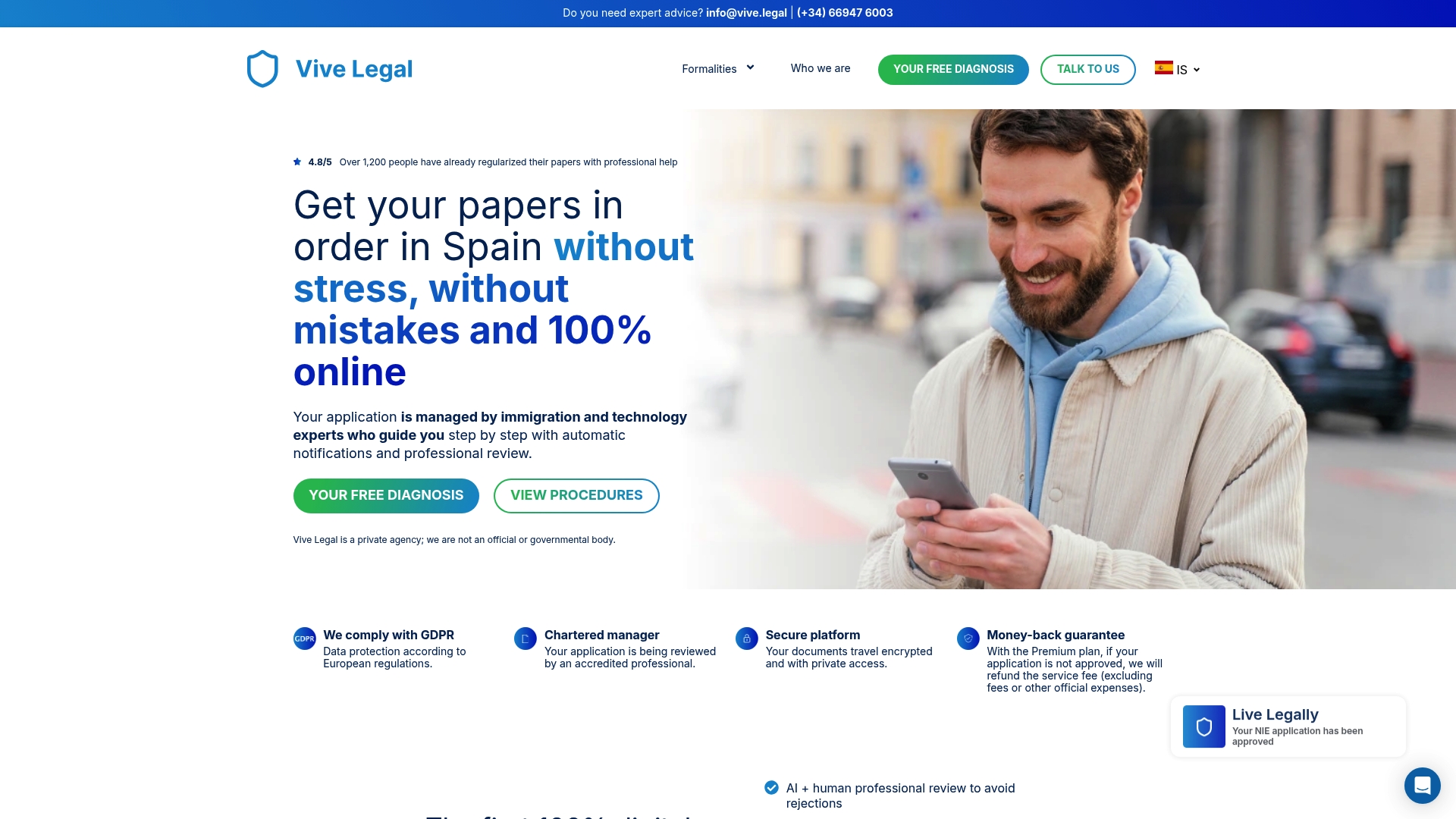
Discover how Vive Legal streamlines your residency application by combining expert legal oversight with easy-to-use digital tools. From personalized diagnostics to document review and appointment scheduling, Vive Legal ensures your submission meets all Spanish legal standards so you avoid common pitfalls. Join countless expats who rely on our platform to monitor their case status, receive timely updates, and achieve residency faster without the headaches of traditional gestorías. Don’t wait until missing a deadline causes unnecessary complications — take proactive control by visiting our Uncategorized Archives - Vive Legal today. Begin your hassle-free residency process now at Vive Legal and turn complex legal procedures into a clear path toward your new life in Spain.
Frequently Asked Questions
What are the main types of Spanish residency documents available for expats?
The main types include the NIE (personal identification number), TIE (biometric residency card), EU citizen registration certificates, and Arraigo permits. Each serves different purposes depending on your nationality and circumstances.
How long do I have to register for residency in Spain after arrival?
You must register within three months of your entry into Spain to comply with residency regulations and avoid complications.
What documentation do I need to apply for Spanish residency?
Typically, you need proof of identity, proof of financial means, and valid health insurance coverage, among any additional requirements specific to your residency category.
Can I work in Spain once I obtain my residency?
Yes, once you have legal residency, you are allowed to work in Spain under the same conditions as Spanish citizens, provided you maintain your residency status and comply with legal obligations.
Recommended
Living legally in Spain shouldn't be difficult.
View services and pricesNot sure which procedure you need? Find out in 2 min
Questions? Message us on WhatsApp