
7 Essentials for a Student Residency Checklist in Spain

Starting your studies in Spain is a huge milestone, but the paperwork and requirements can feel overwhelming for international students. Missing a single step can delay your plans or even put your Spanish semester on hold. If you are unsure where to begin with visas, residency documents, or student registration, you are not alone.
This guide breaks down the exact steps you need to take for a legal and smooth transition to Spanish student life. You will learn how to secure the right visa, collect the mandatory documents, and keep your residency status valid from your first day to graduation.
Living legally in Spain shouldn't be difficult.
View services and pricesNot sure which procedure you need? Find out in 2 min
Questions? Message us on WhatsApp
Each step gives you clear instructions and highlights key details you cannot afford to overlook. Get ready to simplify the entire Spanish student residency process with focused, actionable solutions you can start using today.
Table of Contents
- 1. Confirm Your Visa And Entry Requirements
- 2. Collect Required Residency Documents
- 3. Schedule Your NIE Or TIE Appointment
- 4. Review Forms And Prepare Supporting Evidence
- 5. Secure Local Registration And Health Insurance
- 6. Track Application Status And Respond To Notices
- 7. Plan For Renewals And Future Compliance
Quick Summary
| Takeaway | Explanation |
|---|---|
| 1. Start visa application early | Processing times for student visas can take 4-8 weeks; begin your application three months before departure to avoid delays. |
| 2. Verify all required documents | Missing or improperly prepared documents can jeopardize your visa application; ensure everything is complete and translate documents into Spanish. |
| 3. Schedule your NIE or TIE appointment promptly | You must apply for your TIE within one month of arrival; book your appointment early and prepare necessary documentation to comply with regulations. |
| 4. Monitor application status regularly | Stay proactive in checking your application status; use online tracking to ensure you don’t miss important communications from immigration authorities. |
| 5. Prepare for residency renewal in advance | Keep track of your permit expiration and start gathering renewal documents 90 days in advance to ensure uninterrupted legal residency. |
1. Confirm Your Visa and Entry Requirements
Preparing to study in Spain requires understanding the critical process of obtaining the right student visa. Whether you are coming from within or outside the European Union your entry requirements will differ substantially and demand careful preparation.
For non-EU students, securing a student visa is mandatory for stays exceeding 90 days. This student immigration process involves several key steps that demand meticulous attention to documentation and legal requirements.
Key visa requirements for international students include:
- Proof of acceptance from an officially recognized Spanish educational institution
- Demonstrated financial means to support yourself during studies
- Comprehensive health insurance coverage valid in Spain
- Valid passport with at least one year of remaining validity
- Criminal background clearance from your home country
- Medical certificate confirming you are in good health
Spanish immigration authorities have strict documentation standards for student visas. One missing document can delay or invalidate your entire application.
The application process typically involves submitting documents to the Spanish Embassy or Consulate in your home country. Processing times can range from 4-8 weeks, so start your application early. Ensure all documents are translated into Spanish and legally certified.
Pro tip: Schedule a preliminary consultation with the Spanish consulate at least three months before your intended departure to understand specific requirements for your country and academic program.
2. Collect Required Residency Documents
Securing your student residency in Spain requires assembling a comprehensive portfolio of official documents. Navigating this bureaucratic process demands precision and thorough preparation.
The student immigration process involves collecting several critical documents that validate your legal status and academic intentions.
Essential documents for your residency application include:
- Original university admission letter
- Valid passport with minimum one-year remaining validity
- Passport-sized color photographs meeting Spanish visa requirements
- Proof of financial means to support yourself
- Comprehensive health insurance valid in Spain
- Medical certificate confirming good health
- Criminal background clearance from your home country
- Certified translations of all non-Spanish documents
Attention to detail is crucial. One missing or improperly prepared document can derail your entire residency application.
Each document must be original or officially certified. Translations require professional certification and must be completed by authorized translators recognized by Spanish authorities.
Pro tip: Create digital and physical backup copies of all documents and store them in separate secure locations to protect against potential loss or damage.
3. Schedule Your NIE or TIE Appointment
Navigating the Spanish bureaucratic system requires understanding the critical process of obtaining your Foreigner Identity Number (NIE) or Foreigner Identity Card (TIE). These documents are essential for legal residency and accessing various services in Spain.
For students staying longer than 180 days, scheduling a TIE appointment.aspx) becomes a mandatory step in your immigration process.
Key steps for scheduling your NIE or TIE appointment:
- Check the official government website for appointment availability
- Prepare all required documentation in advance
- Select the nearest immigration office or police station
- Book your appointment through the online system
- Arrive with all original documents and copies
- Be prepared for fingerprinting
Timing is crucial. You must apply for your TIE within one month of arriving in Spain to remain compliant with immigration regulations.
Important documentation requirements include your passport, university admission letter, proof of accommodation, and recent photographs. Some regions might have slightly different specific requirements.
Most appointments can be scheduled online through official government platforms. Plan ahead and book early to secure your preferred date and location.
Pro tip: Create a digital folder with scanned copies of all required documents and save screenshots of your appointment confirmation to ensure you are fully prepared.
4. Review Forms and Prepare Supporting Evidence
Successful student residency in Spain hinges on meticulous documentation and precise form preparation. Your application’s success depends on presenting a comprehensive and accurate portfolio of supporting evidence.
The student immigration process requires careful compilation of official documents that validate your educational and financial status.
Critical documents to review and prepare include:
- Official university admission letter
- Completed visa application forms
- Detailed financial statements proving economic solvency
- Comprehensive health insurance documentation
- Passport with minimum one-year remaining validity
- Academic transcripts and qualification certificates
- Proof of accommodation in Spain
- Criminal background clearance certificate
Attention to detail can make or break your residency application. Even minor errors or missing documents can result in immediate rejection.
Document verification steps are crucial. Each form must be:
- Completely filled out
- Signed in the correct locations
- Accompanied by required supporting evidence
- Translated into Spanish by certified translators
- Organized in a logical sequence
Translated documents require official certification, so budget time and resources for professional translation services. Photocopies must be clear and legible.
Pro tip: Create a digital and physical checklist to track each document’s status and maintain a systematic approach to your application preparation.
5. Secure Local Registration and Health Insurance
Navigating the Spanish healthcare and registration system is a crucial step for international students. Your legal residency and access to essential services depend on completing these administrative requirements accurately.
Non-EU students must comply with registration requirements within three months of entering Spain.
Key steps for local registration and health insurance:
- Register with the local Non-nationals Office
- Obtain a health insurance policy meeting official standards
- Provide proof of enrollment from your educational institution
- Demonstrate financial means to support your stay
- Select between public and private health insurance options
- Secure documentation for social security or special healthcare subscription
Comprehensive health coverage is not optional. Your insurance must provide equivalent protection to the national healthcare system.
Health insurance options for students include:
- Private insurance approved by immigration authorities
- Public healthcare through social security registration
- Special student healthcare plans
- Comprehensive international health coverage
Non-EU students typically need private health insurance that explicitly meets Spanish immigration requirements. Carefully review policy details to ensure full compliance.
Pro tip: Request a detailed insurance certificate in Spanish that explicitly states coverage meets official residency requirements to streamline your registration process.
6. Track Application Status and Respond to Notices
Managing your student residency application requires vigilant monitoring and prompt communication with Spanish immigration authorities. Staying proactive can mean the difference between approval and unnecessary delays.
Students can check application status online through multiple official channels and must be prepared to respond quickly to any requests.
Critical tracking and communication strategies include:
- Register for online application tracking
- Save your application or NIE number
- Set up email and SMS notifications
- Check status weekly
- Prepare digital copies of all documents
- Respond to requests within specified timeframes
Immigration processes demand precision. One missed notification can jeopardize your entire application.
Monitoring methods for your application involve:
- Official government website tracking
- SMS notifications
- Phone inquiry lines
- Email communication channels
- Physical mail updates
Digital tracking offers the most efficient approach. Always ensure your contact information remains current and accessible to immigration officials.
Pro tip: Create a dedicated email folder and mobile notification system specifically for immigration communications to ensure you never miss an important update.
7. Plan for Renewals and Future Compliance
Your student residency journey in Spain does not end with initial approval. Maintaining legal status requires strategic planning and proactive management of your renewal process.
Students must understand the student residency renewal process to ensure uninterrupted legal stay and academic continuity.
Key renewal preparation steps include:
- Track your current permit expiration date
- Begin gathering required documentation 90 days in advance
- Maintain continuous enrollment in your academic program
- Keep financial and health insurance documentation updated
- Ensure passport remains valid for entire permit duration
- Attend mandatory police appointments for card renewal
Missed renewal deadlines can result in immediate legal complications and potential deportation.
Renewal documentation checklist:
- Updated proof of enrollment
- Valid passport
- Current health insurance certificate
- Financial solvency statements
- Proof of address
- Previous residence permit
Timely preparation prevents last minute complications. Most renewal applications should be submitted 60 days before current permit expiration.
Pro tip: Create a digital and physical folder with all renewal documents organized chronologically to streamline the application process and reduce stress.
Below is a comprehensive table summarizing the essential steps and information for preparing to study and reside in Spain as an international student.
| Process Step | Description | Notes and Recommendations |
|---|---|---|
| Confirm Visa Requirements | Understand and fulfill visa prerequisites for studying in Spain. | Prepare necessary documents, such as proof of acceptance, financial evidence, and health insurance. |
| Collect Residency Documents | Gather official documentation for residency applications. | Comprehensive preparation and professional translation of documents are essential. |
| Schedule NIE/TIE Appointment | Arrange for essential residency identification. | Book early, review requirements, and prepare thoroughly. |
| Prepare Supporting Evidence | Compile critical forms and evidence supporting academic and insurance requirements. | Maintain organization and ensure accuracy in applications. |
| Secure Registration and Insurance | Complete registration and obtain health insurance. | Choose between private or public options and make sure coverage complies with regulations. |
| Track Application Status | Monitor visa or residency processing updates actively. | Respond promptly to notifications, maintain accurate contact information. |
| Plan Renewals | Strategically manage permit renewals and ongoing compliance. | Start early to avoid delays and maintain required documentation. |
Navigate Your Student Residency Journey with Confidence and Ease
The process of obtaining and renewing your student residency in Spain can feel overwhelming with strict documentation and tight deadlines. From securing your student visa to scheduling your NIE or TIE appointment, every step needs precision to avoid delays or rejection. If you want to eliminate the stress of managing complex paperwork and bureaucratic hurdles, our services are designed specifically to support you throughout this journey.
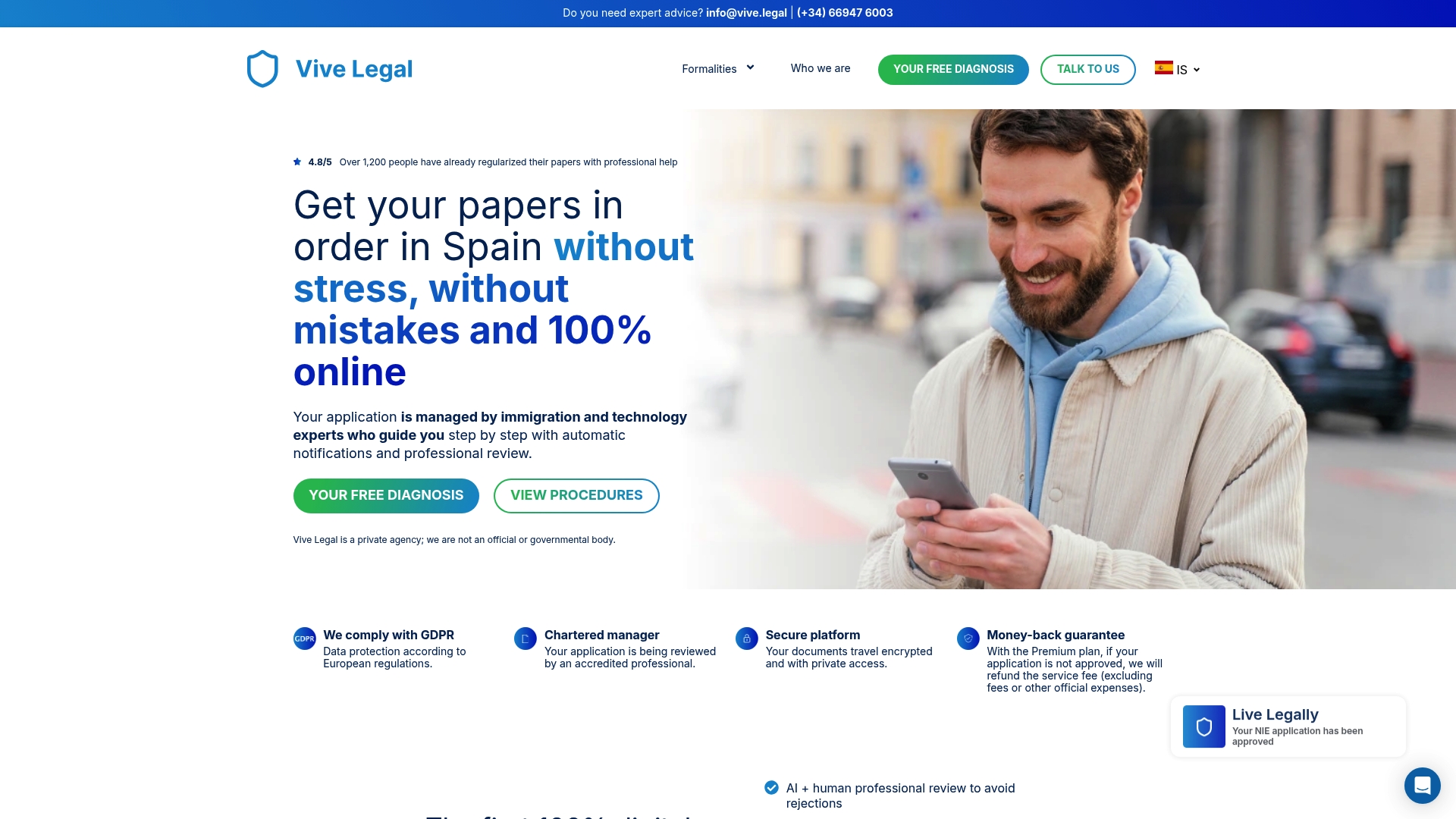
At Vive Legal, we combine expert legal guidance and smart digital tools to simplify the immigration process. Whether you need personalized document review, help preparing your application forms, or seamless appointment scheduling, our platform ensures accuracy and timely compliance. Explore our Uncategorized Archives - Vive Legal to learn more about how we help students and expatriates stay on track. Don’t let paperwork slow down your studies in Spain. Start your hassle-free residency application now at Vive Legal and secure your future with professional support every step of the way.
Frequently Asked Questions
What are the key documents required for a student visa in Spain?
To obtain a student visa in Spain, you will need essential documents such as a proof of acceptance from a recognized educational institution, financial statements demonstrating your ability to support yourself, and health insurance coverage valid in Spain. Prepare these documents ahead of time to ensure a smooth application process.
How long does it typically take to process a student visa application for Spain?
The processing time for a student visa application ranges from 4 to 8 weeks. Start your application at least three months before your intended departure to allow ample time for processing and to avoid last-minute issues.
What steps do I need to follow to obtain my Foreigner Identity Number (NIE) or Foreigner Identity Card (TIE)?
To obtain your NIE or TIE, you must book an appointment with the nearest immigration office or police station, gather the required documents, and arrive on time with all originals and copies. Ensure you schedule this appointment within one month of arriving in Spain to remain compliant with immigration regulations.
How can I prepare for the renewal of my student residency permit in Spain?
To prepare for the renewal of your student residency permit, track the expiration date and start gathering the necessary documentation 90 days in advance. Keep your enrollment status, financial documentation, and health insurance up to date to ensure a hassle-free renewal process.
What is the importance of having health insurance while studying in Spain?
Having health insurance is crucial because it meets Spanish immigration requirements and provides necessary medical coverage during your stay. Select a policy that aligns with local standards, ensuring you have comprehensive protection to avoid costly medical expenses.
How can I track my student residency application status?
You can track your student residency application status online through official government channels. Register for online tracking and check your application status weekly to stay informed and respond promptly to any notifications or requests.
Recommended
Living legally in Spain shouldn't be difficult.
View services and pricesNot sure which procedure you need? Find out in 2 min
Questions? Message us on WhatsApp