
6 Essential Tips for a Successful NIE Application in Spain

Applying for your NIE in Spain can feel overwhelming, especially when you’re faced with strict paperwork and unfamiliar requirements. One missing document or a small mistake on your application could lead to frustrating delays or even a denial. No one wants to get stuck in endless appointments or repeat the process because of preventable errors.
The right approach can make your NIE application smooth and successful. You’ll learn exactly what documents to prepare, how to avoid common pitfalls, and the steps that keep your process moving forward. Each practical tip is crafted to save you time, reduce stress, and help you get your NIE without unnecessary setbacks.
Living legally in Spain shouldn't be difficult.
View services and pricesNot sure which procedure you need? Find out in 2 min
Questions? Message us on WhatsApp
Get ready to discover what every newcomer to Spain wishes they knew before starting their NIE application. These clear, actionable steps will boost your confidence and give you the tools you need to succeed from day one.
Table of Contents
- Understand What the NIE Is and Why You Need It
- Gather All Necessary Documents in Advance
- Double-Check Your Application for Common Mistakes
- Book Your Appointment Online for Faster Service
- Prepare for Your NIE Appointment Day
- Track Your Application and Stay Informed
Quick Summary
| Takeaway | Explanation |
|---|---|
| 1. Acquire Your NIE Immediately | The NIE is essential for legal activities in Spain, such as opening bank accounts or renting properties. Apply as soon as you arrive. |
| 2. Prepare Necessary Documents Ahead | Gather all required documents before your appointment to avoid delays. Missing or incorrect documents can lead to rejection. |
| 3. Double-Check Your Application | Carefully review your application for errors before submission. Common mistakes can cause significant delays or rejection of the NIE. |
| 4. Book Your Appointment Online | Scheduling your appointment online secures your spot and reduces wait times. Avoid walk-ins to streamline the process. |
| 5. Stay Engaged During Processing | Monitor your email and communication channels after submission. Quick responses to any official requests prevent unnecessary delays in obtaining your NIE. |
1. Understand What the NIE Is and Why You Need It
The NIE (Número de Identificación de Extranjero) is your Spanish foreign identification number, and it’s essentially your key to legal life in Spain. Think of it as your official passport to every major activity, from opening a bank account to signing a job contract.
Unlike the DNI (national ID for Spanish citizens), the NIE is specifically designed for non-Spanish nationals who need to conduct any economic, social, or professional activity in Spain. It’s a unique alphanumeric identifier that Spanish authorities recognize across all legal, tax, and administrative matters.
The NIE is mandatory for any legal or financial activity in Spain and does not expire—it’s valid for life once issued.
Why you absolutely need this number:
- Opening a bank account (you won’t get past the first conversation without it)
- Buying or renting property
- Working legally in Spain
- Registering for social security or healthcare
- Paying taxes
- Enrolling in university or official courses
- Starting a business or freelance activity
Most European expatriates and international students don’t realize how critical the NIE is until they try to complete their first transaction in Spain. Spanish banks won’t open accounts without it. Employers won’t process payroll. Landlords won’t sign rental agreements. It’s not optional—all foreigners must obtain the NIE within three months of arriving in Spain if you’re planning to stay.
The good news? Once you have it, you’re set for life. The NIE never expires and remains valid whether you stay in Spain for one year or fifty years.
Pro tip: Request your NIE application as soon as you arrive in Spain—the sooner you apply, the sooner you can handle administrative tasks like opening bank accounts or signing rental agreements without delays.
2. Gather All Necessary Documents in Advance
Document preparation is where most NIE applications succeed or stumble. Showing up unprepared to your appointment nearly guarantees delays, rescheduling, or rejection. The solution is simple: collect everything ahead of time.
Spanish authorities are strict about documentation. They won’t accept incomplete files or documents that don’t meet their specific standards. When you arrive with all required materials properly organized, you signal that you’re serious and professional about your application.
Having all documents accurately prepared before your appointment expedites the entire NIE process and prevents frustrating delays.
The complete document checklist:
- Original passport (plus color copies of the main pages)
- Completed application form (EX-15 for non-EU citizens or EX-18 for EU citizens)
- Justification documents showing why you need the NIE (employment contract, property deed, university enrollment letter, etc.)
- Proof of tax fee payment (form 790)
- Two recent color passport-sized photos (4x3 centimeters)
Each document matters. Your passport must be valid and not expire soon. Your justification documents must clearly explain your reason for requesting the NIE, whether that’s employment, property purchase, or studies. The form 790 proves you’ve paid the administrative fee.
The photos are particularly easy to get wrong. Many applicants bring photos that are too old, the wrong size, or not in color. Get fresh photos taken at a professional photo studio in Spain—they know the exact requirements and won’t let you walk out with unsuitable images.
Organize everything in a folder before your appointment. Keep originals and copies separate so you can hand over copies while retaining your originals. This small step shows Spanish officials you’re prepared.
Pro tip: Make two complete sets of copies of every document—one for the appointment and one backup in case authorities request additional documentation later.
3. Double-Check Your Application for Common Mistakes
A single oversight can derail your entire NIE application. The difference between approval and rejection often comes down to whether you caught small errors before submitting. This step takes time but saves you months of frustration.
Spanish bureaucracy has zero tolerance for incomplete paperwork. Missing signatures, outdated documents, or incorrectly filled forms trigger automatic delays. Your application gets sent back, you reschedule, and the clock resets. Checking everything twice before submission prevents this entirely.
Double-checking all sections and documents before submission reduces the risk of denial or delays and significantly speeds up your NIE issuance.
Common mistakes that cause rejections:
- Incomplete or incorrectly filled forms (especially the EX-15 form)
- Missing signature on required documents
- Expired or incorrect identification documents
- Failing to submit proof of your reason for the NIE
- Incorrect or missing proof of fee payment (form 790)
- Documents that aren’t properly photocopied or notarized
The EX-15 form is particularly tricky. It’s in Spanish, and many applicants make translation errors or skip sections. Read every field carefully. Even a single blank box gives authorities reason to reject your application. Your signature must appear where required, not where you think it should go.
Your identification documents must be current. An expired passport, no matter how minor, creates problems. Spanish officials won’t accept anything past its validity date. Check expiration dates on every document you’re submitting.
Common application errors include failing to clearly explain why you need the NIE. Be specific in your justification documents. Don’t assume the officer understands your situation. If you’re employed, attach your employment contract. If buying property, include the purchase agreement.
Pro tip: Have someone else review your completed application before submission—a fresh set of eyes catches mistakes you’ve overlooked after reviewing your own work multiple times.
4. Book Your Appointment Online for Faster Service
Online appointment booking is your fastest route to the NIE. While walk-in options exist in some offices, they lead to unpredictable waits and lower priority. Booking ahead guarantees your spot and lets you plan around your schedule.
Spain’s official government portal handles all NIE appointment scheduling. The system is straightforward but requires accurate information. You select your preferred office location, choose from available time slots, and receive confirmation.
Booking your appointment online through the official system streamlines the process and guarantees you a confirmed time slot instead of uncertain walk-in availability.
Why online booking matters:
- Guarantees a reserved time slot at your chosen office
- Eliminates unpredictable waiting times on the day
- Allows you to plan your schedule in advance
- Shows Spanish authorities you’re organized and serious
- Prevents last-minute conflicts with work or studies
- Provides official confirmation documentation
Wait times vary dramatically by location. Smaller cities might have appointments available within 1 to 2 weeks, while busy metropolitan areas face longer delays. In Madrid and Barcelona, appointment wait times can reach 4 to 8 weeks, so book immediately when you’re ready to apply.
Accuracy matters when booking online. Your personal details must match exactly what appears on your application form and passport. Mismatched names, dates, or identification numbers trigger confusion and potential delays when you arrive.
Book during business hours and use a reliable internet connection. Take a screenshot of your confirmation before closing the browser. Save your appointment reference number somewhere accessible. Many applicants lose their confirmation details and waste time trying to recover them.
If your circumstances change after booking, reschedule through the same portal rather than simply not showing up. Missed appointments without notice can affect your credibility with Spanish authorities.
Pro tip: Book your appointment the moment your documents are ready and you’ve paid the fee—don’t wait for the perfect timing, because popular slots in major cities fill quickly and pushing your booking back costs you valuable weeks.
5. Prepare for Your NIE Appointment Day
Your appointment day determines whether you walk out with an NIE or face delays. Success depends on preparation, punctuality, and professional presentation. Treat this day like a job interview, because in many ways, it is one.
Spanish officials evaluate not just your documents but your readiness and respect for the process. Arriving disorganized, late, or unprepared signals that you don’t take the application seriously. The opposite approach opens doors.
Arriving early, dressed appropriately, and prepared to answer questions significantly improves your appointment outcome and demonstrates respect for the process.
What to bring on appointment day:
- Original passport (plus color copies)
- Completed and signed application form
- Proof of fee payment (form 790)
- All justification documents (employment contract, property deed, etc.)
- Two color passport photos
- Any additional supporting documents relevant to your situation
Organize everything in a folder before you leave home. Keep originals and copies separated so you can quickly hand over what’s needed. Spanish officials appreciate applicants who can locate documents instantly without fumbling through folders.
How to present yourself:
Dress formally for your appointment. Business casual at minimum, professional attire preferred. This isn’t casual bureaucracy. Spanish authorities notice when applicants show respect through appearance and behavior.
Arrive early. Plan for traffic, transportation delays, or getting lost. Arriving 10 to 15 minutes before your scheduled time demonstrates reliability. Arriving late risks losing your slot entirely, and rescheduling in busy cities means waiting weeks more.
Bring a notebook and pen. Take notes on what officials tell you, especially regarding collection dates or next steps. This shows you’re engaged and helps you remember critical details later.
During your appointment, listen carefully to instructions and ask clarifying questions if needed. Keep your answers brief and honest. Officials may ask why you need the NIE or verify details about your employment or property purchase. Consistency between your documents and your verbal responses matters.
Some applicants receive their NIE immediately. Others receive a collection date and must return later. Either way, confirm the next steps before leaving.
Pro tip: Take a photo of your appointment confirmation on your phone and screenshot any official communications—having proof of your appointment time prevents disputes if arrival times are questioned.
6. Track Your Application and Stay Informed
Submitting your application isn’t the end—it’s the beginning of the waiting period. Many applicants disappear after submission and miss critical notifications about their NIE status. Staying engaged throughout the process prevents missed deadlines and collection dates.
Spanish authorities communicate primarily through email and occasional phone calls. If you miss these notifications, you won’t know when to collect your NIE or if additional documents are requested. Proactive tracking keeps you in control.
Being proactive in following up ensures you don’t miss collection dates or requests for further documentation, avoiding unnecessary delays in obtaining your NIE.
How to track your application:
- Check your email daily for official communications from the police office or consulate
- Save all emails from authorities in a dedicated folder for easy reference
- Contact the office where you applied if you haven’t heard anything after two weeks
- Monitor any online portals provided during your appointment
- Keep your appointment confirmation and reference number accessible
- Maintain a written record of important dates and contact information
Processing times vary based on workload and location. Standard NIE processing can take up to three weeks or longer depending on volume at your office. Busier locations may take significantly longer. Don’t assume delays mean problems—stay patient but remain vigilant.
When you receive notification that your NIE is ready, act quickly. Collection deadlines exist, and missing them can complicate matters. Some offices won’t hold documents indefinitely. Mark the collection date in your calendar and set phone reminders.
If authorities request additional documentation, respond immediately. Don’t assume you can handle it next week. Spanish bureaucracy moves slowly, and delays in providing requested documents push your timeline back further.
Keep detailed notes of every interaction. Write down names of officials you speak with, dates of communications, and what was discussed. This documentation helps if disputes arise about missing information or miscommunications.
Pro tip: Create a dedicated email filter for NIE-related communications and check it multiple times daily during the processing period to ensure no official messages slip past your inbox.
Below is a comprehensive table summarizing the key steps and requirements for obtaining an NIE (Número de Identificación de Extranjero) as discussed throughout the article.
| Step | Action & Requirements | Key Consideration |
|---|---|---|
| Understanding NIE | Confirm its mandatory nature for non-Spanish nationals conducting legal and financial activities in Spain. It never expires. | Essential for tasks like opening bank accounts, renting property, and working legally. |
| Document Preparation | Gather required documents, including a valid passport, completed application forms, justification for NIE, proof of fee payment, and passport photos. | Ensure documents are accurate, not expired, and meet specifications. |
| Double-Checking Application | Review content for errors, complete forms correctly, and ensure all required signatures are included. | Prevents delays caused by incomplete or incorrect submissions. |
| Booking Your Appointment | Reserve a time slot online through the official government portal for a streamlined process. | Schedule as early as possible to secure a preferred time and location. |
| Attending the Appointment | Bring organized documents, dress professionally, and arrive punctually. | Demonstrates preparation, professionalism, and respect for the process. |
| Tracking Application | Monitor communications from authorities and stay proactive in responding to requests. | Ensure you meet collection deadlines to avoid complications with receiving your NIE. |
Streamline Your NIE Application with Expert Legal Support
Applying for your NIE in Spain can feel overwhelming with strict documentation requirements and complex bureaucracy. This article highlights the critical steps to avoid mistakes, prepare all necessary documents, and secure your appointment. If you want to skip the stress and maximize your chances of success, professional guidance is essential.
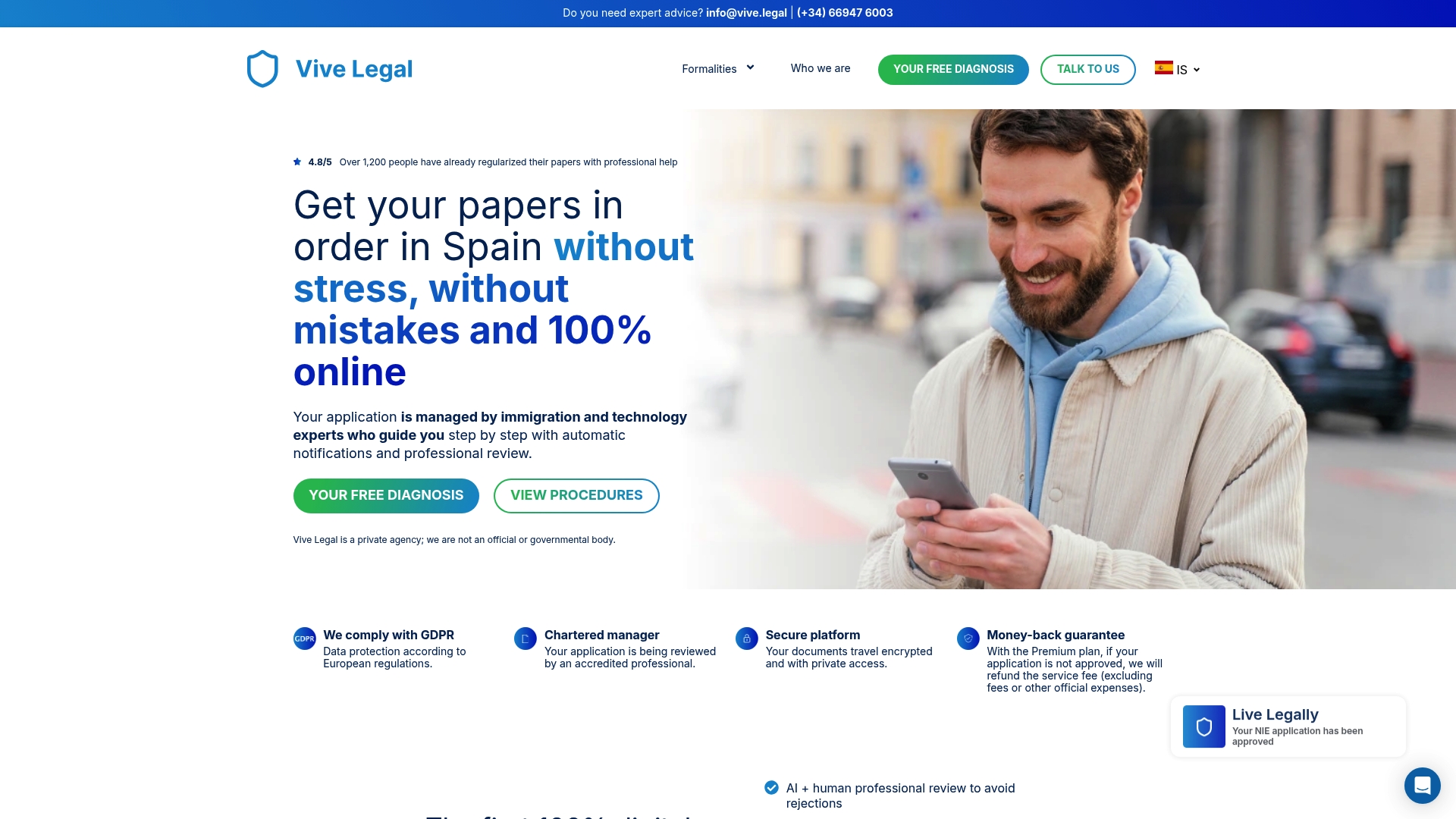
At Vive Legal, we specialize in simplifying the entire NIE application process for expatriates, workers, and students in Spain. Our online platform offers personalized document review, accurate form preparation, and appointment scheduling all from the comfort of home. With a combination of advanced technology and expert oversight, we help you avoid common errors like incomplete forms or missing signatures. Acting now means faster approval and the peace of mind that your application is handled correctly the first time.
Don’t wait for delays or frustrating rejections. Visit Vive Legal to start your hassle-free NIE application today and gain full access to our secure client portal where you can track every step until your NIE is issued.
Frequently Asked Questions
What is the NIE and why do I need it?
The NIE, or Foreign Identification Number, is crucial for anyone engaging in legal, financial, or professional activities in Spain. Apply for it as soon as you arrive to avoid interruptions in tasks like opening bank accounts or signing rental agreements.
What documents do I need to prepare for my NIE application?
To successfully apply for your NIE, gather your original passport, a completed application form, justification documents, proof of tax fee payment, and passport-sized photos. Ensure you have these documents organized before your appointment to facilitate a smooth process.
How can I avoid common mistakes when applying for the NIE?
Double-check your application for completeness, accuracy, and that all required signatures are included. Take time to review each section and have someone else look it over, as catching small errors can prevent rejections and delays.
How do I book an NIE appointment online?
Visit the official government portal to schedule your NIE appointment online, ensuring you provide accurate personal information that matches your documentation. Book as soon as your documents are ready, as wait times can vary from a few weeks to several months depending on your location.
What should I do on the day of my NIE appointment?
On your appointment day, arrive early, dressed appropriately, and bring all required documents neatly organized. Present yourself professionally and be prepared to answer questions briefly and honestly to improve your chances of a successful outcome.
How can I track the status of my NIE application?
Stay proactive by checking your email regularly for communications from authorities about your application status. If you haven’t heard anything within two weeks, contact the office where you applied to follow up on your application.
Recommended
Living legally in Spain shouldn't be difficult.
View services and pricesNot sure which procedure you need? Find out in 2 min
Questions? Message us on WhatsApp