
7 Types of Residency Documents You Need in Spain

Moving to Spain can feel overwhelming when you encounter unfamiliar paperwork at every turn. Whether you want to study, work, or simply stay longer than a quick visit, Spanish residency rules and documents can quickly get confusing. Yet, knowing exactly which permits and cards you need is the difference between stressful delays and a smooth new beginning.
This guide cuts through the confusion with straightforward, actionable details about the must-have residency documents foreigners need in Spain. You’ll unlock the key steps to securing your legal status, from understanding the NIE and TIE card to tackling student or worker permits and even bringing your family along. These practical insights will help you avoid costly mistakes and settle in with confidence.
Living legally in Spain shouldn't be difficult.
View services and pricesNot sure which procedure you need? Find out in 2 min
Questions? Message us on WhatsApp
Get ready to discover step-by-step advice for every major residency pathway—so you can handle Spanish immigration with clarity and peace of mind.
Table of Contents
- 1. Understanding The NIE: Your Foreigner ID Number
- 2. TIE Card: Application And Key Benefits
- 3. EU Certificate: Staying Legally As An EU Citizen
- 4. Student Residency Permit: Essential Steps
- 5. Work And Highly Skilled Residency Permits Explained
- 6. Family Reunification: How To Bring Loved Ones
- 7. Arraigo Permits: Options For Exceptional Regularization
Quick Summary
| Takeaway | Explanation |
|---|---|
| 1. Obtain your NIE to live, work, or study in Spain | The NIE is essential for opening bank accounts, signing contracts, and more as a foreigner in Spain. |
| 2. Your TIE card is crucial for extended stays | The TIE card confirms your legal residency in Spain, allowing work and access to various services. |
| 3. EU citizens must register for an EU certificate | It’s mandatory for EU citizens residing in Spain for over three months, granting residency rights without restrictions. |
| 4. Gather key documents for a student residency permit | Required documents include an acceptance letter and proof of financial means; start early to avoid complications. |
| 5. Family reunification allows bringing loved ones | Valid residents can apply to reunite with close family members, aiding in settling in Spain together. |
1. Understanding the NIE: Your Foreigner ID Number
If you’re planning to live, work, or study in Spain, you’ll need to understand the NIE – your essential identification number as a foreigner. The NIE (Número de Identificación de Extranjero) is more than just a random set of digits it’s your official gateway to legal and financial activities in Spain.
What exactly is the NIE? It’s a unique identification number assigned to non Spanish citizens for various administrative purposes. Think of it as your personal identification code that allows you to:
- Open a bank account
- Sign employment contracts
- Pay taxes
- Purchase property
- Access healthcare services
- Obtain official documents
The NIE is not a residency permit but a crucial identification number that tracks your legal interactions within Spain. Obtaining the NIE process involves submitting specific documentation and completing an official application.
The NIE is your key to unlocking official administrative processes in Spain.
When you apply for your NIE, you’ll need to provide several key documents including:
- Valid passport
- Completed NIE application form (EX-15)
- Proof of reason for obtaining NIE (work contract, study enrollment, etc.)
- Payment of administrative fees
Important to remember: The NIE is personal and non transferable. Each foreigner receives their own unique number which remains constant throughout their interactions with Spanish authorities.
Pro tip: Keep multiple copies of your NIE document and store the original in a secure location to prevent potential loss or damage.
2. TIE Card: Application and Key Benefits
The TIE card represents your golden ticket to official legal residency in Spain. This critical document serves as the primary identification and legal proof for foreign nationals planning an extended stay in the country.
The TIE (Tarjeta de Identidad de Extranjero) is more than just a piece of plastic. It’s your official authorization to live and work in Spain for periods exceeding 90 days. Understanding TIE requirements is crucial for smooth integration into Spanish administrative systems.
Your TIE card is the definitive proof of your legal status in Spain.
To qualify for a TIE card, you’ll need to meet several key prerequisites:
- Possess a valid residence permit
- Register on the municipal register (padrón)
- Provide proof of financial stability
- Submit necessary identification documents
The application process involves several important steps:
- Complete municipal registration
- Gather required documentation
- Schedule an appointment at local police station
- Submit application and biometric data
- Pay required administrative fees
Key Benefits of the TIE Card:
- Legal proof of residency
- Enables work permissions
- Access to healthcare services
- Ability to open bank accounts
- Simplified administrative interactions
Important Considerations: Always keep your TIE card updated and carry it with you. Expired or missing documentation can result in significant penalties.
Pro tip: Make digital and physical copies of your TIE card and store them separately to protect against potential loss or theft.
3. EU Certificate: Staying Legally as an EU Citizen
If you’re an EU citizen planning to live in Spain for more than three months, obtaining your EU registration certificate is not just recommended – it’s mandatory. This crucial document serves as your official proof of legal residence and opens doors to numerous administrative and social benefits.
Registration procedures for EU citizens are straightforward but require careful preparation. The certificate officially records your residence status and grants you comprehensive rights to live and work throughout Spain without employment restrictions.
Your EU certificate is your passport to unrestricted residency in Spain.
To successfully obtain your EU registration certificate, you’ll need to provide several key documents:
- Valid passport or national ID card
- Proof of financial means
- Comprehensive health insurance coverage
- Documentation of employment or student status
- Proof of accommodation in Spain
The application process involves several critical steps:
- Register with local municipal authorities
- Gather required documentation
- Schedule an appointment at local police station
- Submit application and supporting documents
- Receive your official EU registration certificate
Key Benefits of the EU Certificate:
- Legal proof of residence
- Unrestricted work permissions
- Access to healthcare services
- Ability to open bank accounts
- Social security enrollment
Important Deadline: You must complete registration within three months of arriving in Spain. Failing to do so could result in administrative complications.
Pro tip: Make digital and physical copies of all submitted documents and keep them organized in a dedicated folder for easy reference during your registration process.
4. Student Residency Permit: Essential Steps
Pursuing academic dreams in Spain requires navigating the student residency permit process – a critical step for international students planning extended study periods. Your permit is more than just paperwork it’s your gateway to legal education and potential opportunities in Spain.
Student immigration procedures can seem complex, but understanding the key requirements makes the process significantly smoother. Non-EU students must meet specific criteria to secure their legal study status.
Your student residency permit is your official ticket to academic and professional exploration in Spain.
To qualify for a student residency permit, you’ll need to prepare several critical documents:
- Official acceptance letter from recognized Spanish educational institution
- Valid passport
- Comprehensive health insurance coverage
- Proof of sufficient financial means
- Clean criminal background check
The application process involves strategic steps:
- Secure admission to accredited Spanish educational program
- Obtain necessary health insurance
- Demonstrate financial stability
- Submit required documentation
- Complete visa and residency permit application
- Attend mandatory in-person interviews
Key Advantages of Student Residency Permit:
- Legal authorization to study
- Potential part-time work permissions
- Access to healthcare services
- Option for family reunification
- Path to future professional opportunities
Important Considerations: Your permit is typically valid for the duration of your academic program and requires annual renewal. Maintaining good academic standing is crucial for continued residency status.
Pro tip: Start gathering and organizing your documentation at least six months before your intended departure to minimize last-minute complications and reduce potential application stress.
5. Work and Highly Skilled Residency Permits Explained
For international professionals seeking career opportunities in Spain, understanding work and highly skilled residency permits is crucial. These specialized permits offer a strategic pathway for talented individuals to legally live and work in one of Europe’s most dynamic job markets.
Spain’s work permit pathways provide unique opportunities for non-EU professionals with specialized skills. Unlike standard work visas, these permits are designed to attract top-tier talent across multiple professional sectors.
The highly skilled residency permit is your professional gateway to the Spanish job market.
Key requirements for obtaining a work and highly skilled residency permit include:
- Advanced professional qualifications
- Verified employment offer from Spanish company
- Minimum salary threshold
- Specialized professional expertise
- Clean criminal background
The application process involves several strategic steps:
- Secure job offer from Spanish employer
- Employer initiates work permit application
- Submit comprehensive professional documentation
- Complete visa and residency permit application
- Obtain TIE residence card upon arrival
Key Advantages of Highly Skilled Work Permits:
- Expedited visa processing
- Bypass national employment tests
- Family reunification rights
- One-year permit validity
- Renewable residency status
Important Considerations: Employers play a critical role in the application process. Their support and documentation are essential for successful permit acquisition.
Pro tip: Compile a comprehensive professional portfolio with translated credentials and recommendation letters to strengthen your work permit application.
6. Family Reunification: How to Bring Loved Ones
Moving to Spain doesn’t mean leaving your family behind. The family reunification process offers a legal pathway for non-EU residents to bring their closest family members into the country and build a new life together.
Family reunification strategies provide hope for immigrants seeking to maintain family unity while establishing their new home. The process is structured to support genuine family connections across international borders.
Family reunification transforms immigration from a personal journey to a shared family experience.
To qualify for family reunification, you must meet several key requirements:
- Hold a valid residence permit for at least one year
- Demonstrate stable and sufficient income
- Provide proof of adequate housing
- Show clean criminal record
- Establish legal family relationship
The application process involves specific steps:
- Gather all required documentation
- Prove family relationship with official documents
- Demonstrate financial capability
- Submit application at Provincial Aliens Affairs Office
- Complete visa processing at local consulate
Eligible Family Members:
- Legal spouse
- Children under 18 years old
- Dependent children with disabilities
- Parents over 65 years old
Important Limitations: Non-EU family members of EU citizens follow different regulations and are not covered under this specific reunification process.
Pro tip: Prepare a comprehensive documentation folder with translated and authenticated documents to streamline your family reunification application process.
7. Arraigo Permits: Options for Exceptional Regularization
Navigating immigration complexities in Spain can feel overwhelming, but the Arraigo permit system offers a unique lifeline for foreigners seeking legal residency through exceptional circumstances. These special permits provide a pathway to regularization for individuals who might otherwise struggle to obtain standard residency documents.
Exploring Arraigo permit options reveals multiple strategies for establishing legal status in Spain. Each Arraigo type addresses different personal and professional situations.
The Arraigo permit transforms immigration challenges into opportunities for legal residency.
Three primary Arraigo permit types exist:
- Arraigo Social: For individuals with documented social roots
- Arraigo Laboral: For those with proven work history
- Arraigo Familiar: For individuals with family connections in Spain
Key requirements across Arraigo permit types include:
- Continuous residence in Spain
- Clean criminal record
- Proven social or professional integration
- Demonstrable ties to Spanish community
- Ability to support oneself financially
Critical Considerations for Arraigo Permits:
- Requires extensive documentation
- Processing can take several months
- Each permit type has unique eligibility criteria
- Success depends on comprehensive evidence
Important Legal Nuances: Arraigo permits are discretionary. Immigration authorities evaluate each application individually, considering personal circumstances and integration potential.
Pro tip: Consult with an immigration specialist who can evaluate your specific situation and help compile the most compelling documentation for your Arraigo permit application.
Below is a comprehensive table summarizing the key topics discussed throughout the article related to legal residency, official documentation, and administrative processes for foreigners living and working in Spain.
| Residency Topic | Description | Key Takeaways and Benefits |
|---|---|---|
| NIE: Foreigner ID Number | A unique identification number for administrative interaction in Spain. | Necessary for banking, employment, taxes, and more. Not a residency permit. |
| TIE Card | The primary identification for extended stays of over 90 days. | Legal residency proof, enables work, access to services, and facilitates administration. |
| EU Registration Certificate | Mandated for EU citizens staying for over three months. | Grants unrestricted residency rights, employment opportunities, and social benefits. |
| Student Residency Permit | Required for non-EU students studying in Spain. | Offers academic legality, work options, and potential for professional mobility. |
| Work and Highly Skilled Residency Permits | Specific permits catered to professionals with advanced qualifications. | Expedited processing, work permissions, and eligibility for dependents. |
| Family Reunification | Process of uniting families of non-EU residents legally residing in Spain. | Enables family ties to strengthen through legal residency rights. |
| Arraigo Permits | Provides pathways to regularization under exceptional circumstances. | Supports individuals with social, labor, or familial connections to Spain. |
This table encapsulates the essential information provided within the article, offering a structured and straightforward summary for easier understanding and reference.
Simplify Your Spanish Residency Journey with Professional Support
Navigating the complex world of Spanish residency documents can feel overwhelming. From obtaining your NIE and TIE to managing your EU registration or applying for specialized permits like Arraigo and family reunification, every step requires precise preparation and attention to detail. If you want to avoid costly mistakes and lengthy delays, relying on expert guidance is essential. Understanding the specific requirements and meeting deadlines are crucial to gaining and maintaining your legal status in Spain.
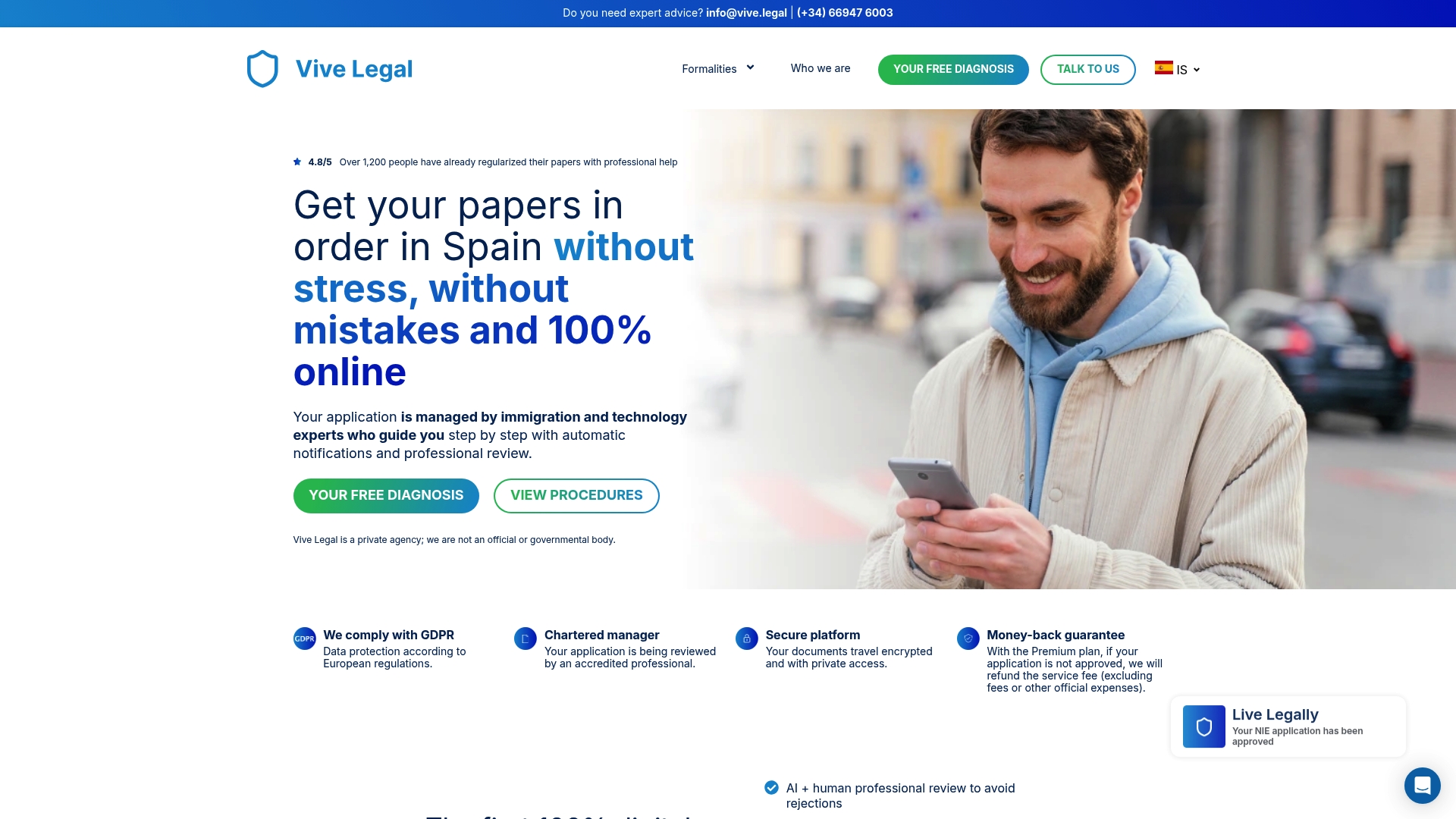
Take control of your immigration process today with Vive Legal. Our online legal consultancy platform offers tailored services that help you prepare, submit, and track your residency applications efficiently. Benefit from personalized diagnostics, professional document reviews, appointment scheduling, and real-time case updates all within a secure client portal. Whether you are a student, worker, EU citizen, or looking for family reunification assistance, Vive Legal simplifies the path forward with transparency and expertise. Start your streamlined residency journey now at Vive Legal and explore our comprehensive insights in the Uncategorized Archives - Vive Legal to stay informed every step of the way.
Frequently Asked Questions
What is the NIE and why do I need it in Spain?
The NIE, or Foreigner Identification Number, is essential for legal and financial activities in Spain, including opening bank accounts or signing contracts. To obtain the NIE, prepare your valid passport, complete the NIE application form (EX-15), and submit proof of your reason for needing it.
How can I apply for a TIE card in Spain?
To apply for a TIE card, you need to possess a valid residence permit and register with local municipal authorities. Gather necessary documentation, schedule an appointment at your local police station, and submit your application along with biometric data within 30 days of your appointment.
What documents do I need for an EU registration certificate?
To obtain an EU registration certificate, you will need a valid passport or national ID, proof of financial means, health insurance coverage, documentation of employment or student status, and proof of accommodation. Compile these documents, register with local authorities, and submit your application at your local police station.
What are the requirements for a student residency permit in Spain?
To secure a student residency permit, you must have an acceptance letter from a recognized Spanish institution, a valid passport, health insurance, proof of financial means, and a clean criminal background check. Gather these documents and submit your residency permit application before starting your studies.
How do I initiate the family reunification process in Spain?
To initiate family reunification, you must hold a valid residence permit for at least one year and demonstrate stable income and adequate housing. Gather the necessary documentation to prove your family relationship and submit your application at the Provincial Aliens Affairs Office within 60 days of gathering all required documents.
What is the Arraigo permit and who can apply for it?
The Arraigo permit provides a pathway for foreigners to regularize their residency in Spain under specific circumstances, such as social ties, work history, or family connections. Ensure you have continuous residence, a clean criminal record, and sufficient documentation to demonstrate your integration and financial support before applying.
Recommended
Living legally in Spain shouldn't be difficult.
View services and pricesNot sure which procedure you need? Find out in 2 min
Questions? Message us on WhatsApp