
What is expat residency in Spain? Your 2026 guide
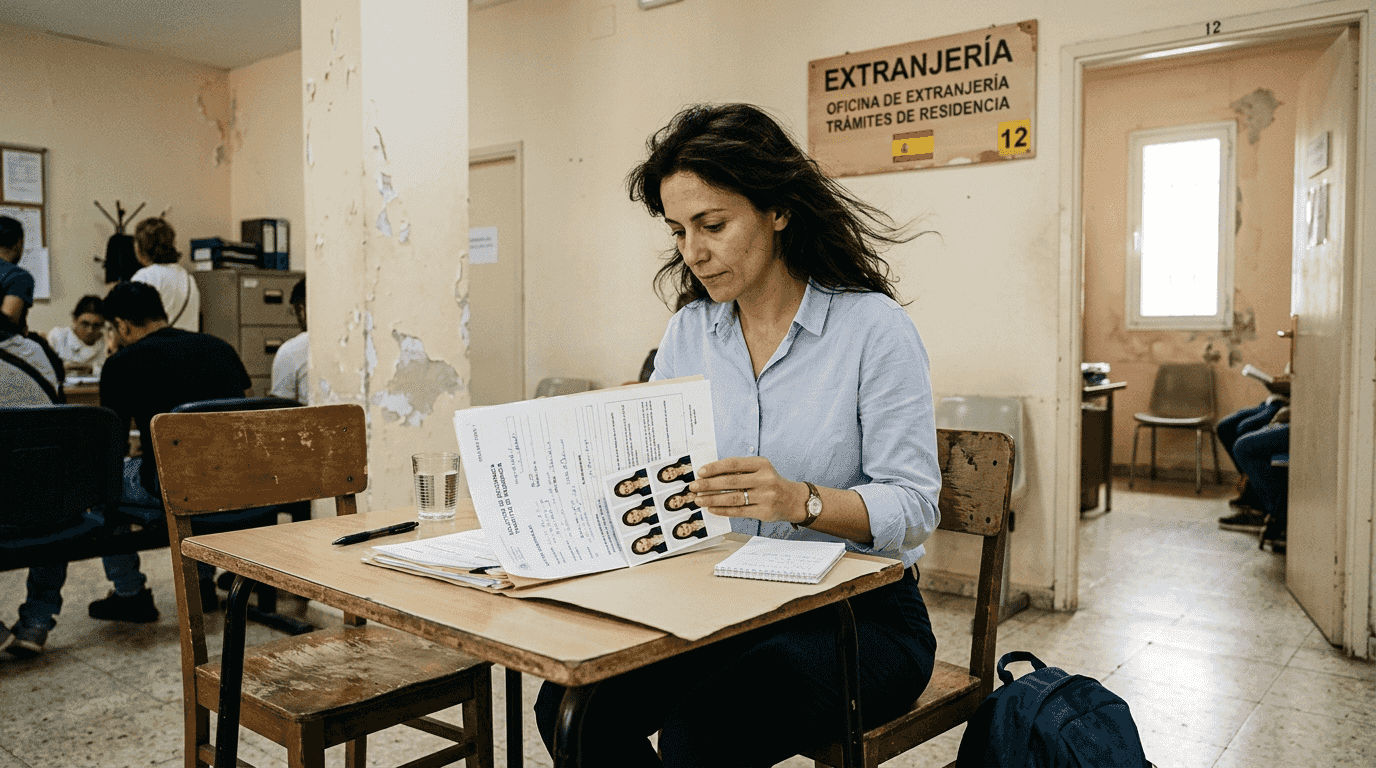
Many expats arrive in Spain believing a tourist visa grants them the right to live long term. This confusion between entry visas and residency permits causes serious legal complications. Understanding the difference is essential for anyone planning to establish life in Spain beyond a short vacation. This guide clarifies what expat residency actually means, explains the various visa routes available in 2026, and walks you through the application and renewal processes. Whether you’re a digital nomad, retiree, or skilled worker, you’ll learn exactly what documentation and income levels you need to secure legal residency status.
Table of Contents
- Understanding Expat Residency: Visas Vs. Residency Permits
- Main Types Of Residency Visas For Expats In Spain
- Common Mistakes And Important Considerations For Expat Residency
- How To Apply For And Renew Expat Residency Permits In Spain
- How Vive Legal Can Assist With Your Residency Procedures
- Frequently Asked Questions
Key takeaways
| Point | Details |
|---|---|
| Visa vs. residency permit | A visa allows entry into Spain, while a residency permit authorizes long-term stay beyond 90 days. |
| Multiple visa categories | Digital Nomad, Non-Lucrative, and Work Visas each have specific income thresholds and eligibility rules. |
| Income documentation matters | Proof of sufficient passive or active income is mandatory and subject to verification by Spanish authorities. |
| Renewal deadlines are strict | Submit renewal applications before your current permit expires to avoid legal complications and potential deportation. |
| Professional help reduces errors | Complex paperwork and changing regulations make expert assistance valuable for approval success. |
Understanding expat residency: visas vs. residency permits
The Spanish immigration system operates on two distinct legal instruments that many newcomers conflate. A visa is an entry document issued by Spanish consulates abroad that permits you to enter Spanish territory for a specific purpose and limited timeframe. Think of it as your ticket through the airport gate. Once you’ve used that ticket and entered Spain, the visa alone doesn’t grant you the right to stay indefinitely.
Living legally in Spain shouldn't be difficult.
View services and pricesNot sure which procedure you need? Find out in 2 min
Questions? Message us on WhatsApp
A residency permit authorizes long-term stay in Spain after your initial entry. This is the legal status that transforms you from a visitor into a resident. For stays exceeding 90 days within any 180-day period, you must obtain a residency permit that corresponds to your visa category. The visa gets you in; the permit lets you stay.
Several common visa types connect directly to residency pathways. Student visas allow enrollment in Spanish educational institutions. Work visas require employer sponsorship or approved self-employment plans. Non-lucrative visas suit retirees with passive income. Digital nomad visas cater to remote workers employed by foreign companies. Each visa category carries specific obligations and renewal conditions that determine your long-term residency eligibility.
The legal distinction matters enormously for your rights and responsibilities. Residency permit holders can access public healthcare, open bank accounts more easily, and establish tax residency. They must also comply with Spanish tax obligations and maintain the conditions that qualified them initially. Violating these terms risks permit revocation and potential deportation. Understanding these fundamentals prevents costly mistakes as you navigate Spain’s immigration bureaucracy.
Pro Tip: Always check the immigration guides for Spain before making major decisions, as regulations and income thresholds change annually.
Main types of residency visas for expats in Spain
Spain offers several residency pathways designed for different expat profiles and financial situations. Each visa category has distinct income requirements, documentation standards, and permitted activities. Choosing the wrong visa type can delay your application by months or result in outright rejection.
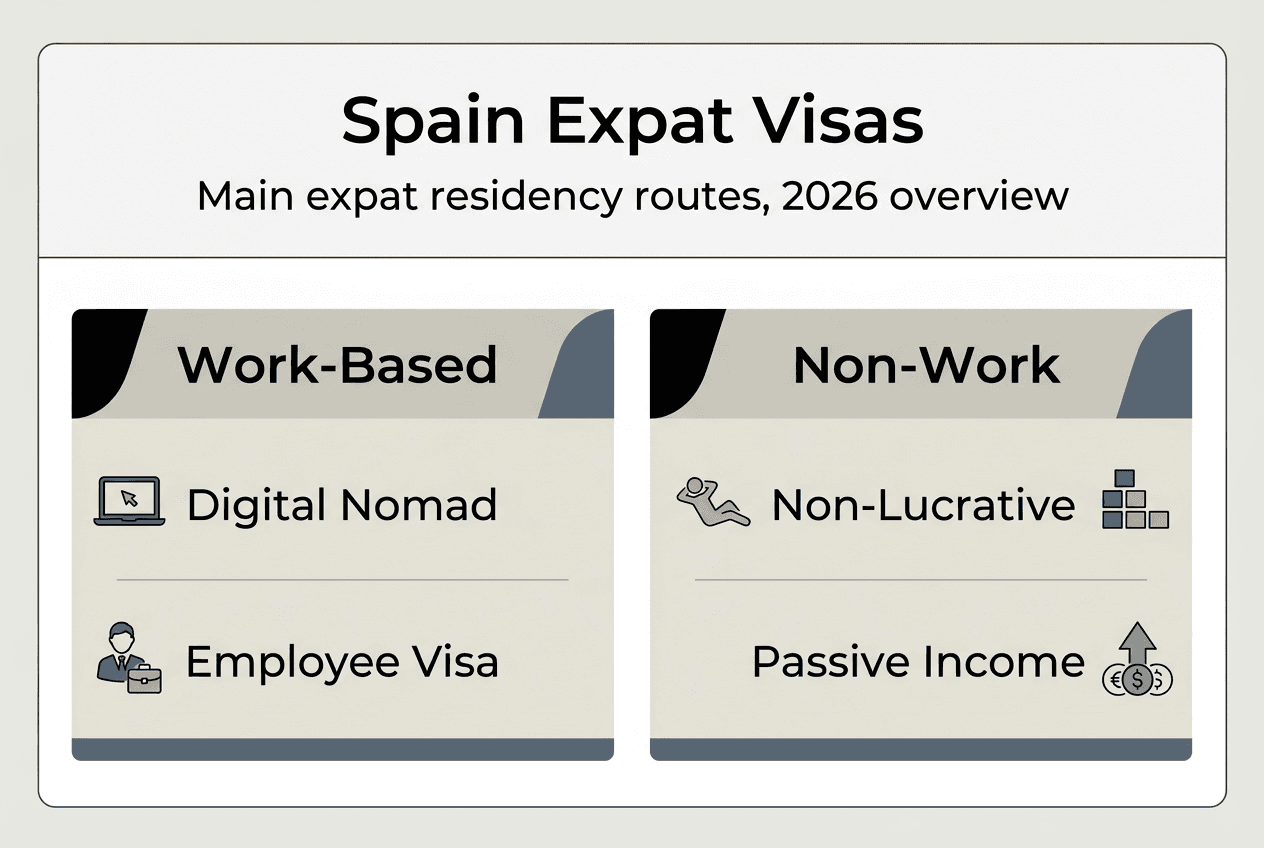
The Digital Nomad Visa allows remote workers to live in Spain while maintaining employment with foreign companies or clients. You must demonstrate income equivalent to approximately 200% of Spain’s minimum wage, which in 2026 translates to roughly €2,400 monthly for a single applicant. This threshold increases by 75% of the minimum wage for each additional family member. You’ll need employment contracts, client agreements, or proof of freelance income spanning at least 12 months. This visa permits work exclusively for non-Spanish entities, so taking local employment violates your permit conditions.

The Non-Lucrative Visa targets individuals with passive income or substantial savings who don’t intend to work in Spain. Applicants must prove financial resources equal to 400% of Spain’s IPREM (Public Income Indicator), approximately €2,800 monthly in 2026. Additional family members require 100% IPREM each. Acceptable income sources include pensions, rental income, dividends, or interest from investments. This visa explicitly prohibits any form of employment in Spain, making it ideal for retirees or financially independent individuals.
Work visas come in two primary forms. Employee work visas require a Spanish company to sponsor your application by demonstrating they cannot fill the position with an EU citizen. Self-employed work visas demand a detailed business plan, proof of professional qualifications, and evidence of sufficient capital to sustain operations. Both categories involve complex labor market tests and extensive documentation.
The Spain Passive Income Visa has gained prominence after Spain began phasing out the property investment based Golden Visa in 2024. This route suits wealthy individuals with investment portfolios, real estate holdings outside Spain, or other substantial passive income streams. Income requirements mirror the Non-Lucrative Visa but emphasize investment income specifically.
| Visa Type | Minimum Monthly Income | Work Permitted | Family Addition |
|---|---|---|---|
| Digital Nomad | €2,400 (200% SMI) | Remote only | +75% SMI per person |
| Non-Lucrative | €2,800 (400% IPREM) | No | +100% IPREM per person |
| Employee Work | Varies by salary | Yes (sponsored) | Dependent visa required |
| Self-Employed | Business dependent | Yes (own business) | Dependent visa required |
| Passive Income | €2,800+ (400% IPREM) | No | +100% IPREM per person |
Specialized options exist for students, researchers, and those qualifying for internship residence requirements or arraigo social visa based on social integration. Each pathway demands meticulous preparation and understanding of eligibility criteria.
Pro Tip: Income thresholds adjust annually based on Spain’s official indicators, so verify current figures through residency visa requirements before preparing your application.
Common mistakes and important considerations for expat residency
Navigating Spanish residency involves numerous pitfalls that can derail your application or trigger unwanted scrutiny from authorities. Understanding these risks helps you avoid expensive delays and legal complications.
Overstating income for banks ranks among the most dangerous mistakes. Some applicants inflate their income figures when opening Spanish bank accounts, hoping to appear more financially stable. Spanish tax authorities routinely share data with immigration offices. When your residency application shows €2,500 monthly income but your bank account declaration claims €5,000, officials investigate. This discrepancy can result in tax audits, residency denial, or permit revocation if you’re already approved.
Documentation accuracy matters enormously throughout the process. Submitting expired police certificates, incorrectly translated documents, or incomplete financial statements causes automatic rejections. Spanish authorities don’t typically request corrections; they simply deny applications and require you to restart from scratch. Every document must meet specific format requirements, include official translations by sworn translators, and carry apostille certification when originating outside Spain.
Timing your renewal correctly prevents legal limbo. Residency permits don’t automatically extend if you miss renewal deadlines. You must submit renewal applications within 60 days before expiration or 90 days after for most permit types. Missing this window can invalidate your legal status, forcing you to leave Spain and reapply from your home country. This disrupts your life completely and may disqualify you from certain residency categories that require continuous legal presence.
Compliance with permit conditions requires ongoing attention. Non-Lucrative Visa holders who accept even unpaid work violate their permits. Digital nomads who start serving Spanish clients cross legal boundaries. Work visa holders who change employers without authorization breach their conditions. Each violation provides grounds for permit cancellation regardless of how long you’ve lived in Spain.
“Maintaining accurate records and staying informed about annual regulatory changes protects your residency status. Professional guidance helps navigate complex requirements and avoid common oversights.”
Annual updates to minimum income thresholds catch many applicants off guard. Spain adjusts IPREM and SMI figures each year, typically announced in January. If you qualified last year but your income hasn’t increased proportionally, your renewal might fail. Monitor these changes and adjust your financial planning accordingly.
Consulting immigration professionals before submitting applications dramatically improves success rates. They identify documentation gaps, ensure proper formatting, and keep current with regulatory changes that casual applicants miss. The cost of professional assistance is minimal compared to the expense and frustration of rejected applications or revoked permits.
Pro Tip: Keep digital copies of every document submitted with your application, including submission receipts and official communications, to streamline the TIE renewal process when your permit approaches expiration.
How to apply for and renew expat residency permits in Spain
Securing your first residency permit involves a structured process that begins in your home country and concludes in Spain. Understanding each step prevents delays and ensures compliance with Spanish immigration law.
- Determine your visa category based on your work status, income sources, and long-term plans in Spain.
- Gather required documentation including passport copies, criminal background checks, medical certificates, proof of income, and health insurance coverage.
- Schedule an appointment at the Spanish consulate with jurisdiction over your residence abroad, often requiring weeks or months of advance booking.
- Submit your visa application with all supporting documents, paying applicable fees that vary by visa type.
- Wait for consulate processing, typically 1-3 months depending on application volume and complexity.
- Receive your entry visa and travel to Spain within the validity period specified on the visa.
- Apply for your NIE (Foreigner Identity Number) at the local police station or immigration office within 30 days of arrival.
- Collect your TIE (Foreigner Identity Card) after fingerprinting and final document verification, usually within 45 days.
Renewal procedures differ significantly from initial applications. You complete renewals entirely within Spain at immigration offices or police stations. Most residency permits require renewal every one or two years initially, extending to five years after demonstrating continuous legal residence. The specific timeline depends on your permit category and individual circumstances.
Current rules and practices emphasize that applicants should always confirm requirements directly with authorities, as procedures evolve. What worked for someone last year may not reflect current standards. Immigration offices sometimes implement local variations in document requirements, making direct confirmation essential.
| Document Type | Initial Application | Renewal Application |
|---|---|---|
| Valid passport | Required (6+ months validity) | Required (current validity) |
| Criminal background check | Required (apostilled, translated) | Not typically required |
| Medical certificate | Required (specific format) | Not typically required |
| Proof of income | Required (12 months minimum) | Required (current year) |
| Health insurance | Required (comprehensive coverage) | Required (maintained coverage) |
| Proof of address | Consulate address acceptable | Spanish address mandatory |
| NIE certificate | Not applicable | Required (existing number) |
| Previous TIE | Not applicable | Required (expiring card) |
Processing durations vary by region and season. Major cities like Madrid and Barcelona experience longer waits due to application volume. Expect 4-8 weeks for straightforward renewals and up to 3 months for initial permits. Incomplete applications extend these timeframes significantly.
Your NIE number remains constant throughout your time in Spain, serving as your tax identification and official reference number for all government interactions. Your TIE card displays this number along with your photo, permit type, and validity dates. Keep your TIE with you always, as police can request identification at any time.
After five years of continuous legal residence, most permit holders qualify for EU long-term residence application, granting indefinite stay rights and simplified renewal procedures. This milestone represents significant stability in your Spanish residency status.
How Vive Legal can assist with your residency procedures
Navigating Spain’s residency system demands expertise in current regulations, meticulous document preparation, and strategic timing. Vive Legal specializes in immigration procedures for expatriates, offering comprehensive support from initial applications through long-term renewals. Our platform combines AI-powered document review with professional legal oversight, catching errors before submission and maximizing approval chances.
We handle every aspect of your residency journey. Our services include personalized eligibility assessments, complete document preparation, appointment scheduling at immigration offices, and real-time case tracking through a secure client portal. Whether you’re applying for your first permit, managing the extraordinary regularization 2026 process, or renewing your existing status, our team ensures accuracy and compliance. We provide specialized assistance with TIE residency card applications, reducing processing times and eliminating common mistakes that cause rejections. Visit Vive Legal to start your hassle-free residency process today.
Frequently asked questions
What is the difference between a visa and a residency permit?
A visa is an entry authorization issued by Spanish consulates abroad that permits you to enter Spain for a specific purpose and limited duration. A residency permit is a separate legal document issued within Spain that authorizes you to live in the country long-term, typically for one to five years depending on your category. You must obtain the appropriate visa first, then convert it to a residency permit after arriving in Spain. The visa expires once you enter, while the residency permit governs your legal status for the duration of your stay.
Can I work in Spain with a Non-Lucrative Visa?
No, Non-Lucrative Visa holders cannot legally work in Spain under any circumstances. This visa category explicitly prohibits both employed and self-employed work activities. You must demonstrate sufficient passive income from pensions, investments, rental properties, or savings to support yourself without working. Accepting even unpaid work or volunteer positions that could be considered employment violates your permit conditions and risks revocation. If you want to work in Spain, you must apply for a work visa or switch to a visa category that permits employment.
What income levels are required for the Digital Nomad Visa?
The Digital Nomad Visa requires income equal to approximately 200% of Spain’s minimum wage, which translates to roughly €2,400 monthly for a single applicant in 2026. For each dependent family member you include in your application, you must demonstrate an additional 75% of the minimum wage per person. This income must come from remote work with foreign companies or international clients, documented through employment contracts, freelance agreements, or client invoices spanning at least 12 months. Spanish authorities verify this income carefully, so maintain accurate records and proof of payment.
How long does it take to renew a residency permit in Spain?
Renewal processing typically takes 4-8 weeks for straightforward cases with complete documentation. Complex situations or applications with missing documents can extend to 3 months or longer. Processing times vary significantly by region, with major cities experiencing longer delays due to higher application volumes. You must submit your renewal application between 60 days before and 90 days after your current permit expires. Timely submission is critical because your legal status becomes uncertain if your permit expires during processing. Always apply well before expiration to avoid complications with employment, travel, or other legal matters requiring valid residency status.
Recommended
Living legally in Spain shouldn't be difficult.
View services and pricesNot sure which procedure you need? Find out in 2 min
Questions? Message us on WhatsApp