
Essential guide to document review for Spanish residency
TL;DR:
- Submitting incomplete or improperly reviewed documents causes most delays or rejections in Spanish residency applications.
- Applicants must connect each required document to a specific legal criterion, avoiding gaps or errors that lead to denial.
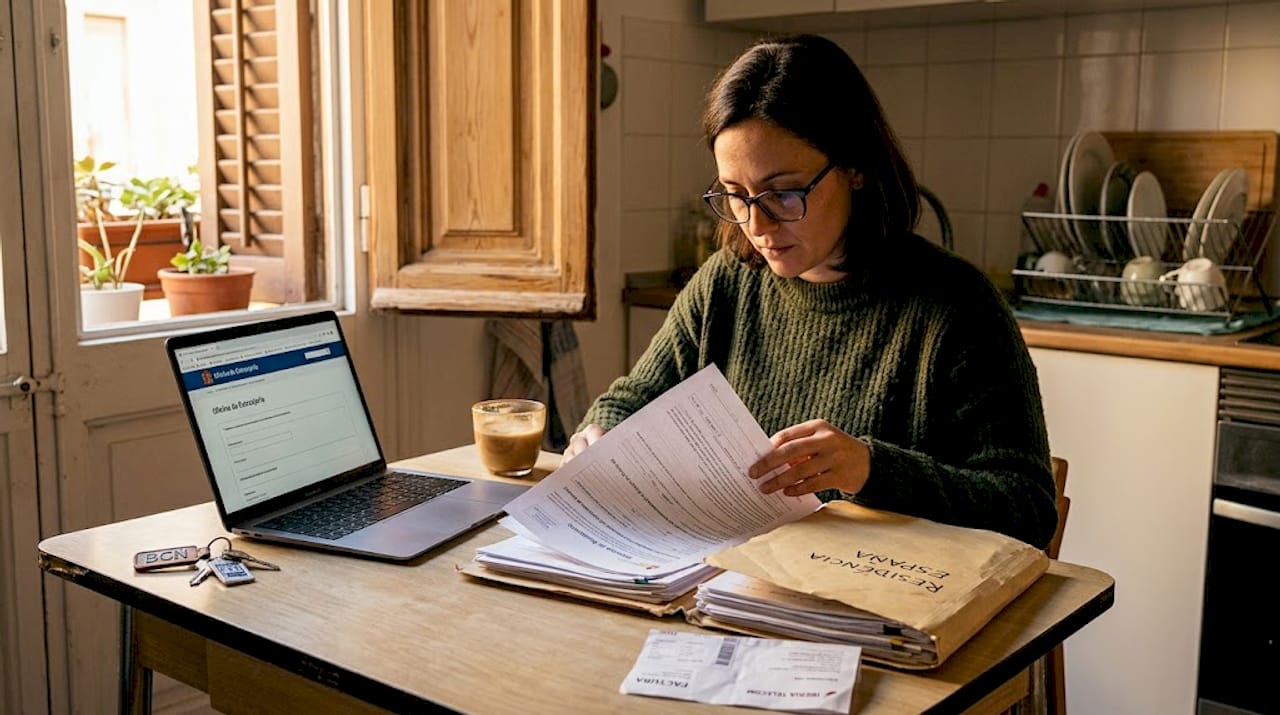
Submitting incomplete or incorrectly reviewed documents is the single most common reason Spanish residency applications get delayed or flatly rejected. It doesn’t matter whether you’re applying for a non-lucrative visa, an arraigo social, or an EU family card: a missing police certificate, an expired padrón, or a gap in your financial proof can send your case back to square one. This guide walks you through exactly what documents you need, how to organize them, how to verify them before submission, and how to handle tricky edge cases so your application gives reviewers nothing to question.
Living legally in Spain shouldn't be difficult.
View services and pricesNot sure which procedure you need? Find out in 2 min
Questions? Message us on WhatsApp
Table of Contents
- Understanding Spain’s residency document requirements
- Preparing your Spanish residency paper trail
- Step-by-step guide to verifying your documentation
- Handling special cases and common obstacles
- A legal expert’s perspective: why process mapping outperforms improvisation
- Need confidence in your Spanish residency application?
- Frequently asked questions
Key Takeaways
| Point | Details |
|---|---|
| Document gaps cause delays | Missing or incomplete documents often result in lengthy processing times or outright rejection. |
| Map every legal requirement | Ensure that each legal criterion is supported by time-stamped, appropriately formatted evidence. |
| Verification is essential | Review and cross-check your application just like a Spanish caseworker would. |
| Prepare for special cases | Anticipate and proactively address documentary obstacles with alternative proofs and notes. |
| Expert help improves success | Consulting legal experts or diagnostic tools increases your chance of first-time approval. |
Understanding Spain’s residency document requirements
Spain’s immigration authorities don’t approach applications with a generous benefit of the doubt. Each document in your file exists to prove a specific legal element, and if even one piece is missing or formatted incorrectly, the whole application can stall. Understanding what documents prove what legal criteria is where most applicants go wrong, because they focus on collecting paperwork rather than connecting it to the law.
The most common residency pathways in 2026 each carry their own mandatory document list. For the non-lucrative visa (residencia no lucrativa), the Spanish Ministry confirms that applicants must show 400% IPREM in financial means for the first year, plus an additional 100% per dependent family member. For the 2026 regularization pathway (regularización extraordinaria), continuous residence and a clean record are the baseline, supported by padrón certificates and other physical proof.
Here’s what authorities are actually checking with each document:
- Identity: valid passport, NIE number, or national identity document
- Legal presence or entry date: entry stamps, prior residence cards, or expired visas
- Continuous residence in Spain: padrón certificates (empadronamiento), utility contracts, lease agreements
- Financial means: bank statements, pension certificates, investment accounts
- Accommodation: current lease or property deed
- Clean criminal record: certificates from Spain and from every country you’ve lived in for the past 5 years
- Family ties (if applicable): marriage certificates, birth certificates, legal dependency proof
- Work or study basis (for specific permits): employment contracts, enrollment letters, or freelance registration
Consulates and the extranjería (Spain’s immigration offices) are strict about format and timing. Documents typically must be no older than 3 months when submitted, apostilled or legalized where required, and translated into Spanish by a sworn translator if in another language. Don’t assume a document you got last year still qualifies.
| Legal requirement | Documents needed | Common format error |
|---|---|---|
| Identity | Passport, NIE | Expired or damaged passport |
| Continuous residence | Padrón, utility bills | Padrón older than 3 months |
| Financial means | Bank statements, pension proof | Statements not covering 12-month period |
| Criminal record | National police certificate, foreign record | Missing apostille or sworn translation |
| Accommodation | Lease or property deed | Lease not in applicant’s name |
| Family relationship | Marriage/birth certificate | No sworn translation |
A common myth is that one padrón certificate covers your entire residence history. It doesn’t. The padrón only shows your current registration address and date of registration at that address. If you’ve moved, or if your registration has gaps, you’ll need historical certificates or supplementary evidence. Check our residency documents checklist for a breakdown by permit type.
Preparing your Spanish residency paper trail
With core documents identified, the next step is structured preparation and evidence mapping to ensure nothing falls through the cracks.
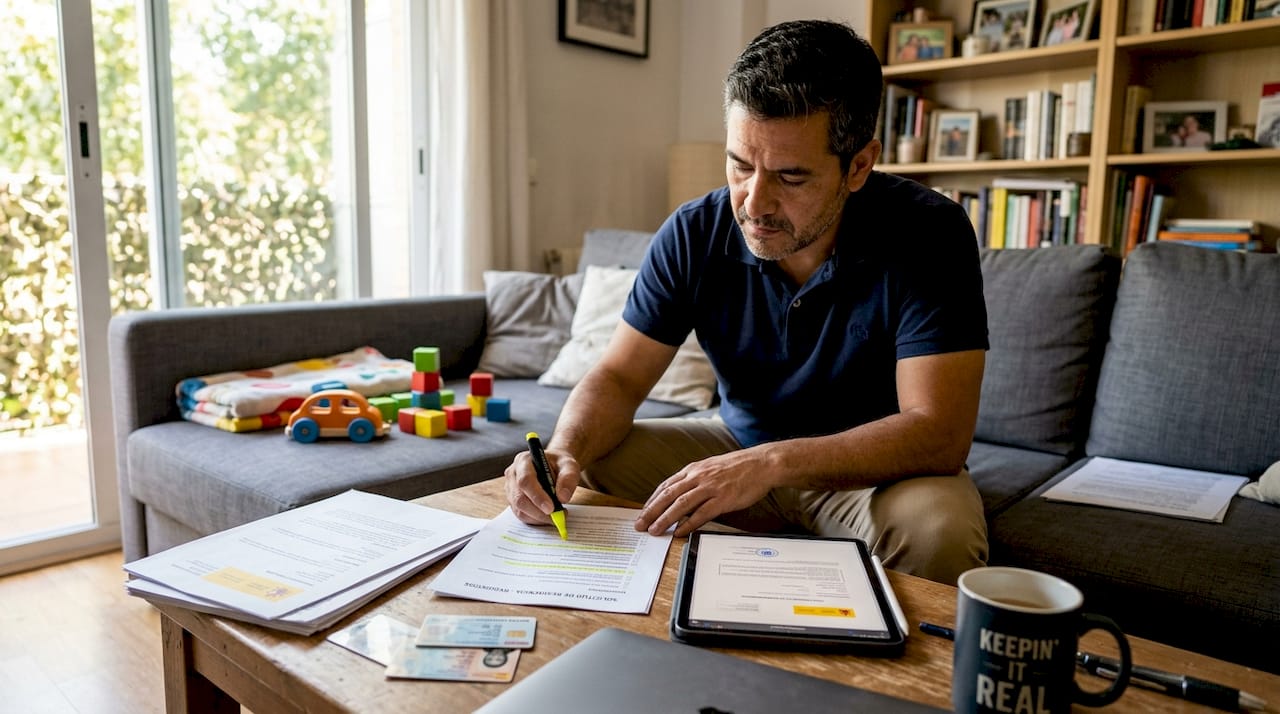
The most effective approach is to treat your application like a legal case file, not a stack of papers you’ve gathered over the years. Experienced practitioners call this “evidence mapping,” and it works because it forces you to link each legal criterion to supporting evidence rather than simply collecting documents at random and hoping they’re enough.
Here’s how to build a strong paper trail from scratch:
- Write out every legal requirement for your specific permit. Don’t use a generic online list. Pull the actual requirements from the official government source or a licensed legal advisor.
- Create a two-column matrix. On the left, list each legal requirement. On the right, write the specific document you’re using to prove it.
- Check for gaps. For every row in your matrix, ask: does this document actually cover the required period? Is it current enough? Is it authenticated?
- Compile time-stamped proof for long residence. If you need to show 3 or 5 years of continuous residence, gather dated documents for every 6-month block at minimum. The goal is no gaps a reviewer could flag.
- Sequence and label your documents. Organize them in the same order as the official requirements list. Label each document clearly, e.g., “Document 4: Bank statement January to December 2025.” This helps reviewers and reduces back-and-forth requests.
- Cross-check original vs. copies vs. certified copies. Some offices require originals, others accept notarized copies. Know which your application requires before you scan anything.
Pro Tip: Maintain a digital folder that mirrors your physical file exactly. Scan every document immediately after obtaining it and label the file with the document name, date, and purpose. If your application is ever questioned, you’ll have a timestamped archive to reference. Where possible, label everything in both English and Spanish to speed up any verification step.
Use the document review steps guide for a detailed walkthrough of how this process applies to specific permit types. And if you want to skip building your own matrix, personalized diagnostics can identify exactly which documents you’re missing based on your individual situation.
Step-by-step guide to verifying your documentation
Once your dossier is organized, verification is the next crucial layer. Here’s how to avoid the most frequent traps and errors before you apply.
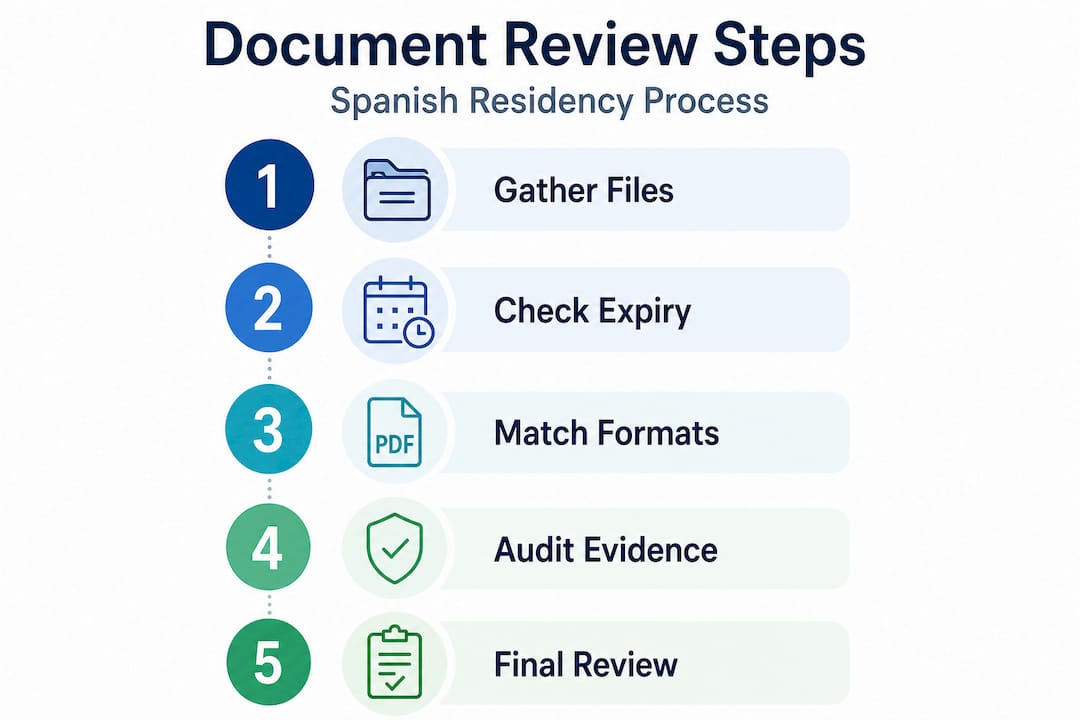
Self-auditing your file is not about perfection. It’s about catching the problems a caseworker will catch, before they do. The goal is to review your documents with the same skeptical eye as the person who will decide your case.
Follow this verification sequence:
- Check all dates. Are your padrón certificates current? Bank statements from within the last 3 months? Police certificates issued within the required window? Expired documents will be flagged immediately.
- Confirm all periods are covered. If you need to show 3 years of continuous residence, lay your documents out chronologically and look for gaps. A 2-month gap between two leases, for example, needs to be bridged with another type of evidence.
- Verify authenticity requirements. Foreign documents must carry an apostille (under the Hague Convention) or be legalized through the Spanish consulate in the issuing country. Sworn translations must come from a certified translator recognized in Spain.
- Check for name consistency. Does your name appear exactly the same on every document? Even minor spelling differences between your passport and a utility bill can cause questions. If they differ, include an explanatory note.
- Confirm family documents are complete. If dependents are included, every family member needs their own identity proof, photos, and any permit-specific documents. Missing even one family member’s certificate can delay the entire application.
Warning: Failure to document continuous residence for the full required period may result in immediate rejection of your application. Double-check every timeline gap, no matter how short it appears. Acceptable residence evidence includes padrón/empadronamiento records, utility bills, leases, medical appointment records, and bank transfer receipts. Use as many overlapping sources as possible.
| Common mistake | What it looks like | How to fix it |
|---|---|---|
| Expired police certificate | Certificate older than 3 or 6 months at submission | Request a new one before booking your appointment |
| Padrón gap | Two certificates with dates months apart | Get historical padrón from the ayuntamiento |
| Missing apostille | Foreign document with no apostille stamp | Contact the issuing country’s authority for apostille |
| Financial proof too short | Statements covering only 1 or 2 months | Request a 12-month statement or certification from bank |
| Unsigned forms | Application form missing applicant signature | Review every page before assembling the file |
Use the documentation review checklist to run a final audit before you submit. If you’ve recently moved within Spain and need to reflect a new address, updating your address ahead of submission is also important for consistency.
Handling special cases and common obstacles
Even meticulously prepared application files may hit snags. Here’s how to handle the special situations that most commonly block or complicate approvals.
Not every applicant has a clean, linear history. Some people have moved frequently, lived in multiple countries, or have documentation gaps for understandable reasons. These situations require extra effort but are manageable with the right strategy.
Common documentary obstacles include:
- Old utility bills or leases that can’t be located after a move
- Padrón certificates that were never renewed after a change of address
- Criminal record certificates from countries with slow or complicated request processes
- Split residence evidence where someone divided their time between Spain and another country
- Documents that list a different name variation across different countries
- Medical or financial records that weren’t kept systematically
When applying for arraigo and criminal record permits, Spanish authorities require police record certificates from Spain and from every country where you’ve been a resident in the last 5 years. Getting certificates from some countries can take 8 to 12 weeks, so start that process well in advance. Some certificates also require apostilles and sworn translations, adding more time.
For the non-lucrative visa, a critical rule catches many applicants off guard: work or telework is prohibited during the permit’s validity, including remote freelancing or employment with a foreign company. If you declare income from remote work during the period you held this visa, your renewal or any future application can be jeopardized. Do not conflate passive income with active remote work when completing application forms.
Pro Tip: If any document is genuinely missing or impossible to obtain, don’t leave the gap unexplained. Proactively include a written statement explaining what the missing document was, why it cannot be provided, and what alternative evidence you’re submitting instead. Reviewers respond much better to a transparent, organized explanation than to a silent gap. Prepare alternative documents and annotate your submission so the reviewer understands your reasoning before they even ask.
For families applying together, child residency requirements in Spain have specific documentation needs that differ from adult applications. Don’t assume that the parent’s documents automatically cover the child’s inclusion.
A legal expert’s perspective: why process mapping outperforms improvisation
Here’s the uncomfortable truth most online guides won’t tell you: the biggest reason residency applications fail is not that people gathered the wrong documents. It’s that they gathered the right documents without understanding what each one needs to prove.
There’s a fundamental difference between having a bank statement in your file and having a bank statement that proves continuous financial means for the required period in the required format. Generic document checklists, the kind shared endlessly on expat forums, don’t make that distinction. They give you a list of paper types, not a logic for proving eligibility. And when a caseworker reviews your file, they are not checking boxes on a generic list. They are looking for gaps, inconsistencies, and unproven legal elements.
We see this pattern repeatedly with DIY applications: an applicant submits 30 documents, but none of them actually prove 3 months of residence during a critical window in 2023. Or someone provides financial proof in the form of a savings account balance, when the requirement is income-based. The documents exist, but the proof doesn’t.
The better model is to think like the caseworker reviewing your application. What question is this document answering? What would make me doubt this proof? Is there a gap in the timeline that a skeptical reviewer would flag? When you approach your submission as a case file that you must be able to defend, you prepare differently.
Build your own matrix before trusting any checklist you find online. Cross-reference every document against the specific legal text for your permit type. Treat small date inconsistencies as real risks, not minor formatting issues. That systematic, skeptical approach is what separates applications that sail through from those that stall for months.
Need confidence in your Spanish residency application?
Managing document review on your own is possible, but the margin for error in Spain’s immigration system is slim. A single overlooked apostille or an outdated certificate can cost you months of waiting time.
At Vive Legal, our specialists combine digital tools with legal expertise to review your documents, identify gaps before they become problems, and prepare a submission file that meets the exact standards required for your permit type. Whether you’re navigating the new 2026 regularization support pathway or preparing a renewal, we handle the complexity so you don’t have to guess. Explore our must-have immigration forms library to get started, or reach out directly for a personalized review that covers your specific circumstances from start to finish.
Frequently asked questions
What is the new 2026 regularization law in Spain and who qualifies?
The 2026 regularization law allows individuals who have been continuously in Spain since December 31, 2025 to regularize their immigration status, provided they meet the required documentary evidence and criminal record standards. Specific proof of continuous presence and clean history is mandatory.
Does the non-lucrative visa for Spain allow any remote or telework?
No. The non-lucrative visa bans all work activity, including teleworking and remote freelancing for foreign employers, throughout the permit’s full validity period.
What types of documents can prove continuous residence in Spain?
Acceptable residence proofs include padrón certificates, utility bills, rental contracts, bank transfer receipts, and dated medical records. Using multiple overlapping sources strengthens your case significantly.
What happens if there are gaps or missing supporting documents in my application?
Gaps in residency evidence or missing documents can lead to delays or outright rejections. You should proactively supply alternatives and written explanations for anything you cannot provide in standard form.
How much money do I need to prove for a Spain non-lucrative visa in 2026?
You must demonstrate financial means of at least 400% IPREM annually, plus 100% of IPREM per additional family member, typically verified through bank statements or official financial certificates.
Recommended
Living legally in Spain shouldn't be difficult.
View services and pricesNot sure which procedure you need? Find out in 2 min
Questions? Message us on WhatsApp