
Must-Know Legal Forms for Spain: Expat Checklist

TL;DR:
- Proper preparation of legal documents is essential when moving to Spain, as strict deadlines and requirements apply. Key forms include empadronamiento registration, NIE number, TIE card, and foreign documents with apostille and sworn translation. Prioritizing these forms and ensuring their validity prevents delays and costly legal complications.
Spain’s legal paperwork can grind your plans to a halt if you show up unprepared. Whether you’re relocating for work, enrolling in a university, or simply setting down roots, knowing the must-know legal forms for Spain before you need them is what separates a smooth transition from a frustrating one. This guide walks you through every critical document, explains when and why you need it, and flags the deadlines and pitfalls that catch most newcomers off guard.
Living legally in Spain shouldn't be difficult.
View services and pricesNot sure which procedure you need? Find out in 2 min
Questions? Message us on WhatsApp
Table of Contents
- Key takeaways
- The criteria for must-know legal forms in Spain
- The top must-know legal forms for Spain
- Side-by-side comparison of essential legal forms
- Recommendations by situation
- What I’ve learned from watching people get this wrong
- How Vive takes the paperwork off your plate
- FAQ
Key takeaways
| Point | Details |
|---|---|
| Start with empadronamiento | Register at your local town hall first — it unlocks healthcare, schooling, and residency card access. |
| NIE vs. TIE are not the same | Your NIE is a tax number; your TIE is a physical residency card with strict 30-day application deadlines. |
| Foreign documents need apostille | Standard translations are rejected in Spain — all foreign documents require apostille plus sworn translation. |
| Validity windows are short | Criminal records and medical certificates expire within 3 to 6 months of issue, so time them carefully. |
| Spanish-specific POA is required | A Spanish lasting power of attorney must be prepared locally, as foreign equivalents are not accepted. |
The criteria for must-know legal forms in Spain
Not every piece of paperwork you encounter in Spain carries the same legal weight. Understanding which documents actually matter, and why, helps you prioritize correctly and avoid wasted trips to government offices.
The most critical forms share a few traits:
- Legal obligation. Some documents are required by law for everyone staying over a certain period. Empadronamiento is mandatory for anyone residing in Spain for more than six months.
- Time-sensitivity. Several applications must be submitted within strict windows. Missing the deadline on your TIE card application, for example, can mean restarting the process entirely.
- Supporting document requirements. Many forms require accompanying evidence such as a rental contract, proof of income, or a valid passport. Foreign documents almost always require additional steps.
- EU vs. non-EU distinction. EU citizens face fewer hurdles, but even they must register officially. Non-EU residents face more paperwork, fees, and stricter validity rules.
- Validity periods. Criminal record certificates and medical certificates both carry expiration dates tied to when you submit them. Planning your document timeline around these windows is non-negotiable.
Pro Tip: Build your document timeline backwards from your intended submission date. If your visa appointment is in three months, your criminal record certificate needs to be issued within that window to still be valid at submission.
The top must-know legal forms for Spain
Here is a breakdown of the key forms every individual in Spain should know, whether you are an expat, a student, or a property buyer.
1. Empadronamiento (Padrón)
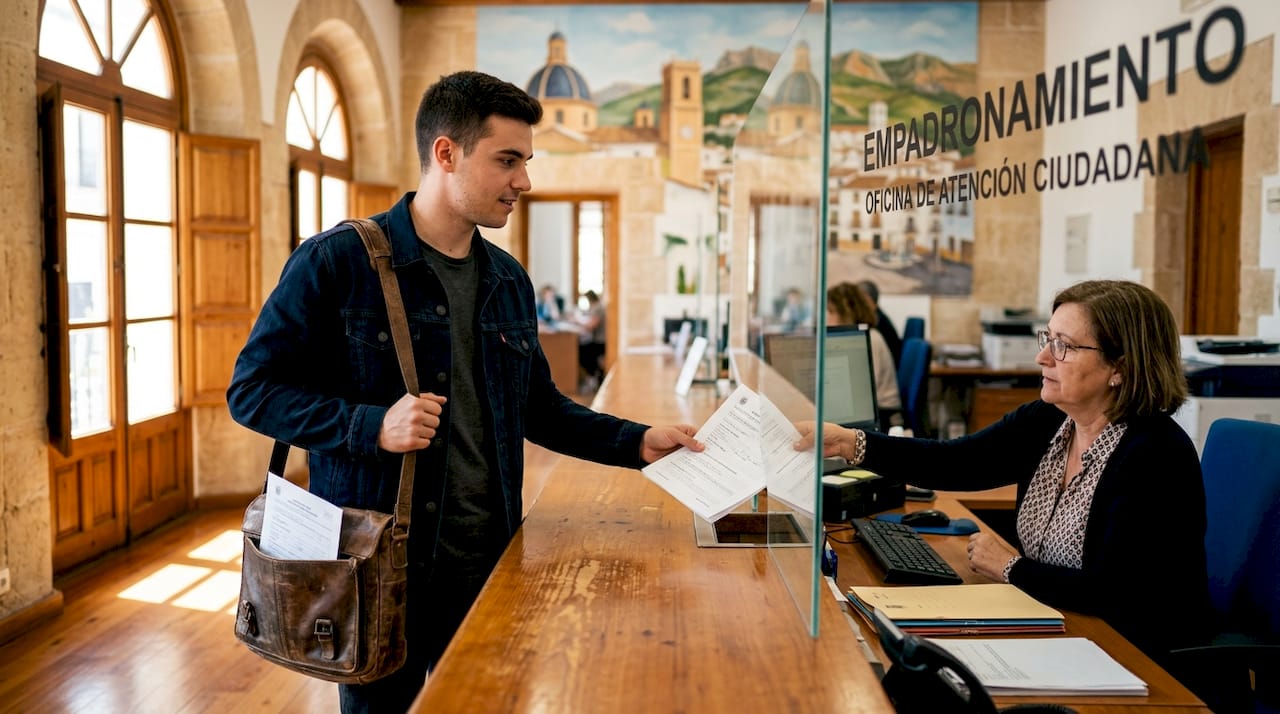
This is your official registration with the local municipal authority and your first legal act in Spain. Registration is free but legally required and opens the door to healthcare access, public schooling, and residency card applications. You will need your passport and either a rental contract or property deed to complete it. Without this document, many of the other forms on this list simply cannot be processed.
2. NIE (Número de Identidad de Extranjero)
Your NIE is a personal identification number assigned to all foreigners in Spain. You need it to open a bank account, sign contracts, pay taxes, and purchase property. It is not a card but a number. Getting it requires an appointment at a Comisaría or Spanish consulate, depending on whether you are already in Spain. For a full walkthrough of the process, Vive’s NIE acquisition guide covers every step.
3. TIE (Tarjeta de Identidad de Extranjero)
The TIE card is mandatory for non-EU nationals staying in Spain for more than six months. Unlike the NIE, the TIE is a physical identity card and requires a police appointment and payment of application fees. Missing the 30-day deadline after your residence permit approval can force you to restart the entire application, which costs time and money.
4. Visa application forms
Spain has several visa categories: student, work, digital nomad, non-lucrative, and family reunification, among others. Each comes with its own application form submitted through a Spanish consulate in your home country. The form itself is standard, but the supporting documents vary significantly by visa type. Getting the visa category wrong at the start is one of the most common, and most expensive, mistakes newcomers make.
5. Criminal record certificate
This certificate must be issued within 3 to 6 months of your visa or residency application and must carry an apostille plus sworn translation to be accepted by Spanish authorities. A standard notarized copy is not enough. The apostille is a Hague Convention certification that authenticates the document internationally. Order it well ahead of your application window because processing time in your home country can stretch longer than you expect.
Pro Tip: Request two certified copies of your criminal record certificate when you order it. One goes to Spain; the other stays with you as backup in case a document is lost or delayed.
6. Medical certificate
Visa and residency applications tied to long stays require a medical certificate confirming you have no diseases with serious public health repercussions. This certificate must be issued within 90 days before your application date. Some consulates require it from a specific registered doctor. Always check the consulate’s exact requirements before booking your appointment.
7. Spanish will (testamento)
If you own property or assets in Spain, a Spanish will is not optional. It is the most direct way to protect your heirs and avoid a complex cross-border probate process. Spanish wills register centrally and help you navigate forced heirship rules under EU Regulation 650/2012. Foreign nationals can use a professio juris clause to opt out of Spanish forced heirship rules and apply the law of their home country instead. Many property owners in Spain skip this document until a crisis forces the issue, at which point the legal costs and delays multiply.
8. Spanish lasting power of attorney (poder notarial)
A Spanish lasting power of attorney allows someone you trust to manage your finances, property, or health decisions if you are unable to do so yourself. Foreign powers of attorney are generally not accepted by Spanish institutions, including banks, notaries, and healthcare providers. The document must be created in Spain before a notary, and may require an official translator. This is especially critical for older expats, long-term residents, or anyone with significant assets in Spain.
Side-by-side comparison of essential legal forms
Understanding these documents individually is helpful, but seeing them together reveals how they interact and where your priorities should lie.
| Document | Who needs it | Validity | Key requirements | Cost range |
|---|---|---|---|---|
| Empadronamiento | Everyone over 6 months | Ongoing (renew if you move) | Passport, rental contract or deed | Free |
| NIE | All foreign nationals | Permanent (no expiry) | Passport, completed EX-15 form, consulate/police appointment | €10–€15 |
| TIE card | Non-EU nationals over 6 months | 1–5 years depending on permit | Police appointment, NIE, photos, fees | €15–€20 |
| Criminal record | Visa and residency applicants | 3–6 months from issue | Apostille and sworn translation required | Varies by country |
| Medical certificate | Long-stay visa applicants | 90 days from issue | Must meet public health criteria | €50–€200 |
| Spanish will | Property and asset owners | Valid until updated | Notarized, registered centrally | €50–€300 |
| Spanish POA | Anyone needing representation | Defined in document | Notary, possible official translator | €100–€400 |
EU citizens applying for the Certificado de Registro de Ciudadano de la Unión (green certificate) follow a different, simpler path than non-EU nationals, but still benefit from having empadronamiento and a valid NIE in place. Non-EU applicants face stricter document validity windows and are more likely to be affected by improper apostille or translation issues.
Recommendations by situation
Not every person in Spain needs every form at the same time. Here is how to prioritize based on your specific circumstances.
If you are an expat settling in Spain, your immediate stack is: empadronamiento first, NIE second, TIE application within 30 days of residency approval if you are non-EU. After that, get a Spanish will and POA in place before you think you need them. Review Vive’s guide on essential residency documents for a detailed checklist.
If you are a student enrolling at a Spanish university, your priorities shift. You will need a student visa application form submitted before arrival, a criminal record certificate with apostille and sworn translation, a medical certificate, and empadronamiento once you arrive. Your academic institution may also require additional enrollment paperwork separate from your immigration documents.
If you are working in Spain, you need employment authorization tied to your visa category plus a valid NIE for tax and social security registration. For legal compliance at work, the legal compliance guide for 2026 is a practical resource.
If you own property in Spain, a Spanish will and a lasting power of attorney should be at the top of your list. Many property owners focus entirely on the purchase paperwork and forget that without a will, Spanish forced heirship rules may apply to their estate regardless of what their home country documents say.
- Register for empadronamiento within your first month.
- Obtain your NIE before signing any contracts or opening bank accounts.
- Apply for your TIE card within the legal deadline if you are a non-EU resident.
- Get your foreign documents apostilled and translated before you need them urgently.
- Prepare your Spanish will and POA while you are healthy and available to do so.
Pro Tip: Store scanned copies of all your legal documents in a secure cloud folder. Spanish offices frequently ask for photocopies, and having everything digitally accessible saves multiple trips home or to a copy shop.
What I’ve learned from watching people get this wrong
In my experience working with people navigating Spain’s legal requirements, the single most common mistake is underestimating the importance of document order. People apply for the TIE before completing empadronamiento, or they arrive at a consulate with a criminal record certificate that expired two weeks ago. These are not small errors. They reset your timeline by weeks or months.
What I’ve seen trip people up most consistently is the apostille issue. There’s a widespread assumption that getting a document notarized in your home country is the same as getting it apostilled. It is not. Proper legalization requires apostille authentication and a sworn translator, and authorities will reject anything that falls short of that standard.
The other thing I’d push back on is the idea that you can handle all of this reactively. The people who sail through the Spanish immigration system are the ones who processed their documents six weeks before they needed them, not six days. The empadronamiento guide on Vive’s blog puts it plainly: registration is your legal foundation in Spain, and everything else builds on top of it.
My honest advice is to get legal help early for anything involving apostilles, sworn translations, or time-sensitive residency applications. Not because the paperwork is impossible, but because a single misstep costs far more in time and stress than professional support ever would.
— Martín
How Vive takes the paperwork off your plate
Managing every form on this list while settling into a new country is genuinely exhausting. Vive was built to handle exactly this problem.
Vive’s online platform covers the full range of immigration and residency procedures, from NIE and TIE applications to empadronamiento support and Arraigo permits. You get personalized document review, appointment scheduling, and real-time case tracking through a secure client portal, all handled by legal professionals. For anyone who wants their immigration forms managed online, Vive handles the preparation, checks for errors before submission, and walks you through each stage with clear notifications. No surprise rejections. No guesswork.
FAQ
What is the first legal document I need in Spain?
Empadronamiento, your registration at the local town hall, is the first document you need and the one that unlocks access to healthcare, schooling, and residency applications.
Is the NIE the same as the TIE card?
No. Your NIE is a personal identification number assigned to all foreign nationals. The TIE is a physical residency card required for non-EU nationals staying over six months, and it has a strict 30-day application deadline after residency approval.
Do foreign documents work in Spain without extra steps?
No. Foreign documents must carry an apostille and a sworn translation to be accepted by Spanish authorities. Standard notarized copies are rejected.
How long is a criminal record certificate valid for Spanish applications?
Criminal record certificates are typically valid for 3 to 6 months from the date of issue. Time your request so it does not expire before your visa or residency appointment.
Do I need a Spanish will if I already have one from my home country?
Yes. A Spanish will is strongly recommended for anyone with property or assets in Spain. It registers centrally and allows you to specify which country’s inheritance law applies to your Spanish estate, protecting your heirs from unexpected forced heirship rules.
Recommended
Living legally in Spain shouldn't be difficult.
View services and pricesNot sure which procedure you need? Find out in 2 min
Questions? Message us on WhatsApp